


Lichenose Fringe-limbed Treefrog
Ecnomiohyla valancifer
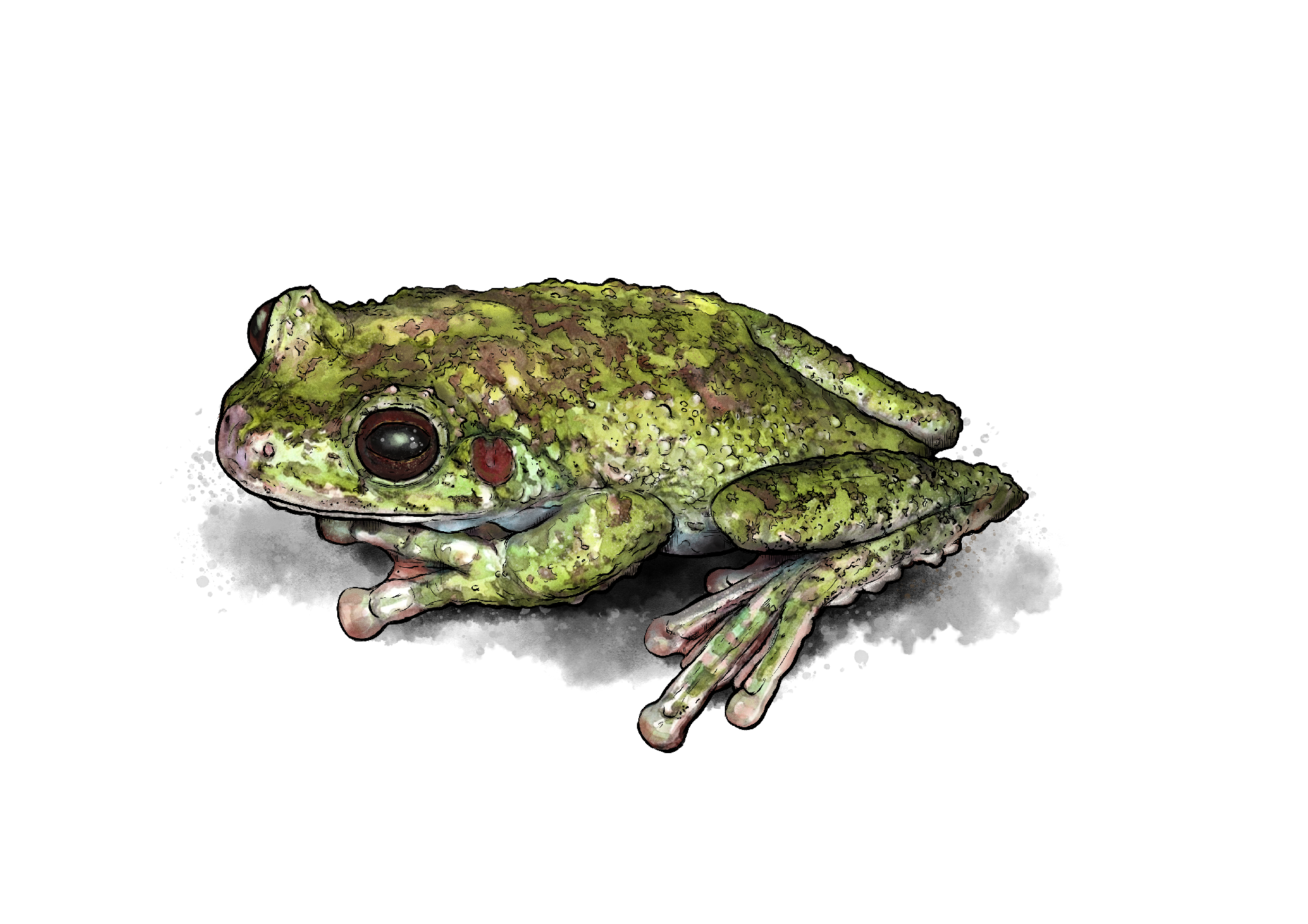
Lichenose Fringe-limbed Treefrog
Ecnomiohyla valancifer
CC goal
56 breeders
Status 11/2025
CC goal
225 animals
Status 11/2025

CC goal
56 breeders
Status 11/2025
CC goal
225 animals
Status 11/2025
You may have heard how Charles Darwin once came up with the idea of evolution? You know, the finches on the Galápagos Islands with their beaks? Each of these inconspicuous black-grey birds has a different beak shape, depending on what it prefers to peck or peck at, and this specialisation has enabled it to tap into a food source that is particularly easy to access and that its troublesome competitors can hardly or not at all reach: the ecological niche.
Frogs don’t have beaks, but they face the same problem – they too must find their niche in a world full of competition and predators. One frog, which you have probably never heard of, has found particularly unusual solutions to this problem. So unusual, in fact, that it is no wonder you have probably never heard of it. In fact, hardly anyone has ever even seen it. Specialisation sometimes goes hand in hand with a penchant for the unusual.
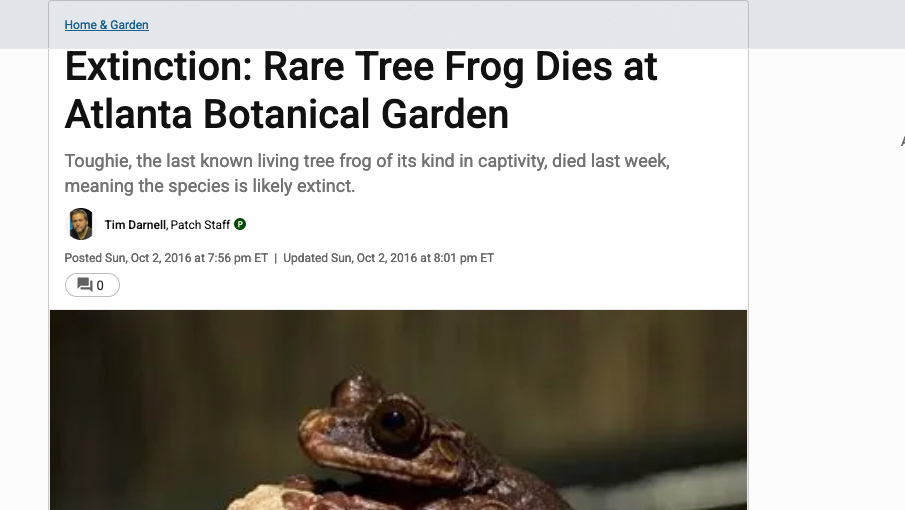
With Toughie's death in 2016, an entire species died out.
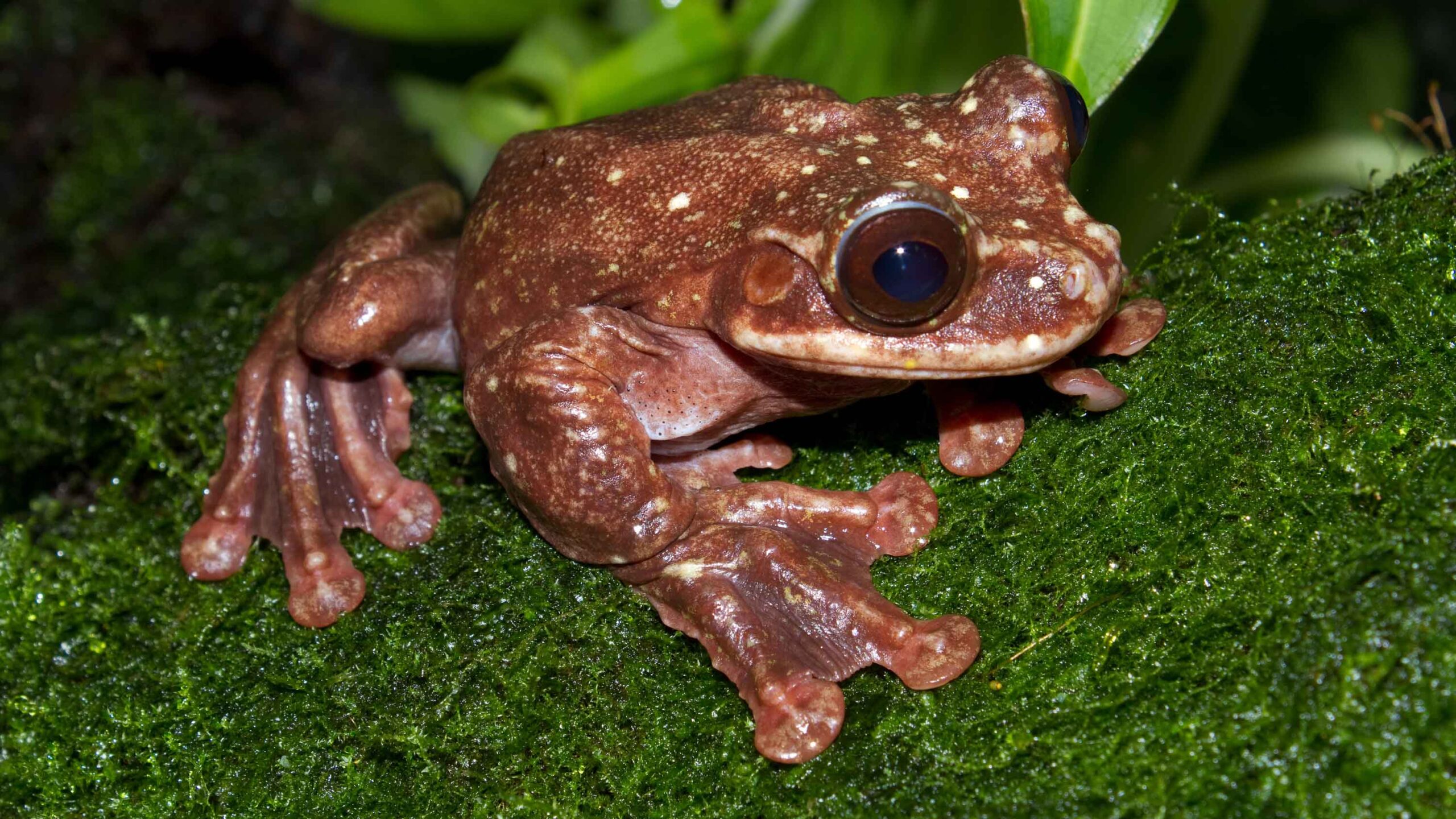
The last of his kind: ‘Toughie’ was the last survivor of Rabb’s fringe-limbed treefrog, Ecnomiohyla rabborum. He lived in the Atlanta Botanical Garden.

His death caused a huge media stir in 2016.

The species was only found in a small area in Panama near El Valle and was not scientifically described until 2008.
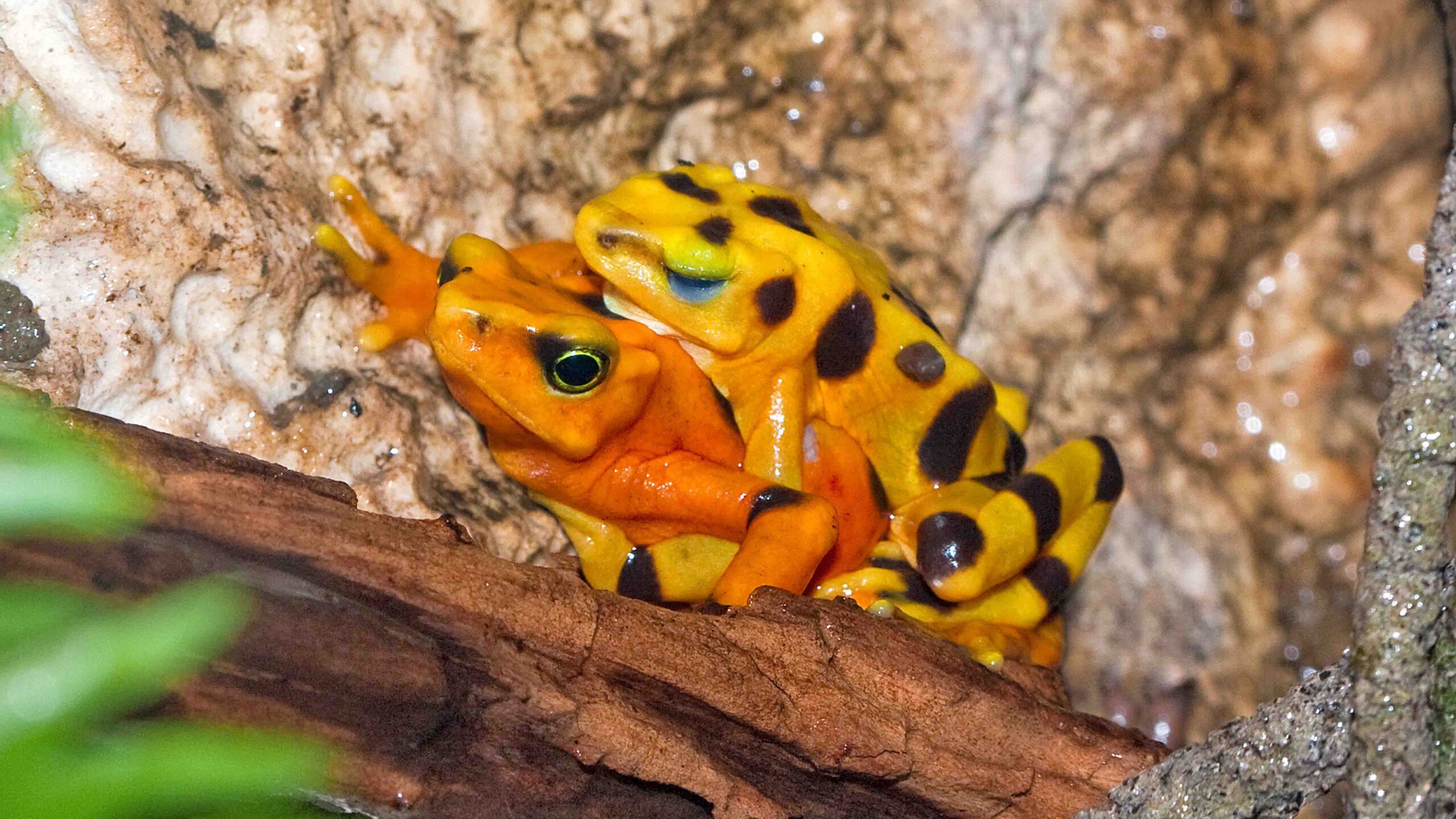
In this region of Panama, a whole series of frogs and toads have become almost or completely extinct in recent decades due to a fungal disease. The famous ‘golden toad’ Atelopus zeteki was saved at the last minute through conservation breeding.
When it became clear how endangered Ecnomiohyla rabborum was, the Atlanta Botanical Garden attempted to establish a conservation breeding programme – unfortunately too late. It was unable to gather enough animals.

To prevent a similar fate befalling its close relative, the Lichenose Fringe-limbed Treefrog scheint, Citizen Conservation has launched a conservation breeding programme for it.
It is becoming increasingly peculiar
The fringe-limbed treefrog we are talking about here is definitely an oddball. It lives high up in the trees of the cloud forests of a mountain range in south-eastern Mexico. These are two factors that make it seem rather unusual. First of all, when we think of creatures living high up in trees, we tend to think of birds rather than frogs. And not without reason, because frogs are amphibians and, as such, are by definition bound to water – ‘Amphibian’ comes from the Greek “amphibios”, which means ‘double life’ and alludes to the fact that amphibians commute between the worlds of water and land habitats, with their larvae initially breathing through gills and later metamorphosing into air-breathing adults, as well as their lifelong close connection to the wet element. However, as we know, bodies of water tend to be found on the ground. So if you live as a frog at lofty heights, you have to come up with some evolutionary solutions to overcome this distance or develop alternatives to the classic frog pond. If you also live in the cloud forests of a mountain range, you are practically on an island, because the price of specialisation is that you are increasingly tied to your very specific niche. It is cool in the cloud forest, while down in the tropical lowlands it is notoriously hot and humid, so you stay among your own kind and lose contact with others, which in turn reinforces the development of peculiarities: speciation.
"A one-room attic flat with its own bathroom"
© Peter Janzen
The pond in the tree
The Lichenose Fringe-limbed Treefrog seems to live exclusively on the mountain slopes around the San Martín volcano, presumably only at altitudes above 1,000 metres. ‘Presumably’ indicates that we don’t know for sure, because, as already mentioned, hardly anyone has ever seen these frogs in the wild. In fact, scientists are only aware of a handful of specimens from their habitat. This is not only due to their very limited occurrence in a very small area, but also to the fact that the frogs probably spend most of their time high up in the trees, where humans cannot reach them. Other tree-dwelling frogs at least come within sight for spawning, but the fringe-limbed treefrogs save themselves the hassle of climbing down to the forest floor and have discovered a very special nursery for themselves: tree hollows, which are often filled with water in the humid cloud forest climate. A one-room attic flat with its own bathroom, so to speak. This is where the frogs raise their offspring. Very convenient.
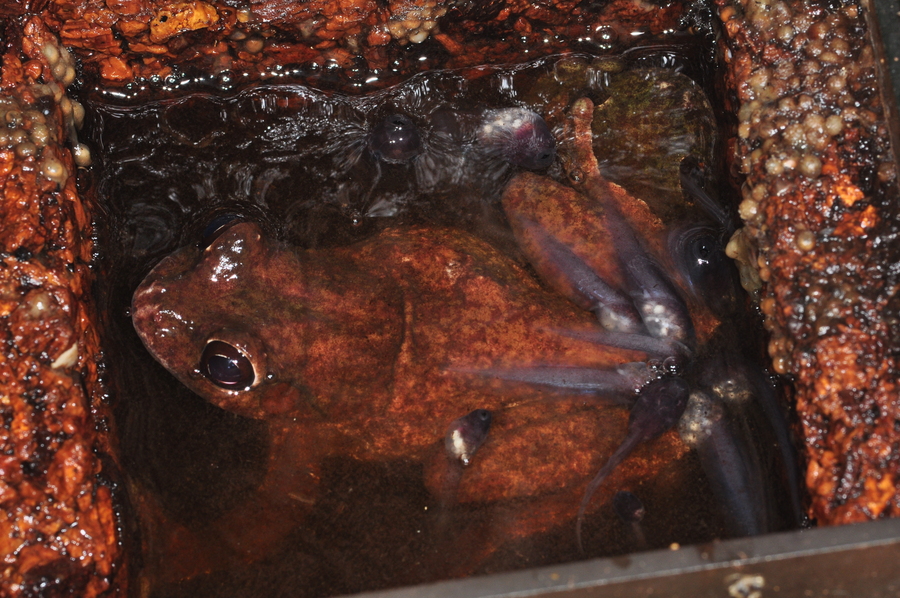
‘Dinner is ready!’ – A female Lichenose Fringe-limbed Treefrog scheint lays nutritious eggs, and the tadpoles eagerly swim over to feed. © Peter Janzen
Frog egg squash
There are only a few minor drawbacks. Compared to a proper body of water, the conditions in such a tree hollow pool are somewhat dodgy: hardly any oxygen in the water and nothing to eat. But that’s no problem for the fringe-limbed treefrog! Although it follows the old frog custom of mating in its exclusive pool, the conditions for the eggs are much better outside the water: the humidity in a tree hollow in the cloud forest is high enough for the spawn, and there is plenty of oxygen in the air anyway. So the female frog grabs the eggs that have just been laid in the pool and freshly fertilised by the male clinging to her with her hind foot, whose toes are connected by large webbing, forming something like, say, a squash racket. Following the tradition of this sport, she then simply slaps them against the tree hollow wall above the water level. However, they do not bounce back, but stick there until the tadpoles finally hatch and promptly fall into the water below. The larvae can now continue to develop there, but they have one problem: there is hardly anything to eat in a mini tree hollow pool. Therefore, the offspring receive full board at Hotel Mum. The mother regularly returns to her hollow pool and lays unfertilised eggs in the water, which are greedily eaten by the tadpoles until one day they undergo metamorphosis and go ashore. Or rather, to the tree whose hollow they are now leaving.
Exalted frog reproduction at Citizen Conservation

From a human perspective, it is certainly unusual, but typical for frogs: reproduction in the Rio Pescado Harlequin Toad bred in CC. After amplexus...
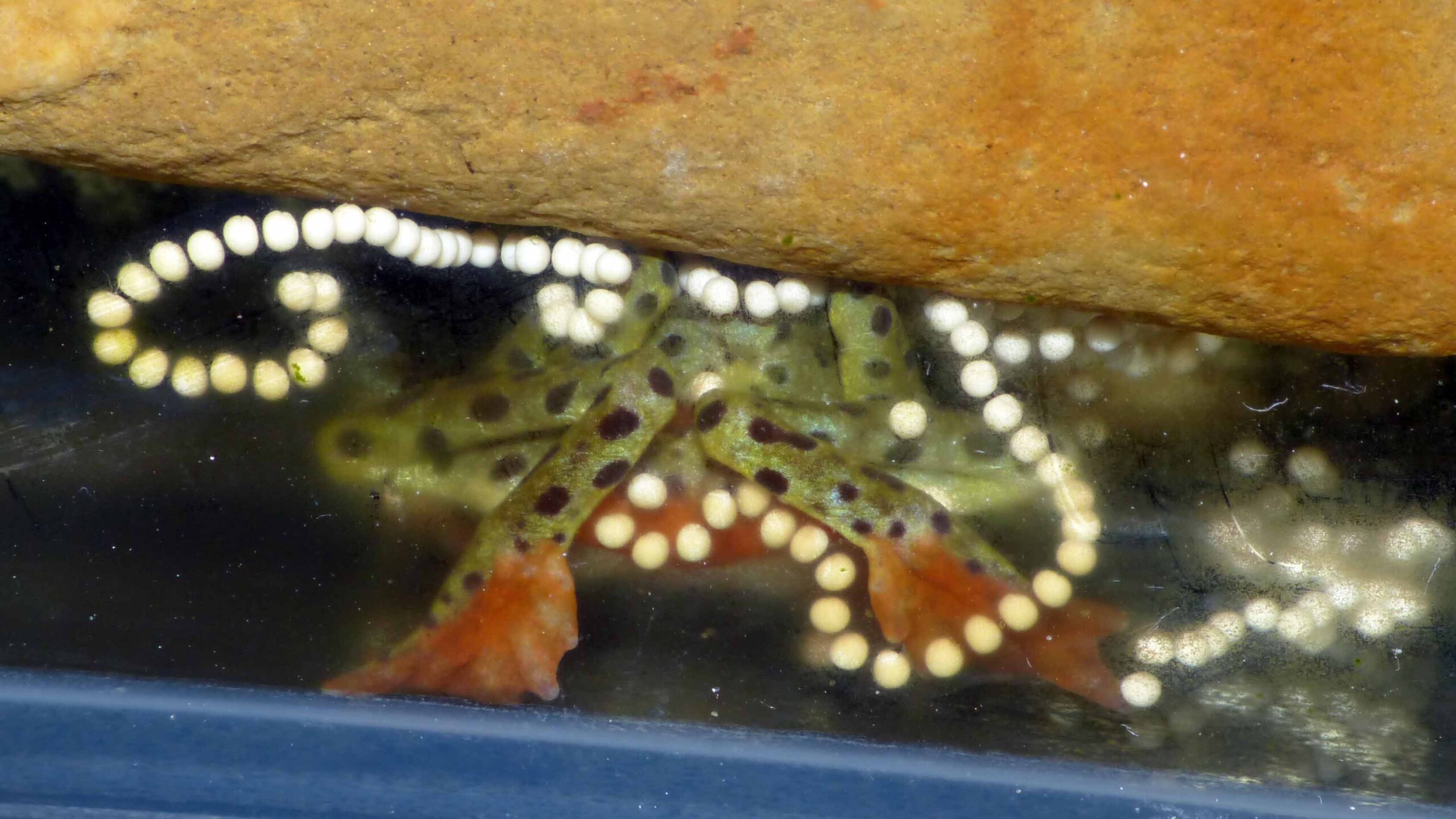
... the female lays lots of eggs in a body of water, ...
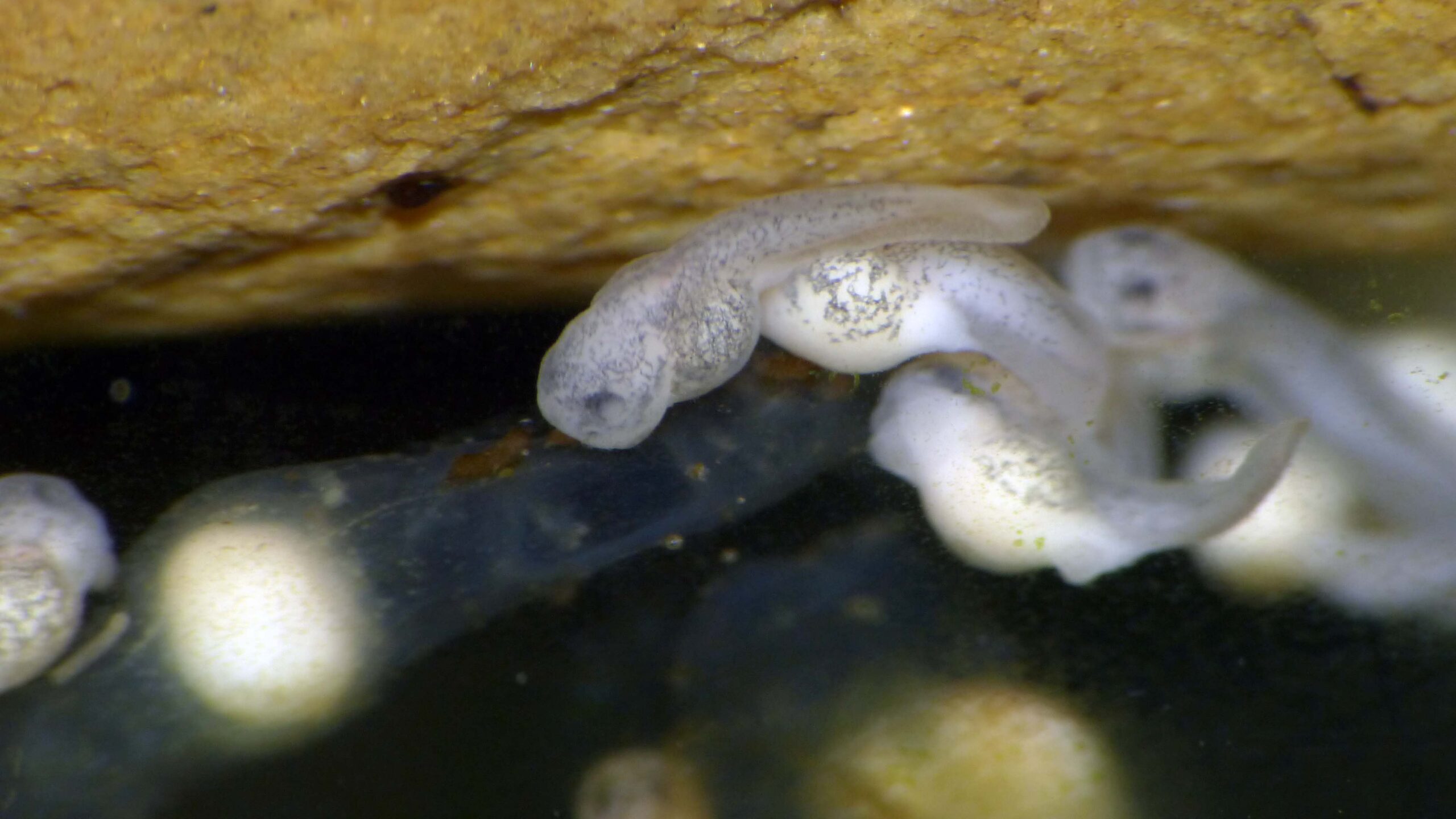
... from which gill-breathing tadpoles then hatch, ...

... which gradually develop into the finished frog, ....

... until they finally undergo a metamorphosis, breathe through lungs and go ashore.

However, numerous frogs and toads have significantly modified this ‘basic model’. In the case of the highly endangered Mallorcan Midwife Toad, which is bred in captivity, the males wrap the spawn strings around their legs and carry them around with them until the tadpoles hatch.

In the case of pouched frogs, one species of which is also cared for by Citizen Conservation, the females carry the eggs around in a pouch on their backs until the tadpoles or even the fully-formed young frogs are released into the wild.
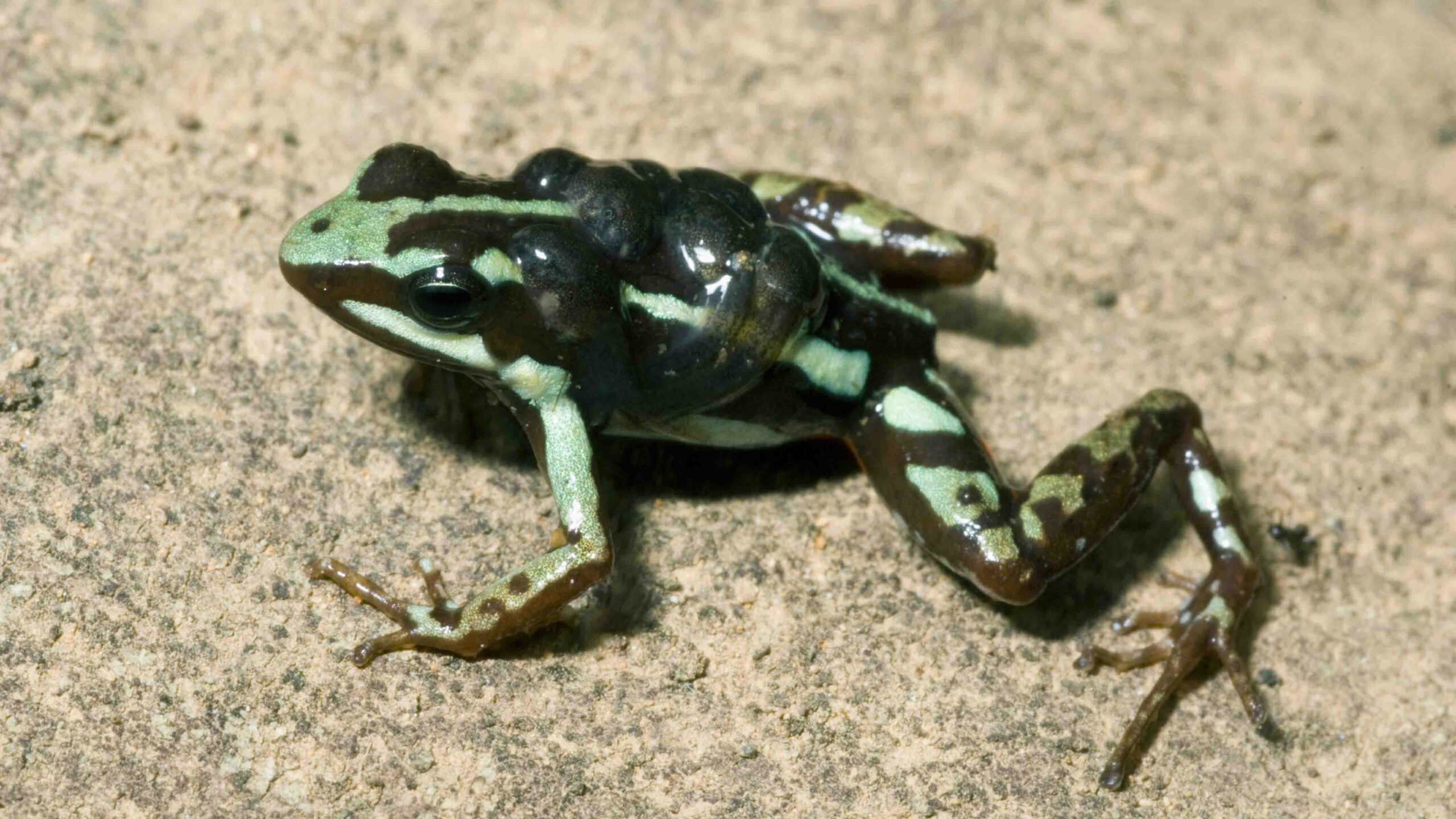
In many poison dart frogs, such as the Phantasmal Poison Frog bred at Citizen Conservation, the parents carry the tadpoles on their backs from the protected spawning cave to the small body of water.
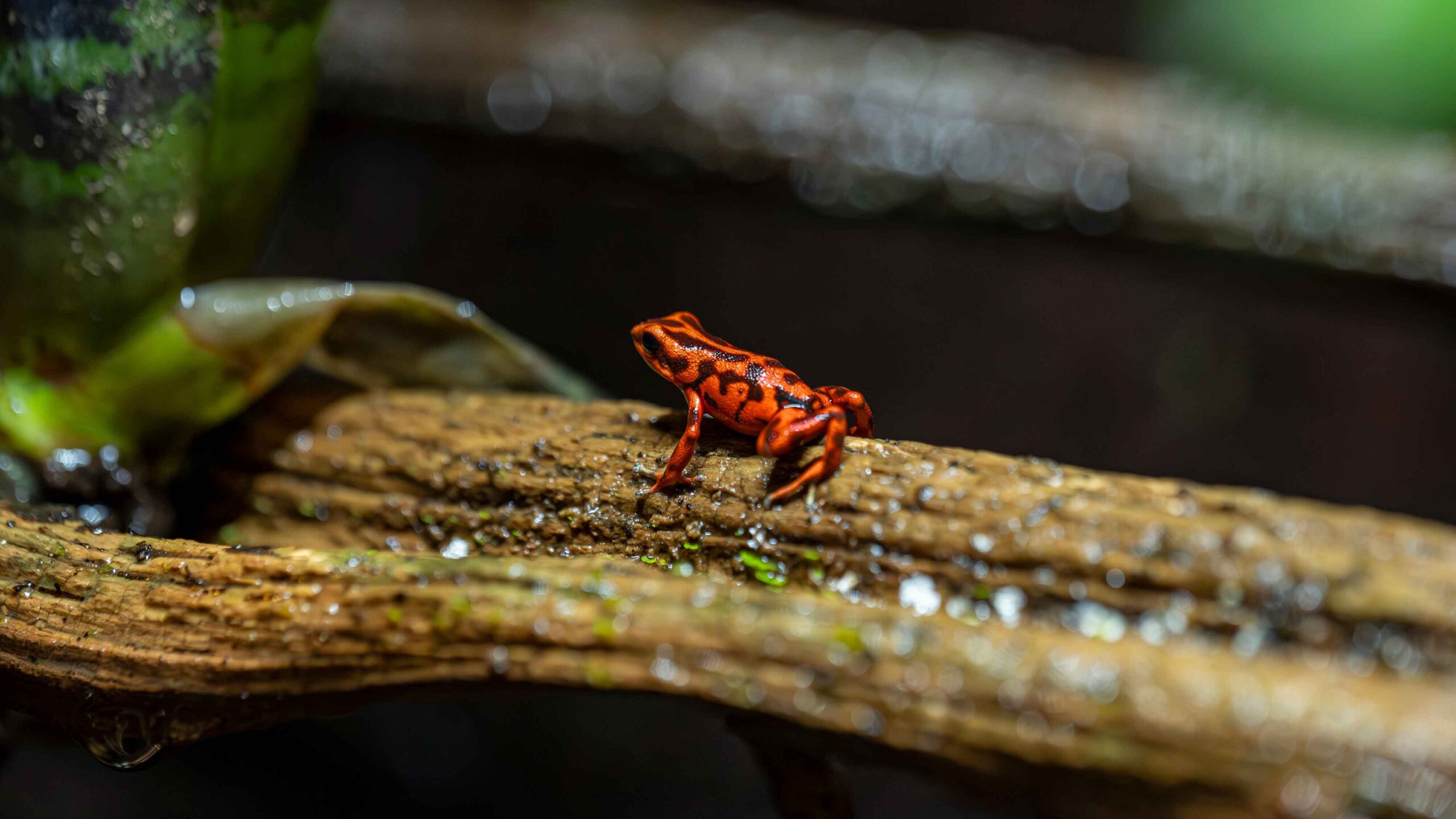
In Vicente's tree climber, which is cared for at CC, the females feed the tadpoles, as does the Lichenose Fringe-limbed Treefrog, with specially laid nutrient eggs..
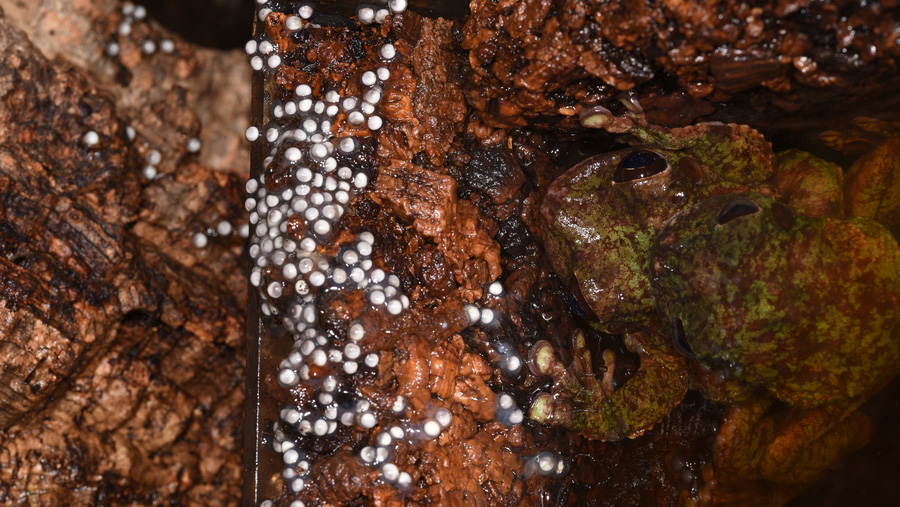
With its doubly exalted mixture of egg throwing and tadpole feeding, the San Martín French tree frog takes it one step further.
„Morituri te salutant!“
And that’s not all that’s unusual about them: because good tree hollows are rare, male frogs defend theirs fiercely against rivals and have even developed a kind of stabbing weapon for this purpose, a thorn-like structure on the ‘thumb’ of their front feet, which they use to engage in bitter gladiatorial combat. The frogs’ rather scrawny and fringed appearance, which gives them their name, serves as camouflage on trees because it blends in so well with the bark. And the large webbing between their toes can be used to steer or slow down their gliding flight through the air when jumping from branch to branch or even from tree to tree, like a kite.
Quite a lot of peculiarities for a single frog. It is perfectly adapted to life in the cloud forests on the slopes of its volcano. But only there. There, it finds itself at a disadvantage, webbed feet or not, as its already tiny habitat is being increasingly deforested. In addition, there is the threat of a fungal disease that has been introduced. As a result, the Lichenose Fringe-limbed Treefrog seems virtually extinct, even though it has hardly ever been seen. Almost everything we know about it comes from observations in terrariums, because some of the frogs have come into human care. Fortunately, they have produced offspring and demonstrated their unusual reproductive strategy. Today, these offspring may be the last chance to preserve this extraordinary species for the future – even if the tree frogs in their native habitat are struggling to survive.
For breeders
Basic information on biology and breeding
Due to its space requirements and the cool temperatures it needs, this frog is quite demanding. Terrarium for a pair measuring at least 80 x 60 x 80 cm (length x width x height). An ‘artificial tree hollow’ is required. Temperatures of 20–24 °C during the day and at least 16–20 °C at night. Keep moist, spray regularly. Feeds easily on standard insect food. Tadpoles are raised in their parents' terrarium; young frogs should be raised separately.