


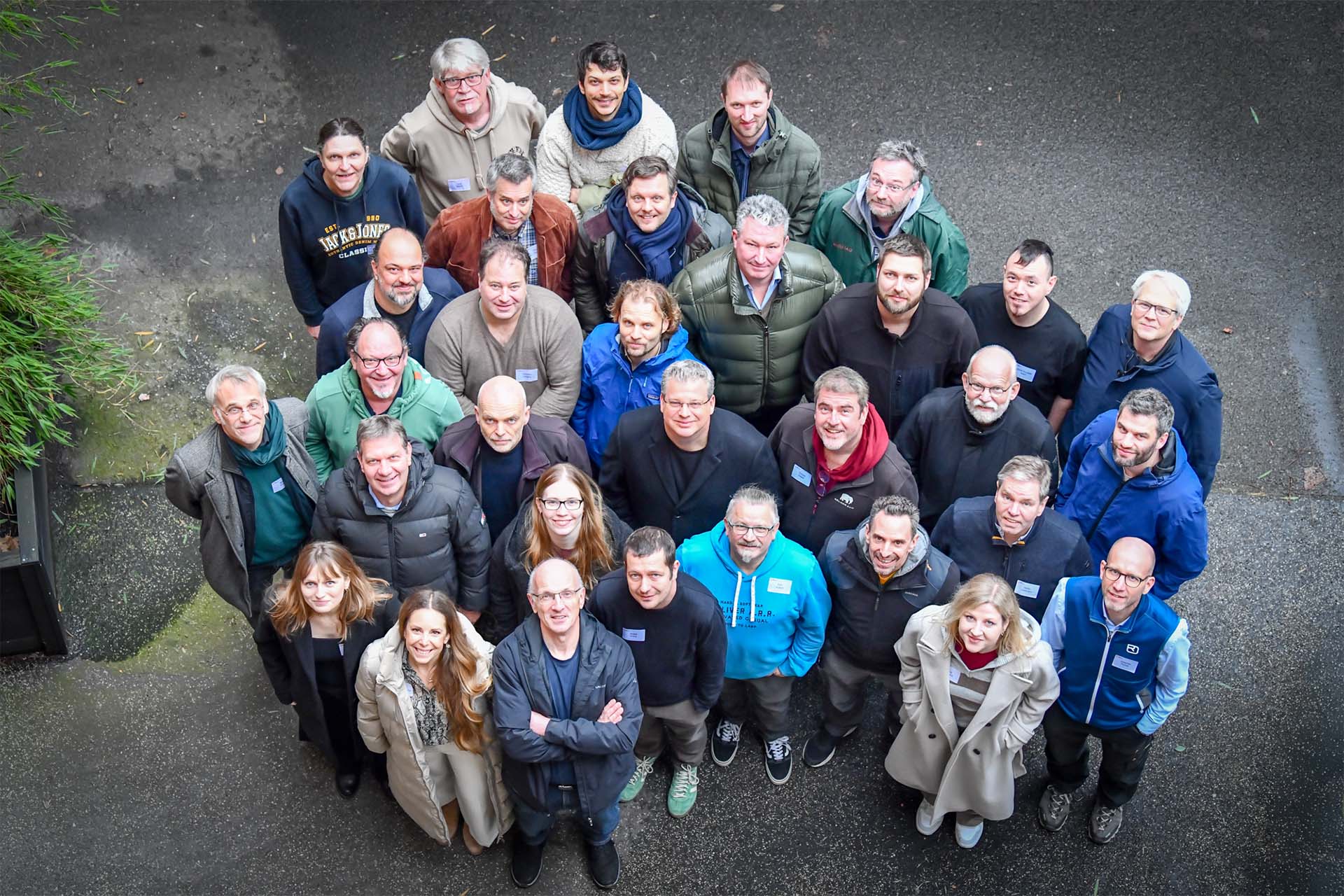
In Kreuzberg, the world is still okay: once a year, the Advisory Board members and Supervisory Board members of Citizen Conservation meet here to discuss the future of our conservation breeding programmes – and how they can contribute to countering global biodiversity loss in the spirit of the ‘One Plan Approach’. From 16 to 18 January 2026, around 35 experts from private animal husbandry, zoos, veterinary medicine and science gathered at the CC office – and, of course, the surrounding restaurants and bars – for intensive discussions and consultations on how we can advance our major goal of expanding capacity to save endangered species in human care.
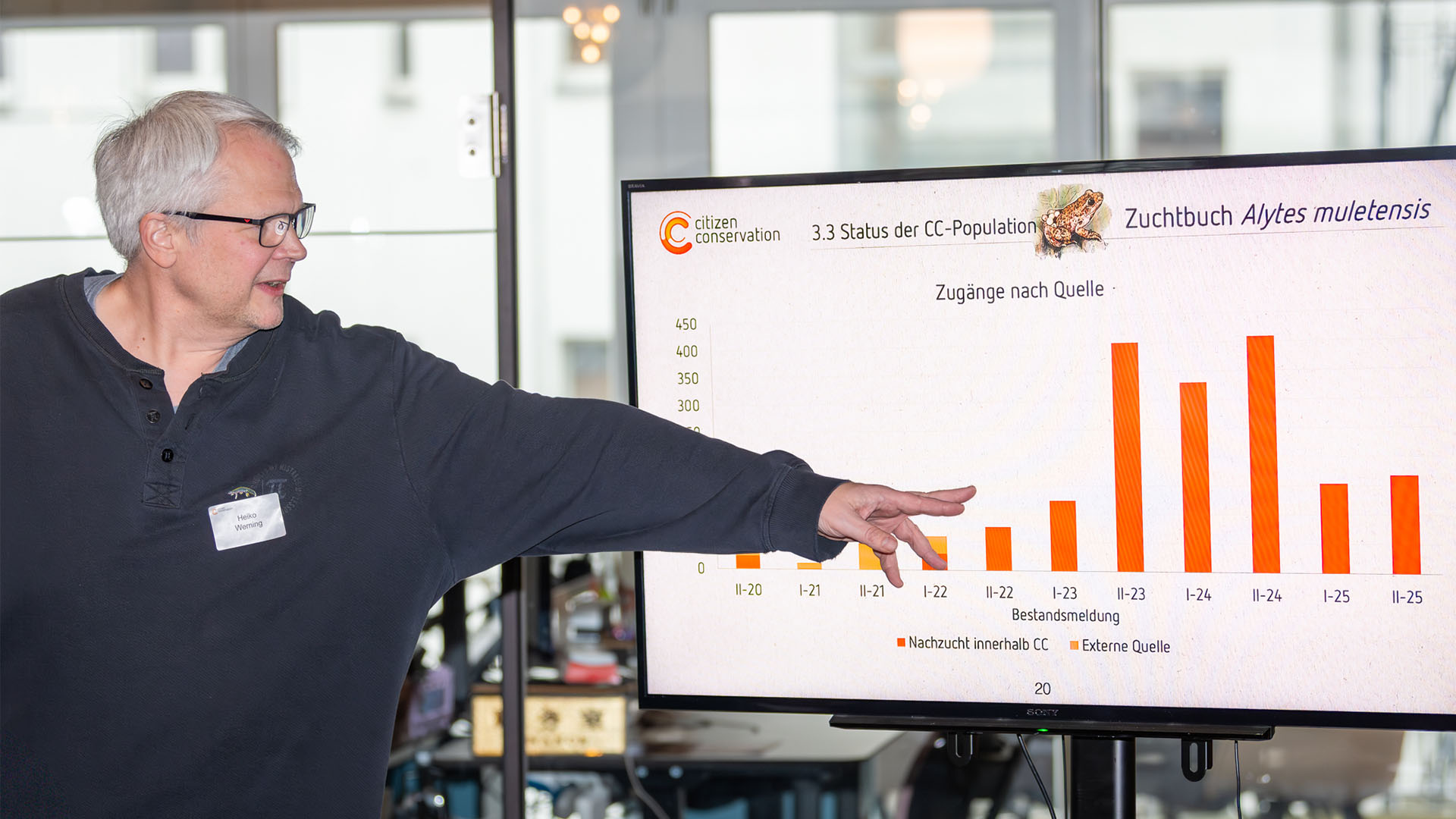
CC species manager Heiko Werning uses the example of the successful CC breeding programme for Alytes muletensis to illustrate what future studbooks could look like.
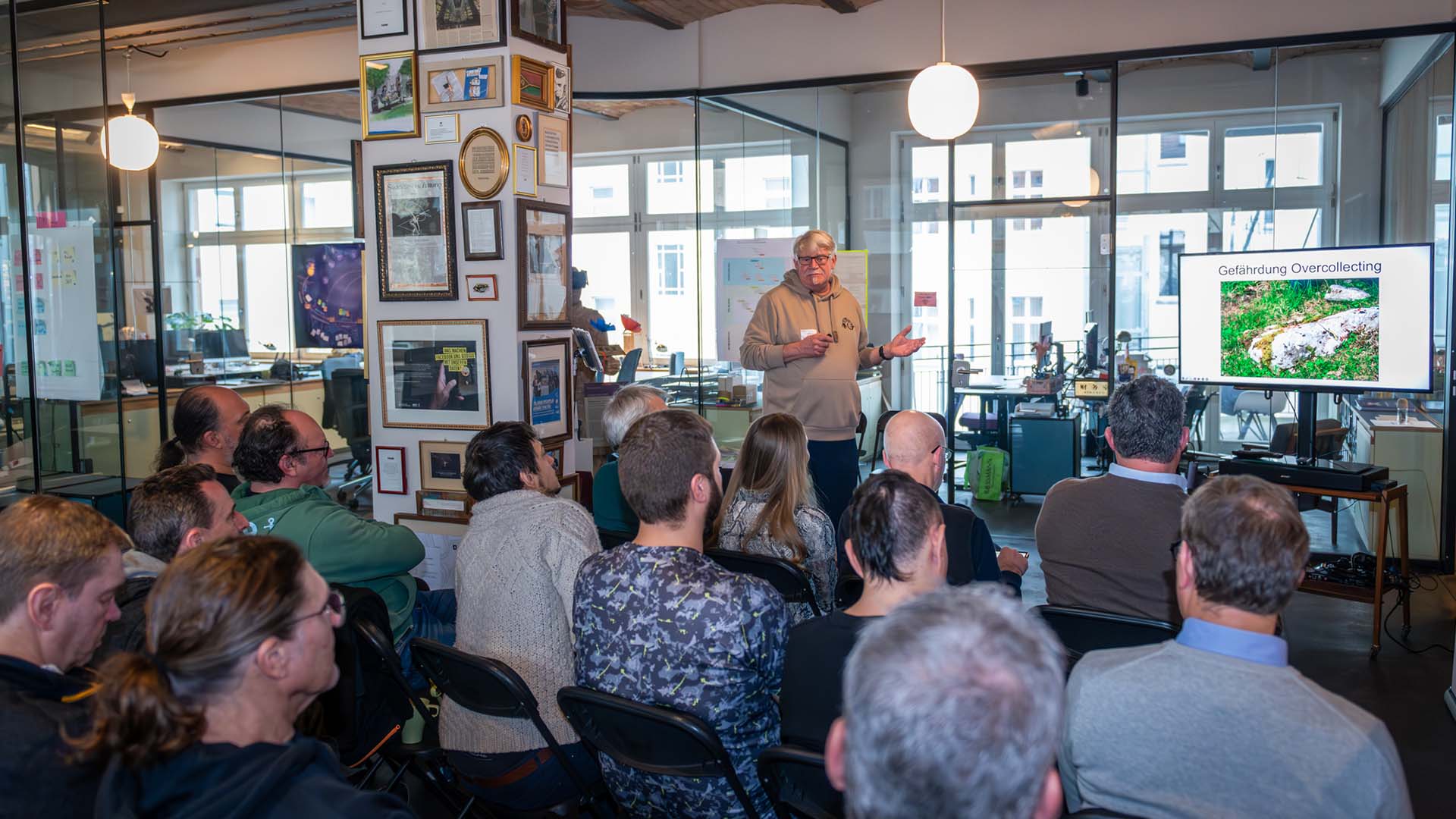
CC Amphibian Advisory Board member Uwe Seidel presents the Alpine Salamander Competence Centre, whose amphibious inhabitants he helps to care for on behalf of CC.
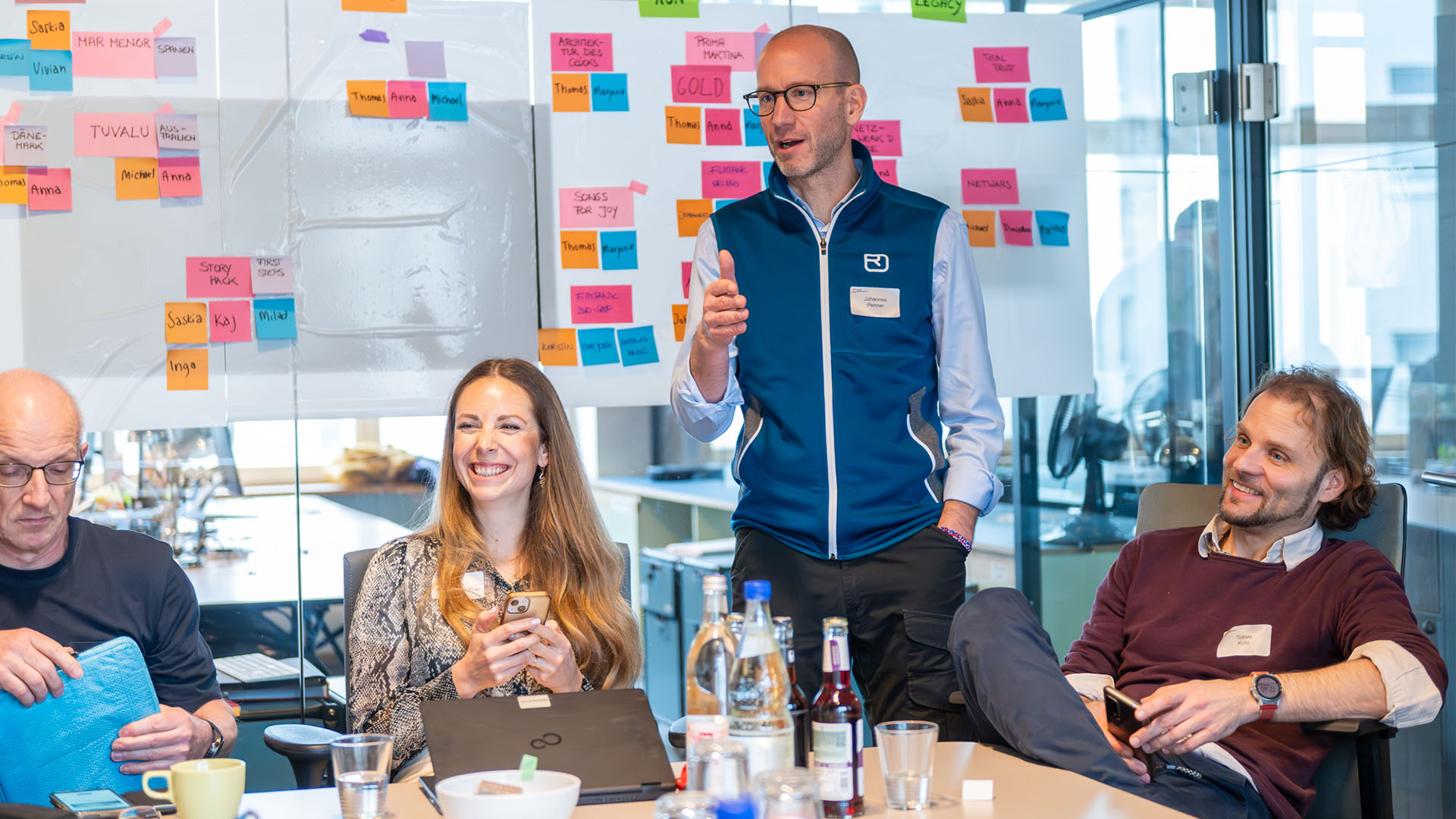
What funny story was being told here? Mona von Schingen-Khan from the BfN, CC curator Johannes Penner and Tobias Kohl from the Stiftung Artenschutz in conversation.
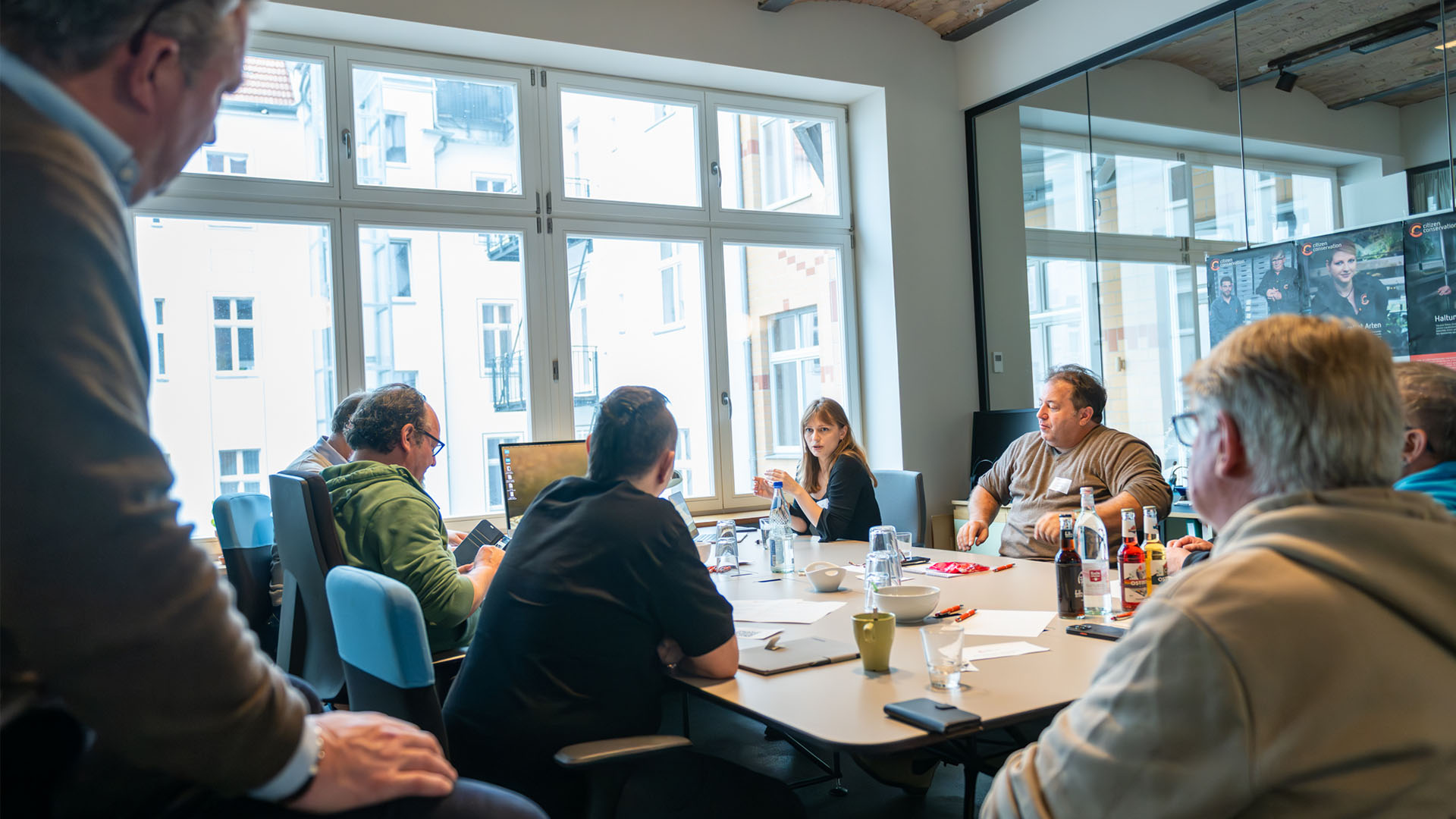
Our new CC colleague Julia Bindl moderates the feedback session, during which the Advisory Board members can express their criticism and praise to CC.
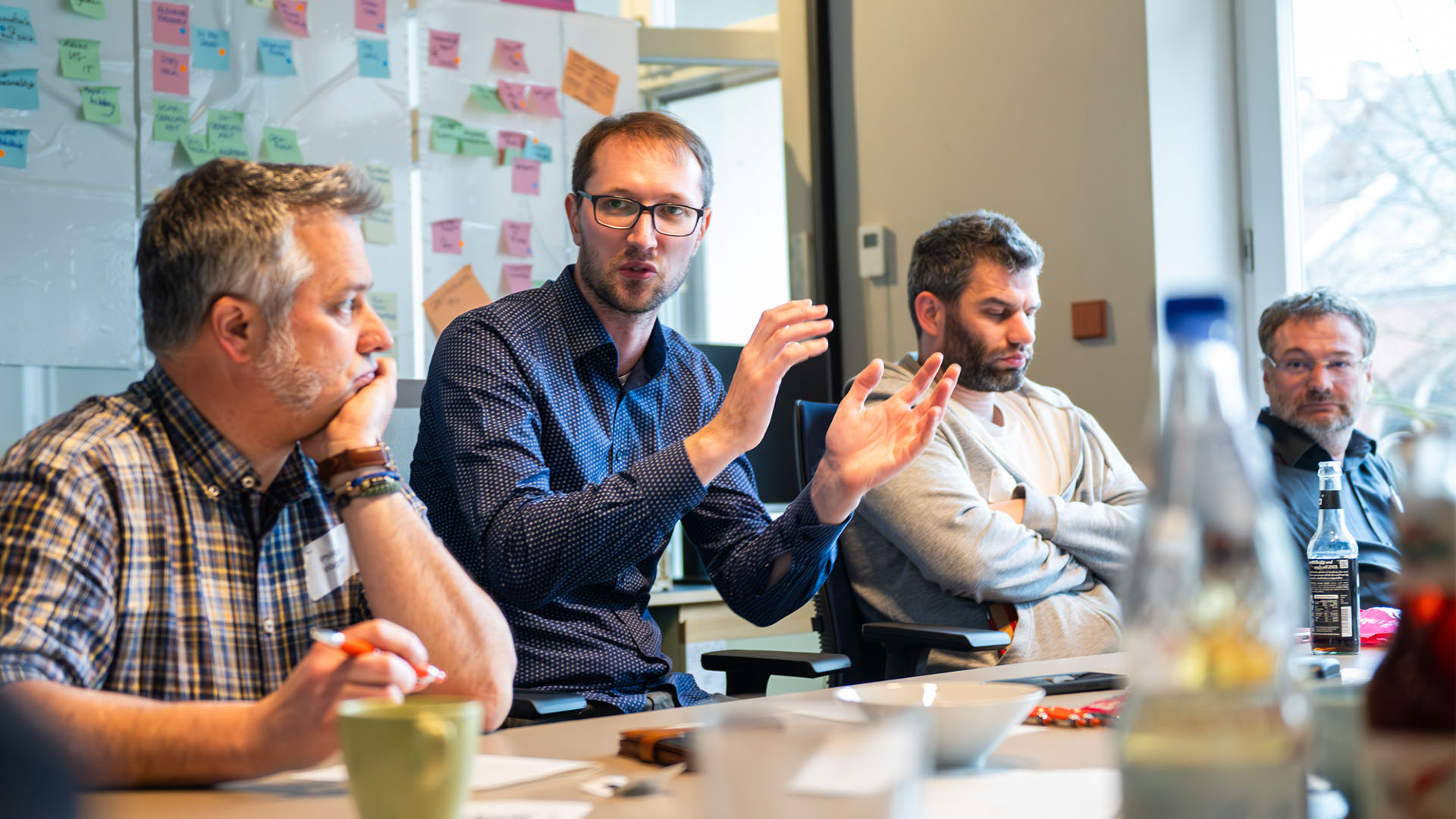
Ask Ariel about fish: Ariel Jacken, CC Fish Advisory Board member and curator at Leipzig Zoo, in conversation with the other experts.
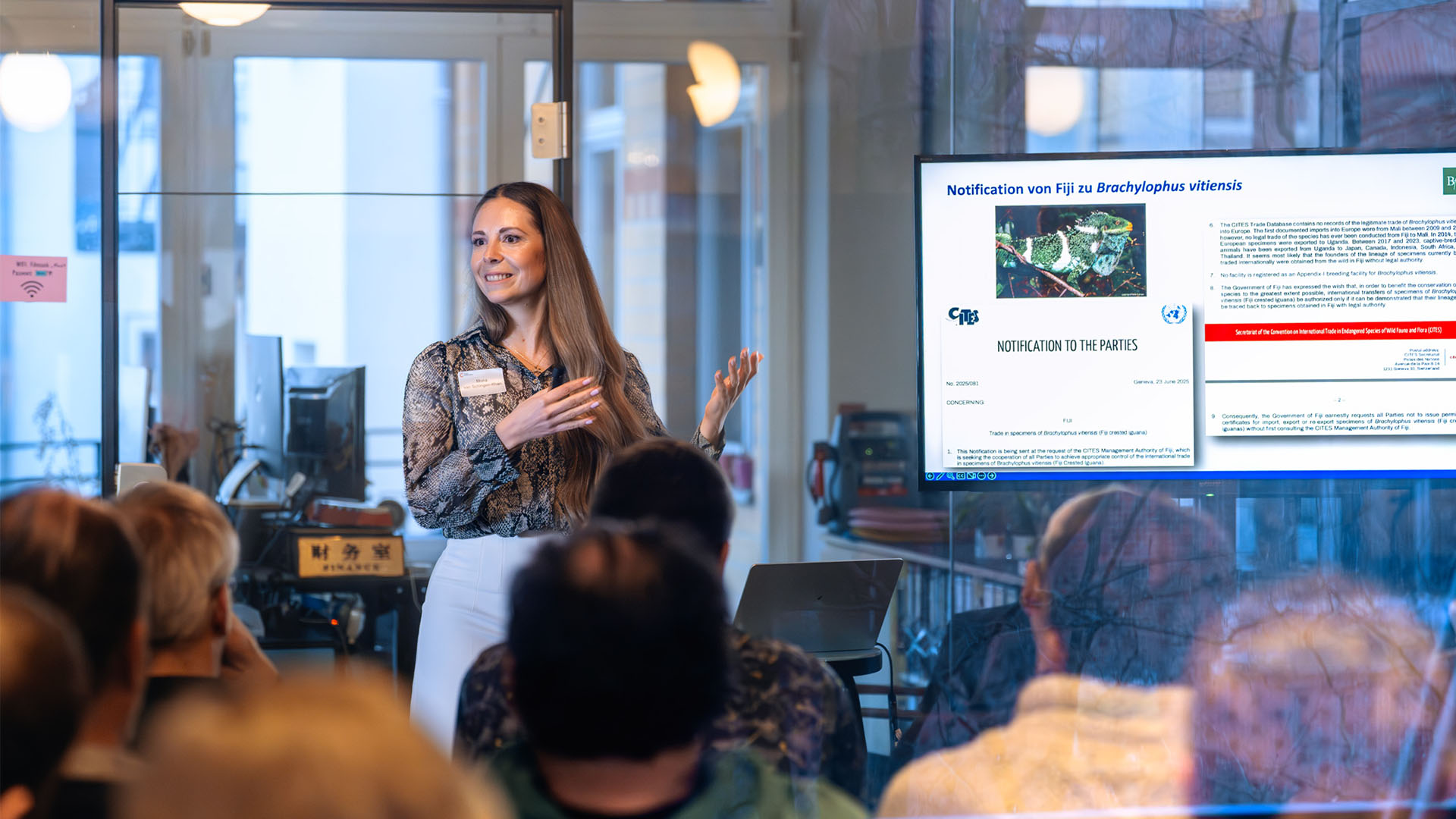
In her presentation, Mona von Schingen-Khan discusses current CITES and EU developments in the context of ex situ breeding.
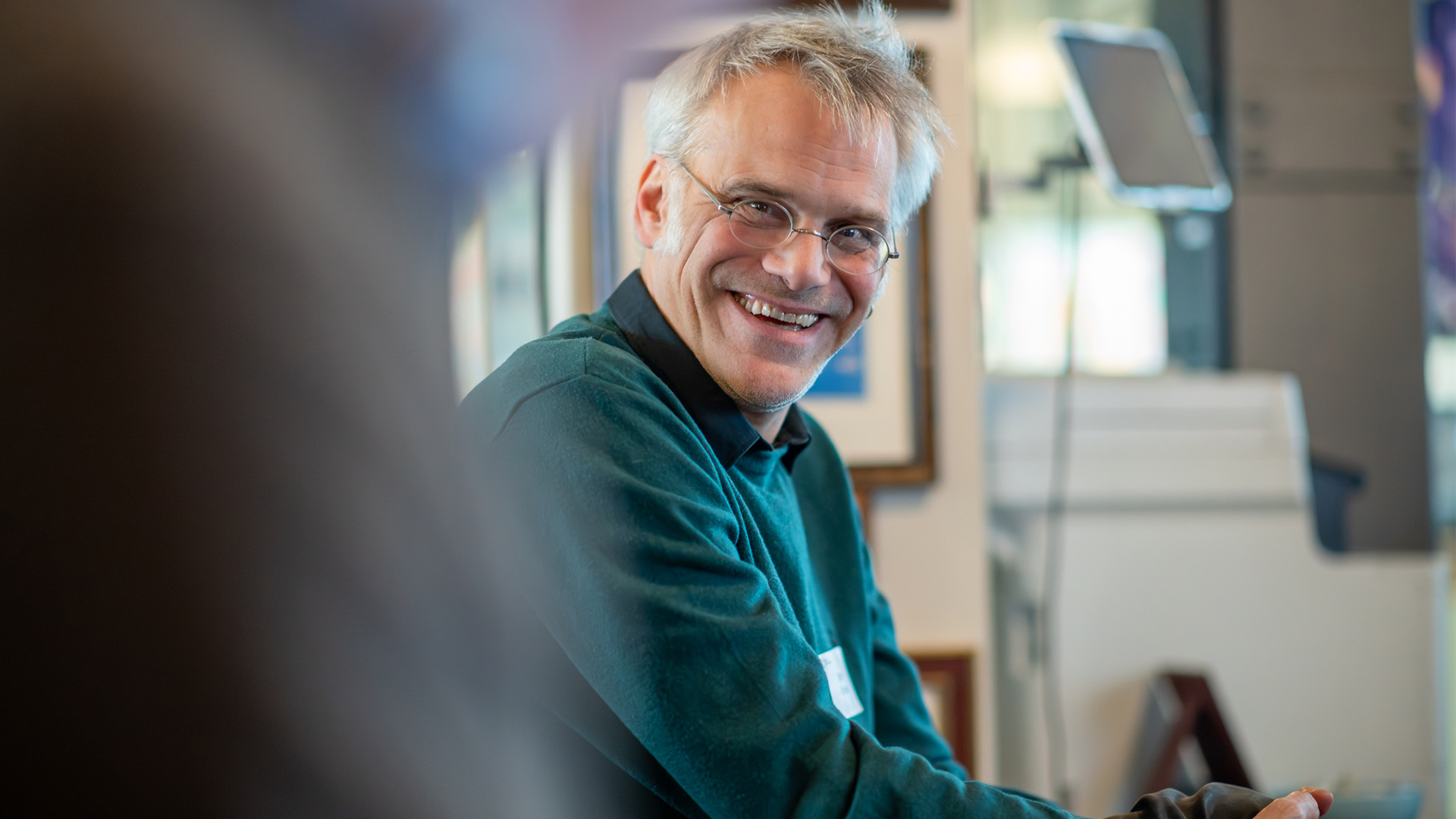
In addition to all the professional talk, fun should not be neglected, agrees CC Managing Director Björn Encke.
International matters
One focus of the general discussion was on establishing CC studbooks. After all, it is not enough to simply set up a conservation breeding programme – it must also be maintained over long periods of time. To do this, the population must be managed. What sounds simple in theory proves to be a complex process in practice, touching on a wide variety of aspects. Uwe Seidel highlighted the importance and, in some cases, the indispensability of such coordinated conservation breeding programmes when he presented the current status of the Alpine Salamander Competence Centre initiated by CC, where three species of the ‘Amphibian of the Year 2026’ that are directly threatened with extinction are being researched and bred. Incidentally, this is being done after prior consultation with Italy, the species’ country of origin.
The importance of such international contacts and agreements was impressively underlined by a guest lecture given by Mona von Schingen-Khan from the Federal Agency for Nature Conservation. The newly elected European representative on the CITES Animals Committee reported on the latest developments in international species conservation following the follow-up conference to the Washington Convention on International Trade in Endangered Species in Uzbekistan. Contrary to what the current global mood sometimes suggests, understanding and cooperation are ultimately crucial for the long-term success of projects. Accordingly, an important topic of discussion in the Advisory Board groups on amphibians, fish and reptiles was how CC conservation breeding programmes can be linked to the countries of origin of the species cared for. This is no easy task in an increasingly tense political world situation.
A kick-start to the new year
Finally, in addition to these major strategic issues, there was of course also the very practical question of which species we will offer sanctuary to in the near future and how the existing programmes can be improved. Numerous suggestions and ideas were put forward for both aspects, which were negotiated by our experts with expertise and passion. We can already promise that there will be further exciting additions to our species portfolio in 2026.