

Orange-eyed Leaf Frog
Agalychnis annae
Orange-eyed Leaf Frog
Agalychnis annae
CC goal
32 breeders
Status 05/2026
CC goal
225 animals
Status 05/2026

CC goal
32 breeders
Status 05/2026
CC goal
225 animals
Status 05/2026
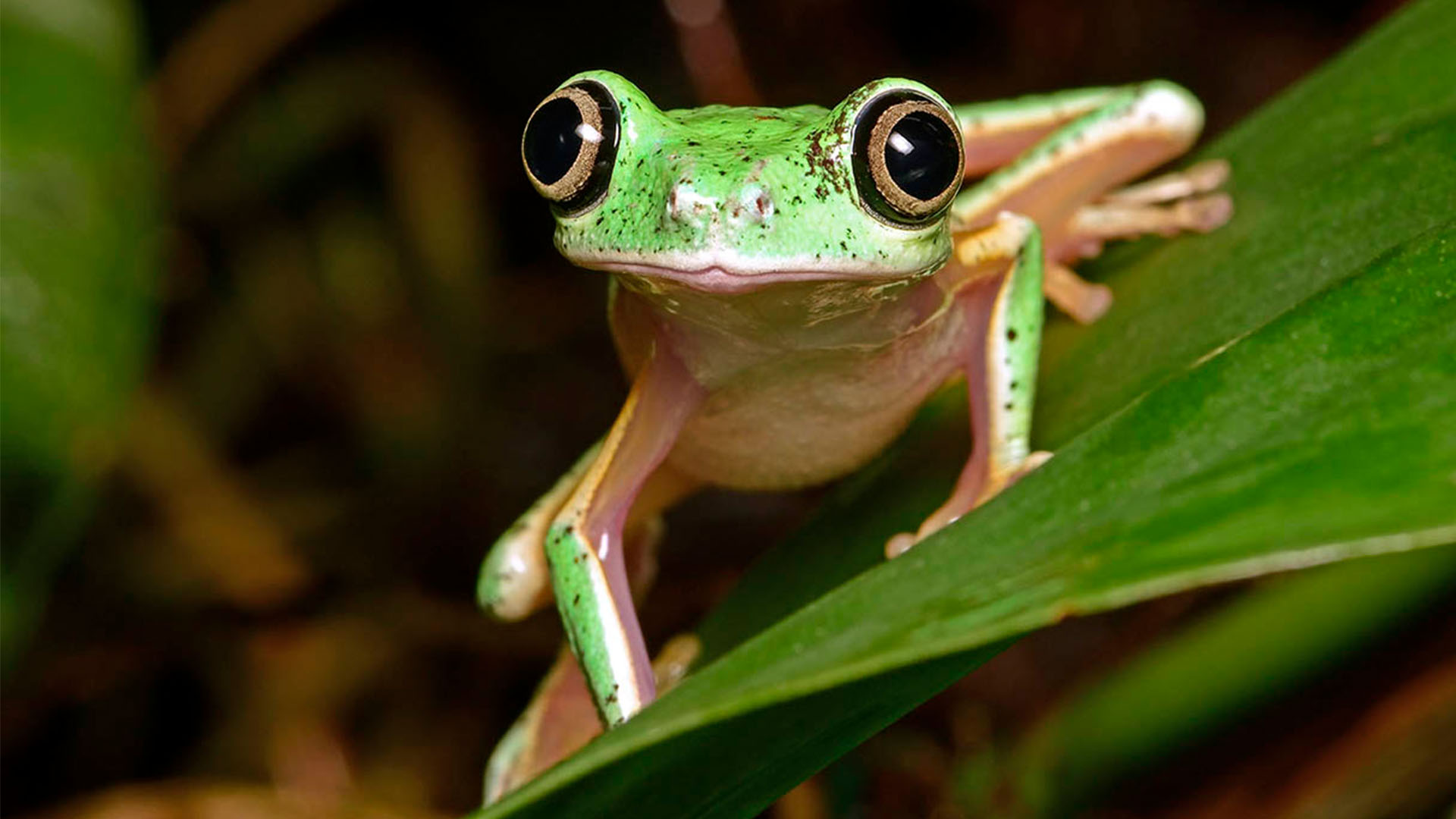
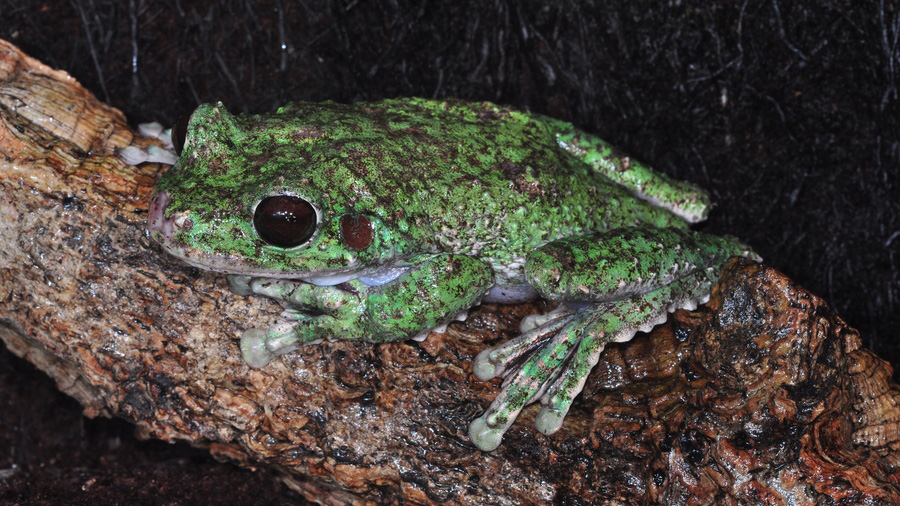
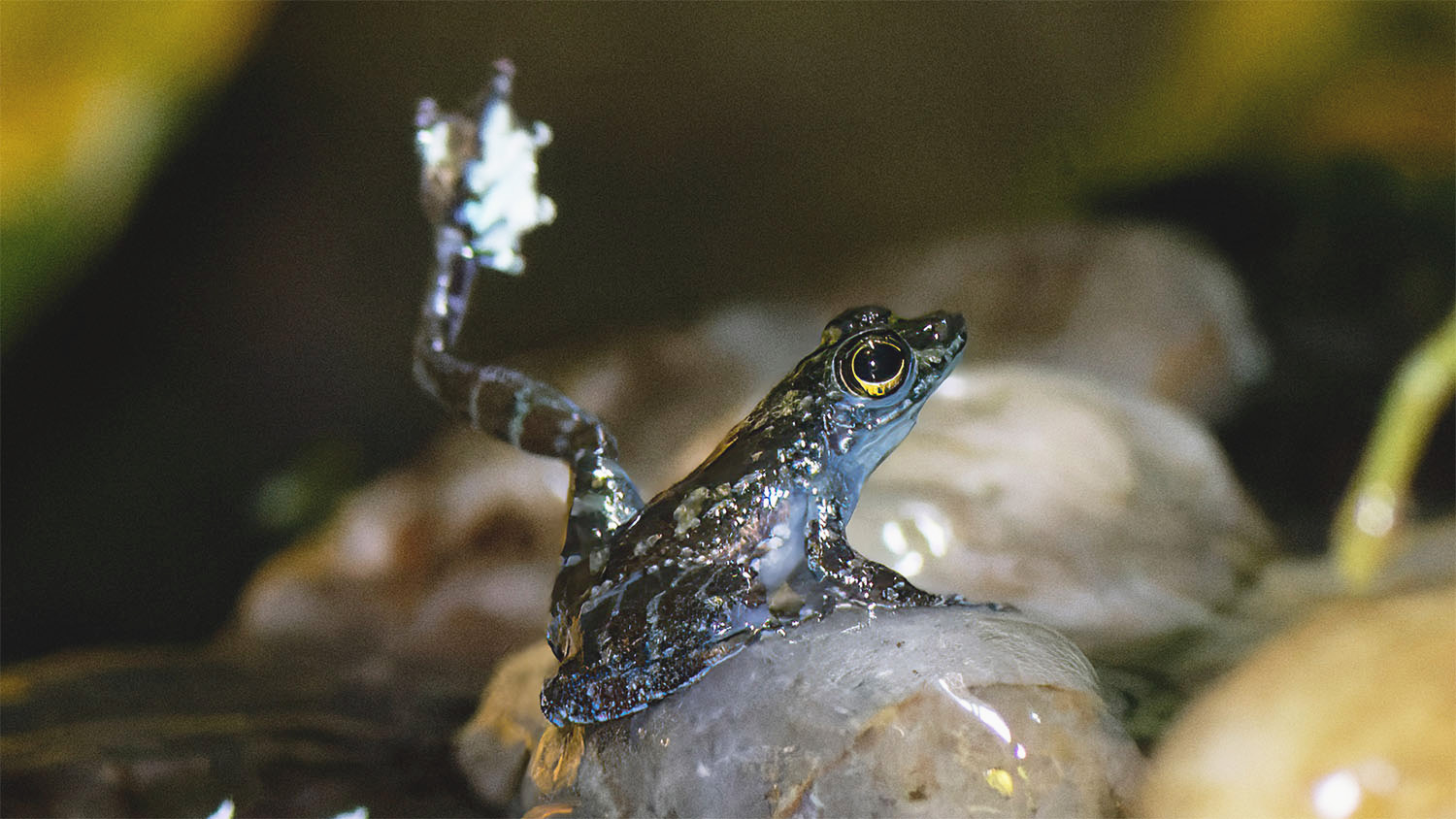
It is safe to assume that the famous frog researcher William E. Duellman held his wife in high regard. In any case, of the several hundred species he helped to discover, he chose to name the Orange-eyed Leaf Frog after her: Agalychnis annae, which translates as ‘Anna’s Agalychnis’. And indeed, this frog from the high-altitude rainforests of Costa Rica fascinates observers with its beauty. However, it only displays this at night, for during the day it curls up on the underside of large leaves, hides its orange eyes and looks like nothing more than a big lump.
Urban frogs
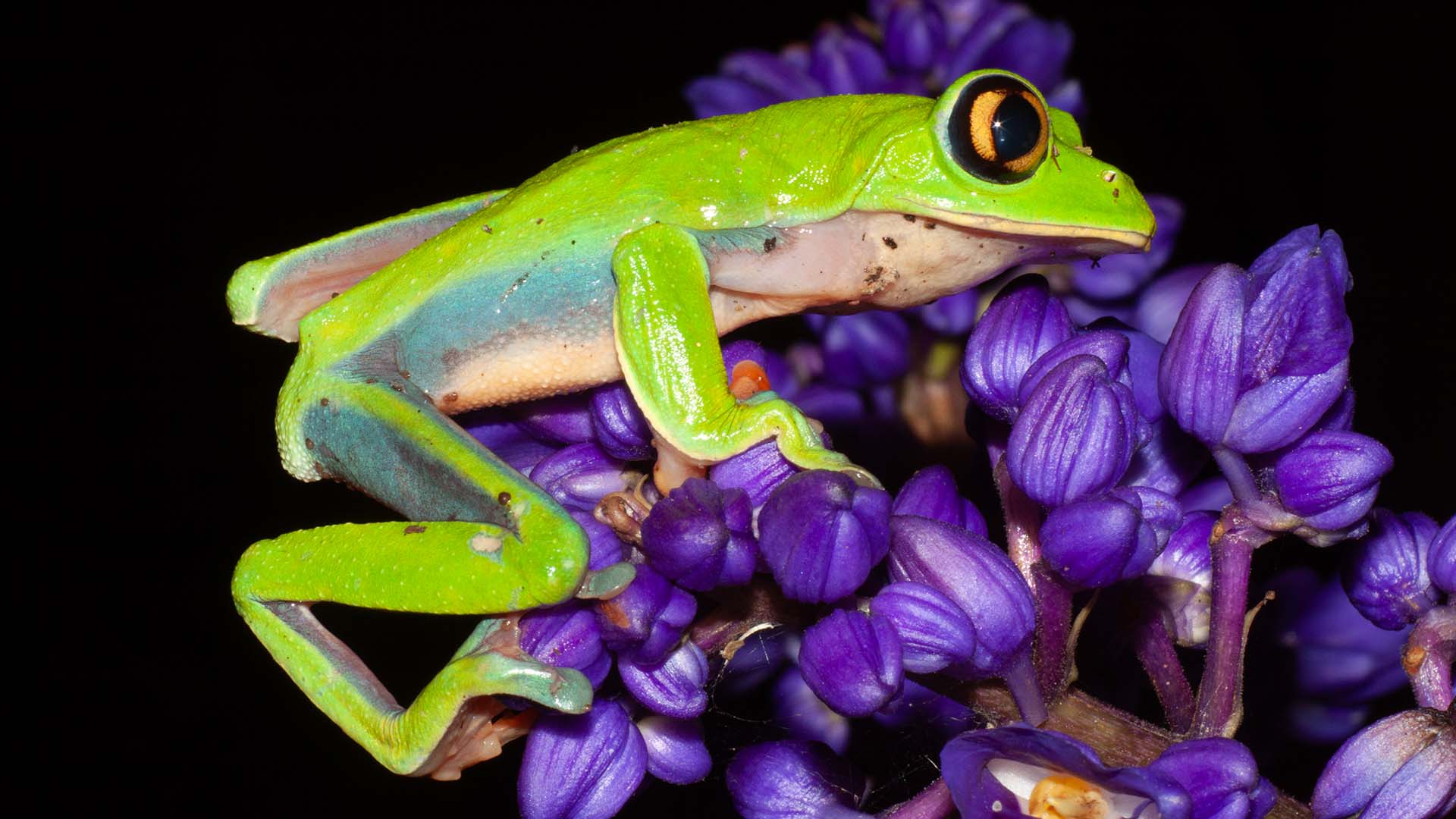
A beauty as if from another world – though she almost disappeared from this one.
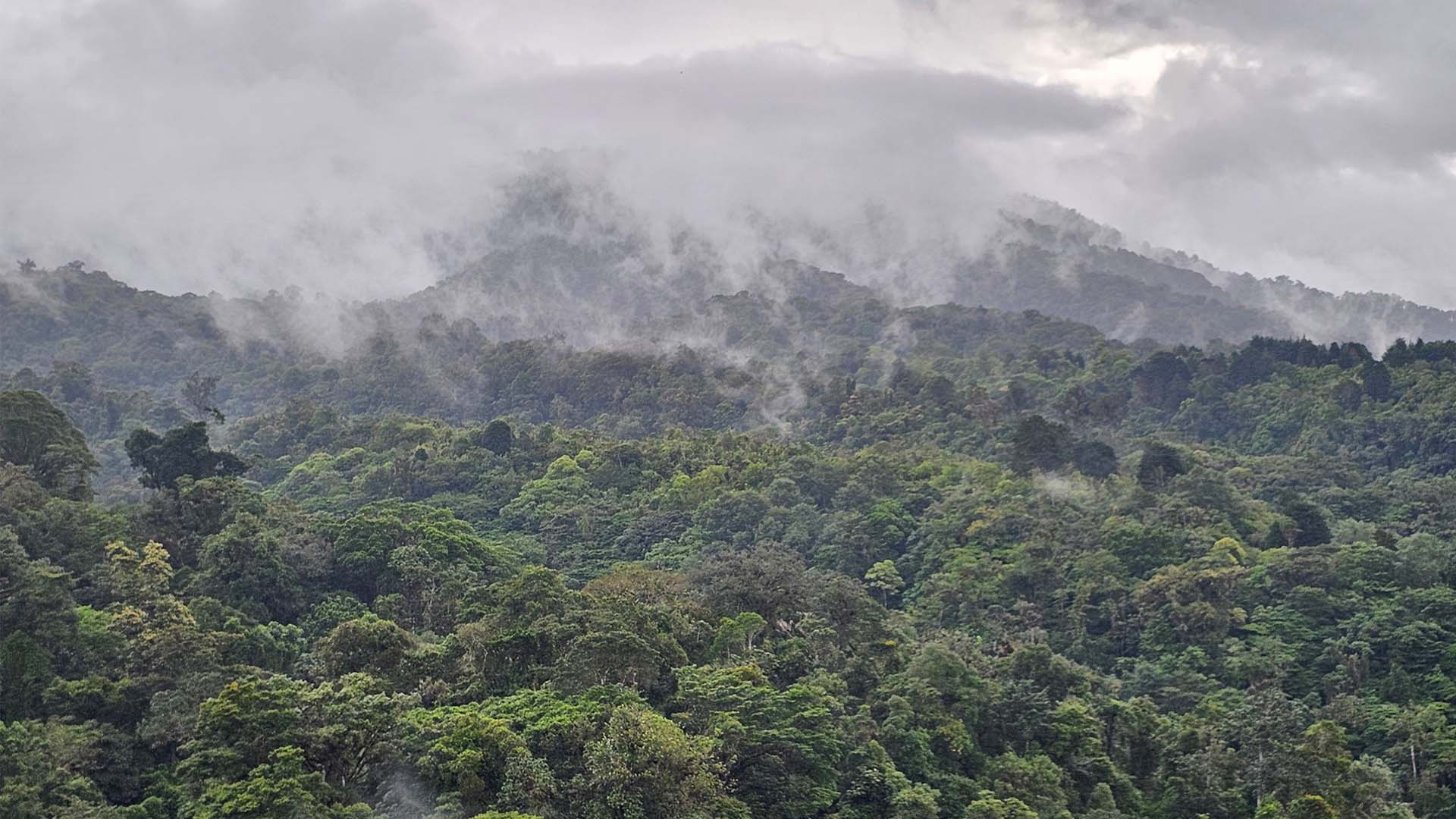
A forest without frogs: The Orange-eyed Leaf Frog once made its home in the seemingly idyllic, well-protected forests of Monteverde in Costa Rica, until it suddenly disappeared.

Today, the Orange-eyed Leaf Frog is found only in heavily human-impacted urban areas, such as this region in the San José metropolitan area.
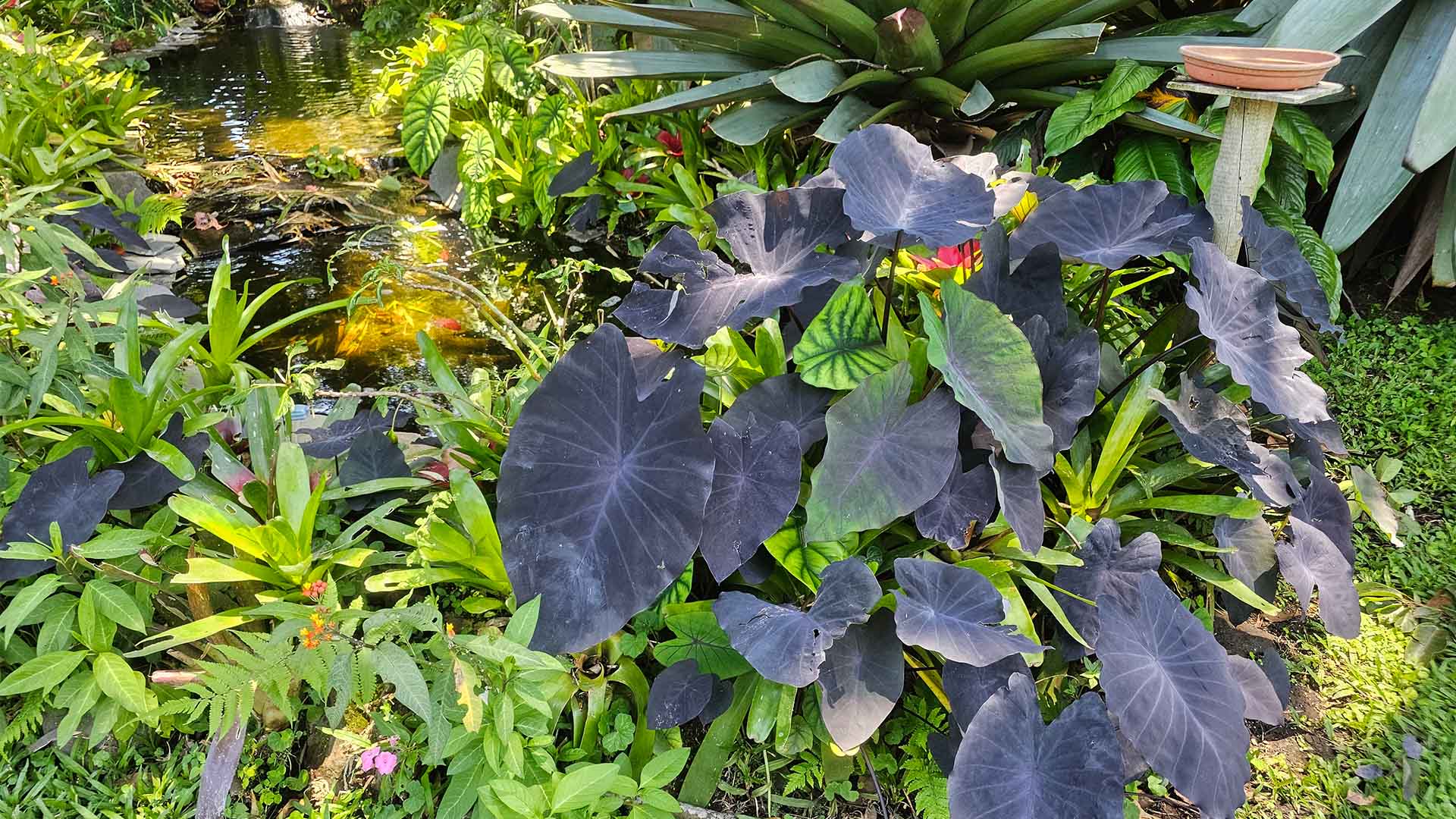
Found in a hotel garden near San José
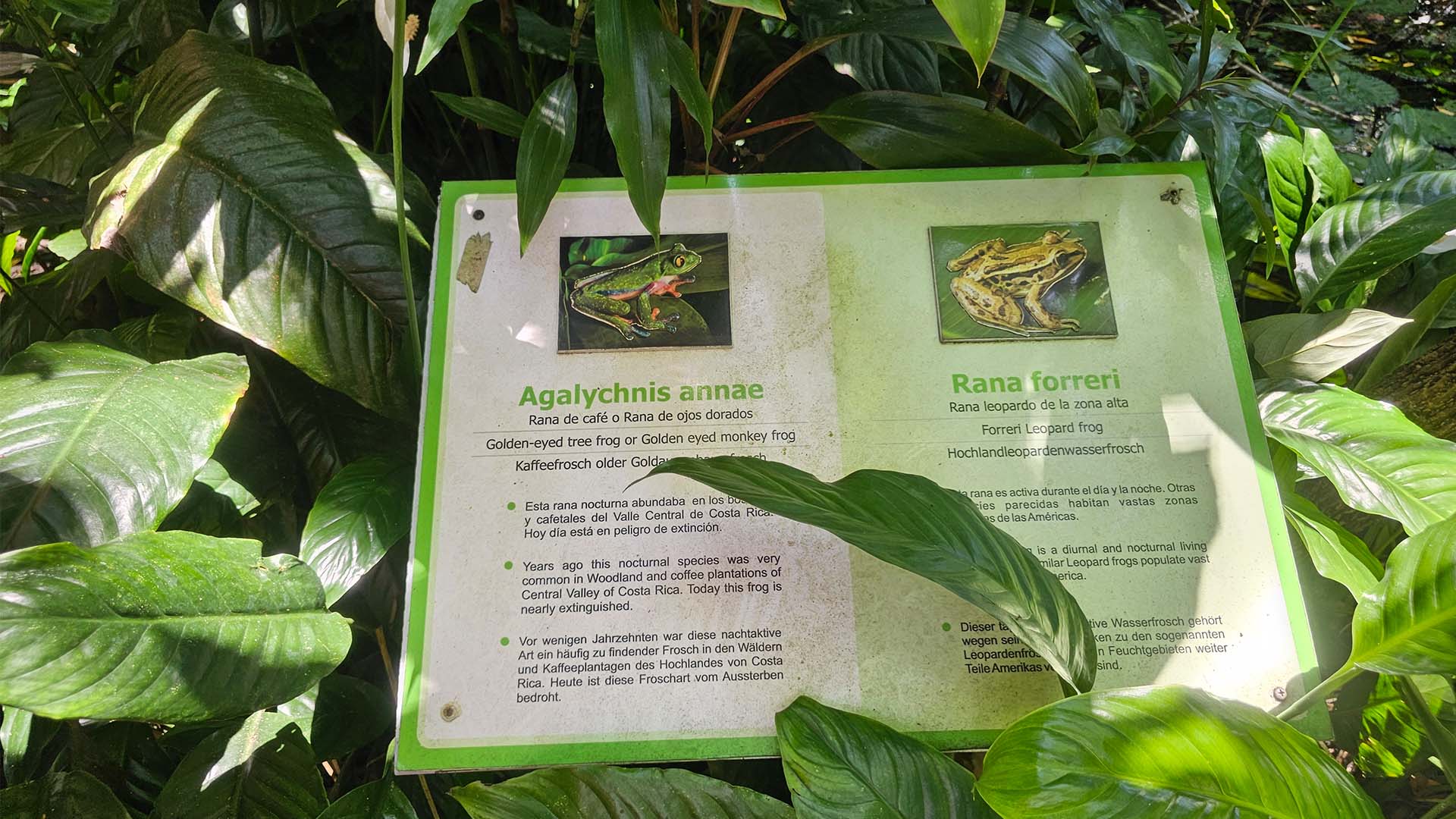
The hotel is aware of the unique nature of the surviving frog population and is happy to point it out to guests.
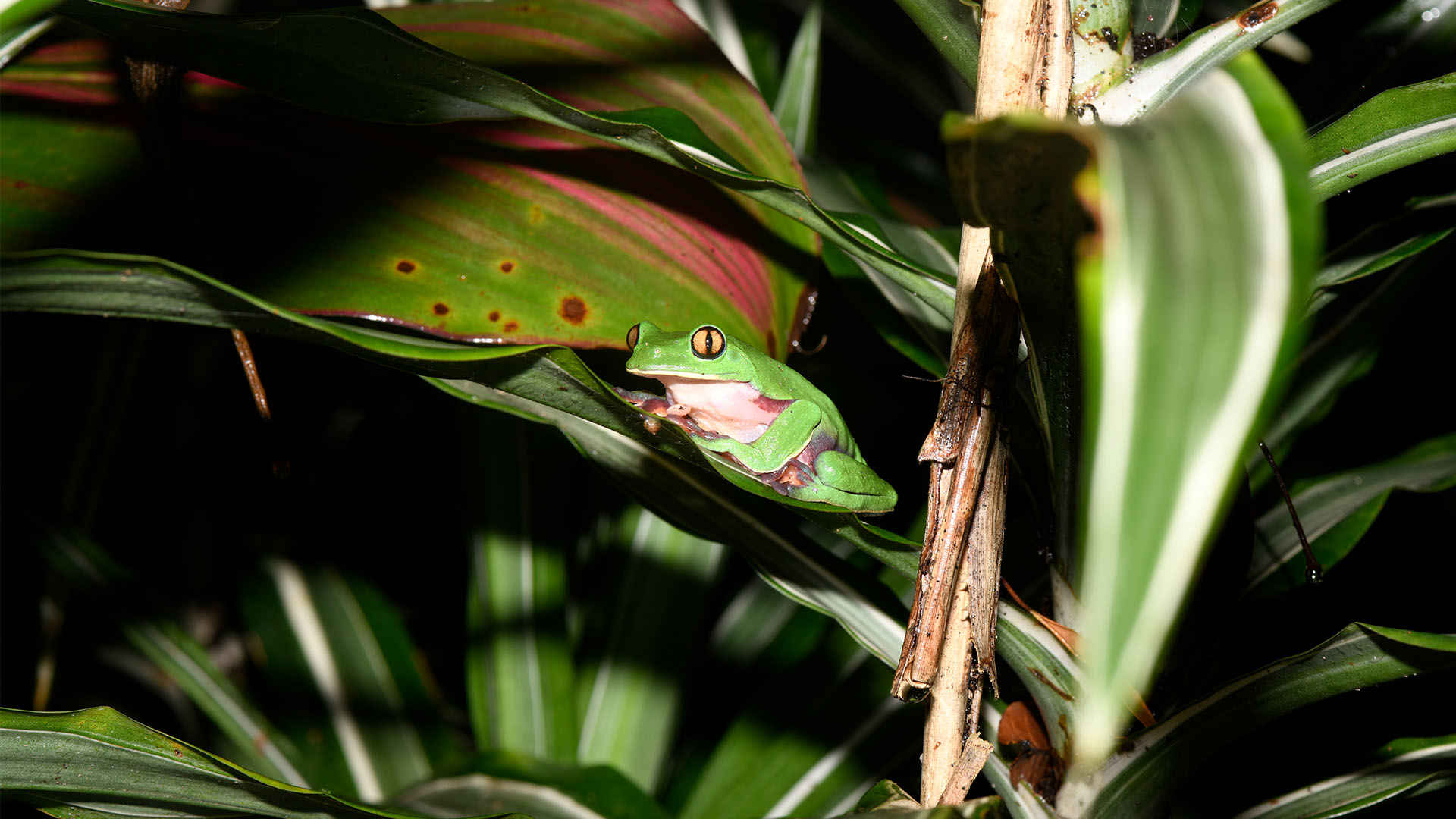
A frog in a flowerbed – Agalychnis annae in a hotel garden near San José
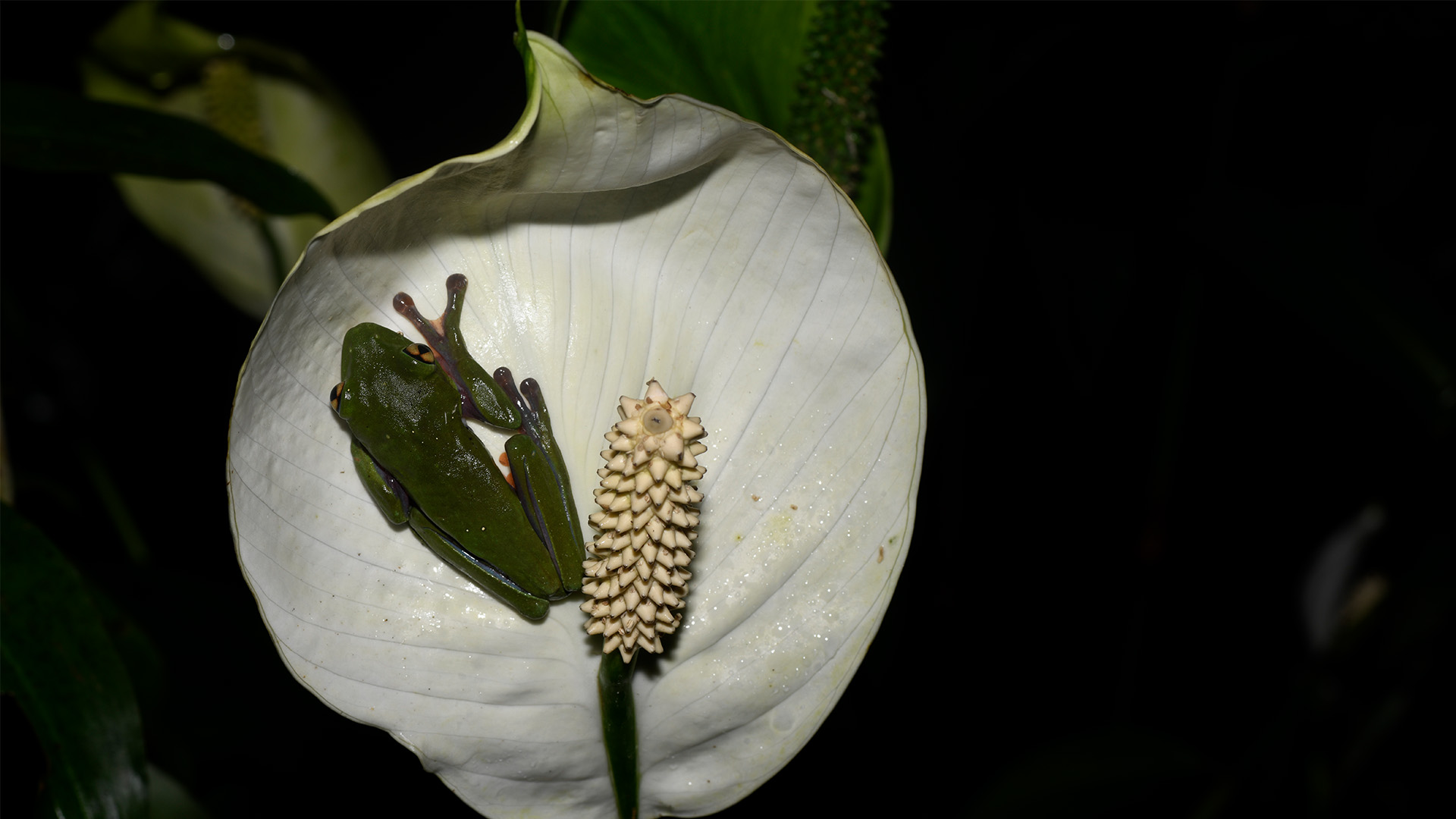
Of flowers and frogs…
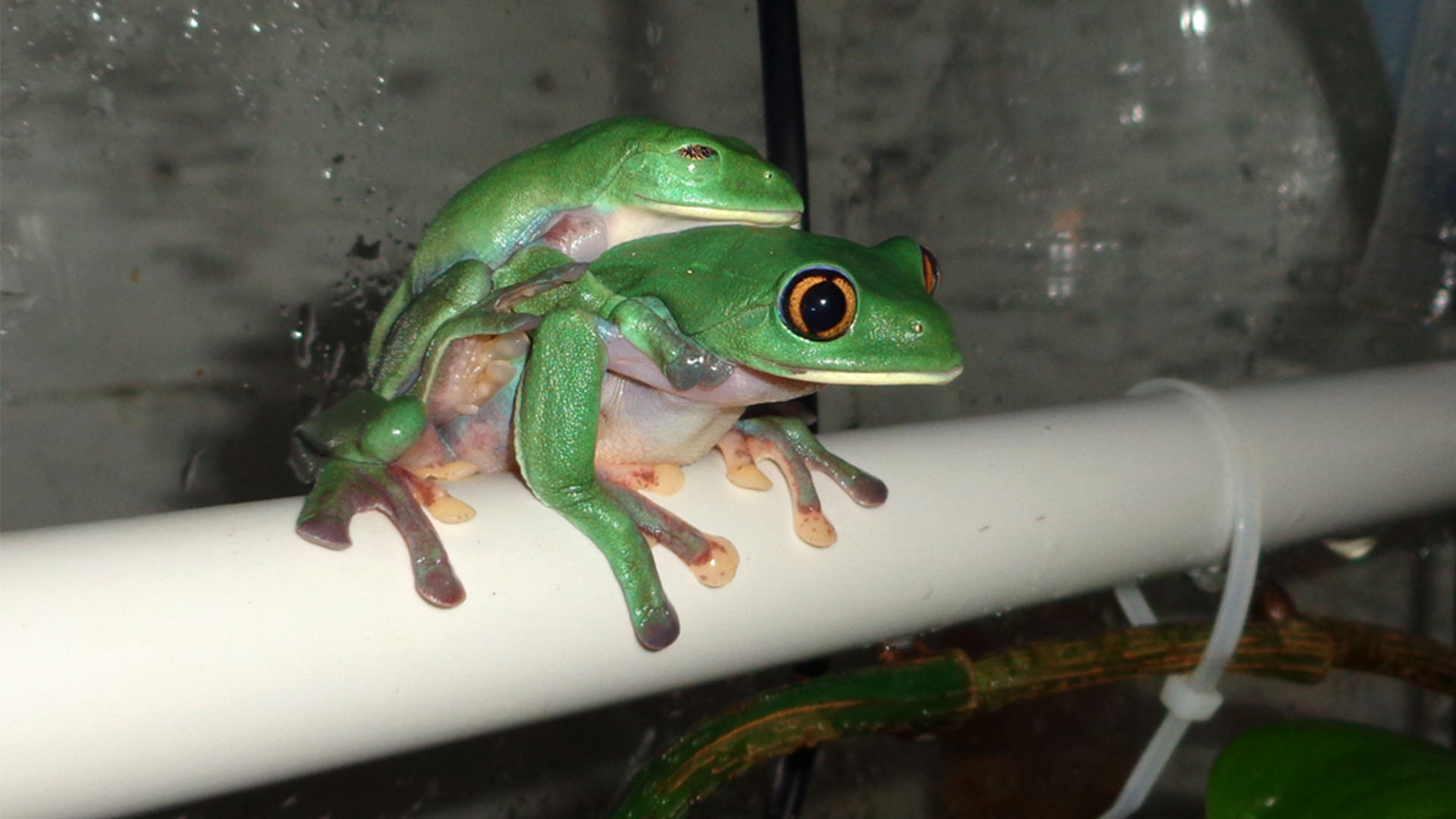
In order to make the species less dependent on the precarious situation in its remaining habitats – some of which are under severe pressure from pollution and habitat destruction – a conservation breeding programme has been established for it at CC.
Astonishing beauty
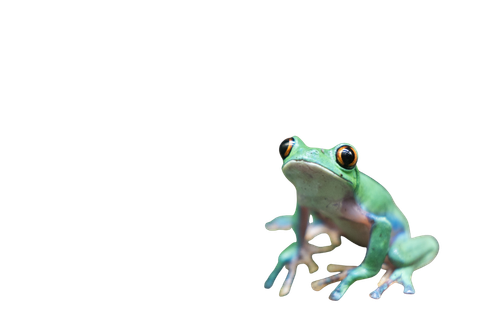
But as soon as it gets dark, this burly frog, which can grow to over eight centimetres in length, reveals its full splendour. With bright orange eyes, beautifully iridescent blue flanks and parts of its toes, a deep green back, and pink to orange tints on parts of its arms, toes and throat – in an age of AI-generated images, it’s hard to believe this frog is real. This beauty, also known as the Blue-flanked Leaf Frog, looks more like a mythical creature.
Into conservation breeding via a human chain

‘So tell us how it all began...’ – Curator Holger Kraus in front of the research station at Zurich Zoo.
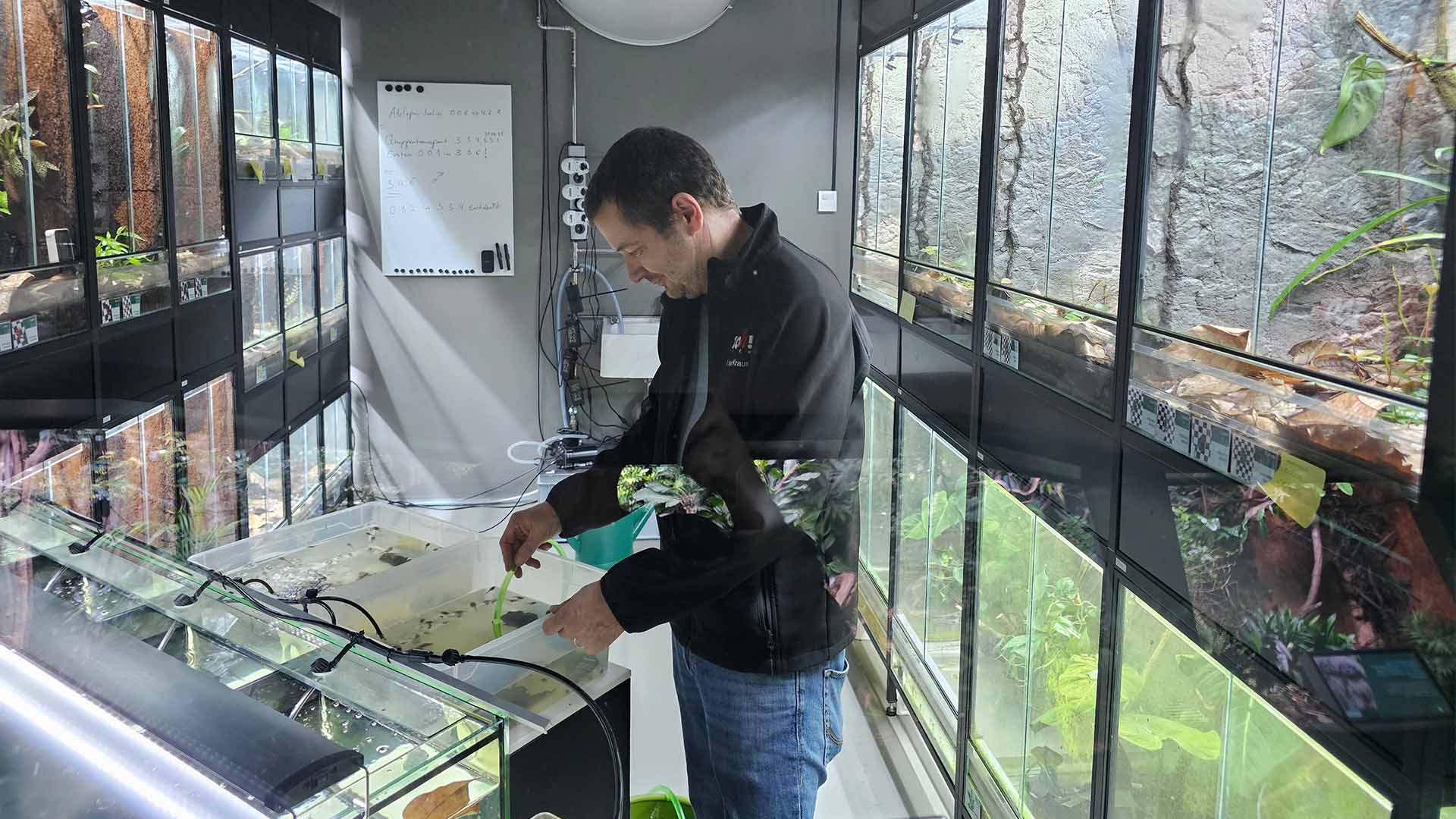
Here, clutches of eggs and tadpoles of the Orange-eyed Leaf Frog, which had been seized by Swiss customs, were kept, identified and raised.
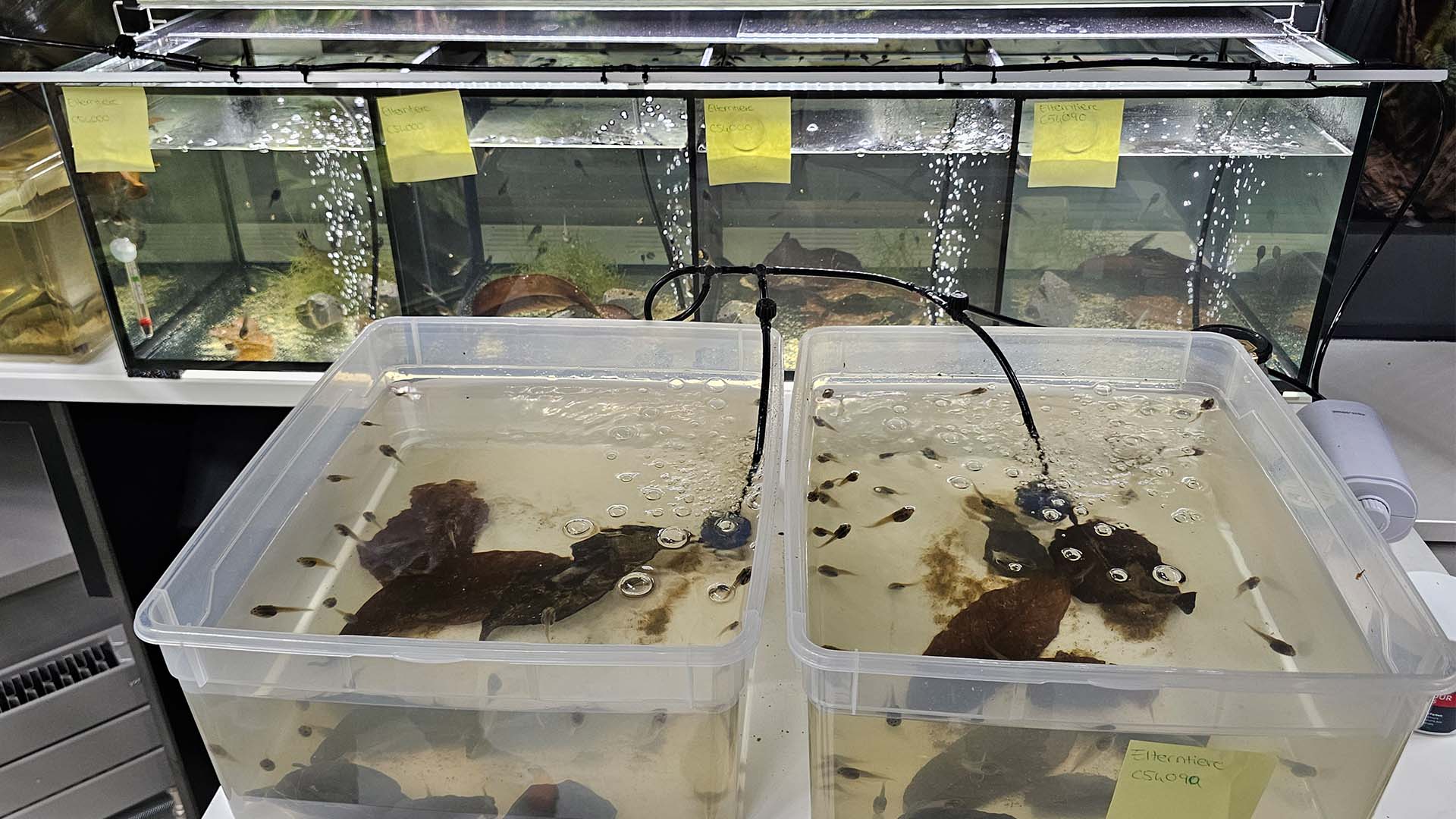
The Zurich tadpole nursery
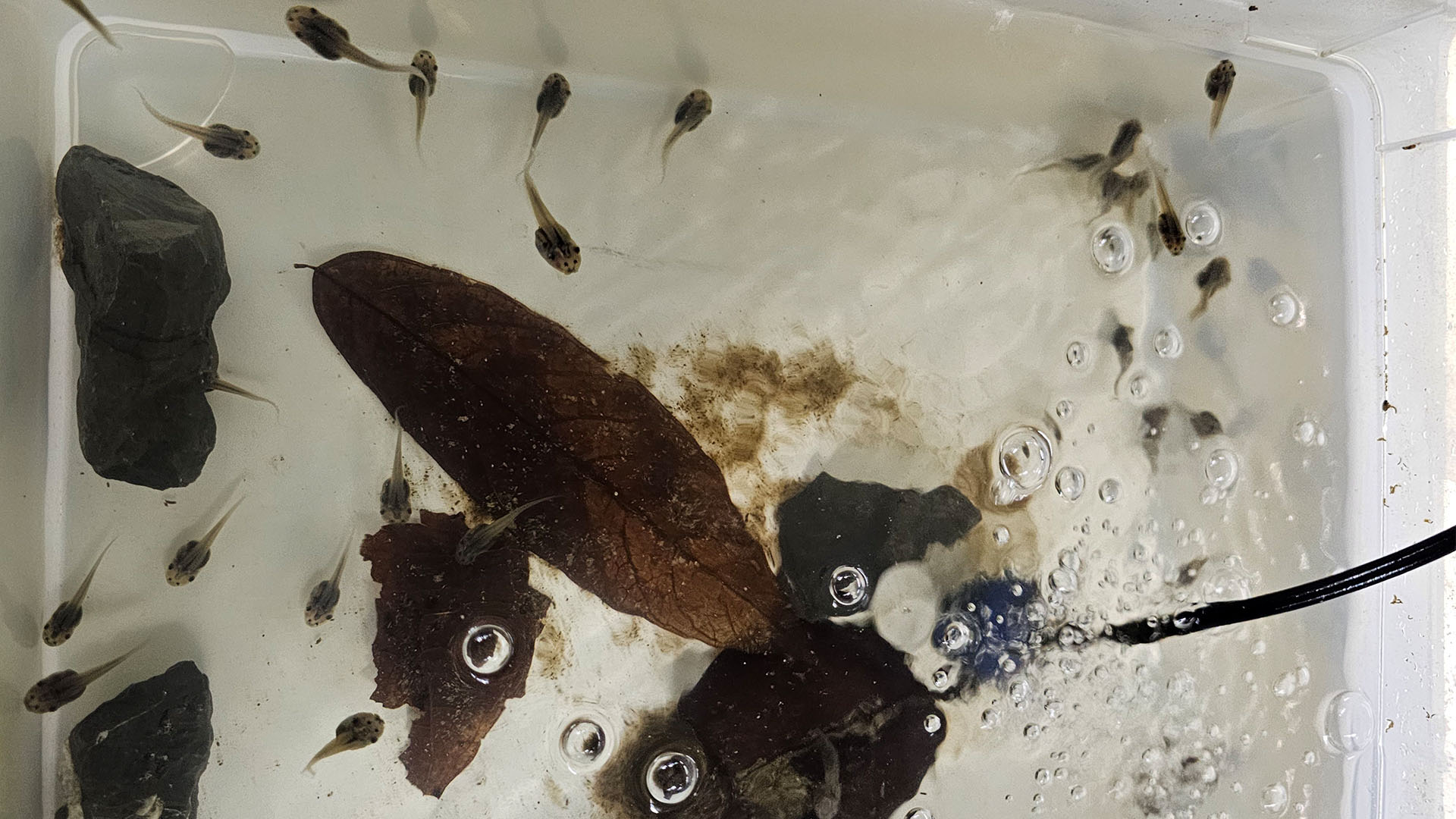
A view inside one of the nursery tanks containing tadpoles
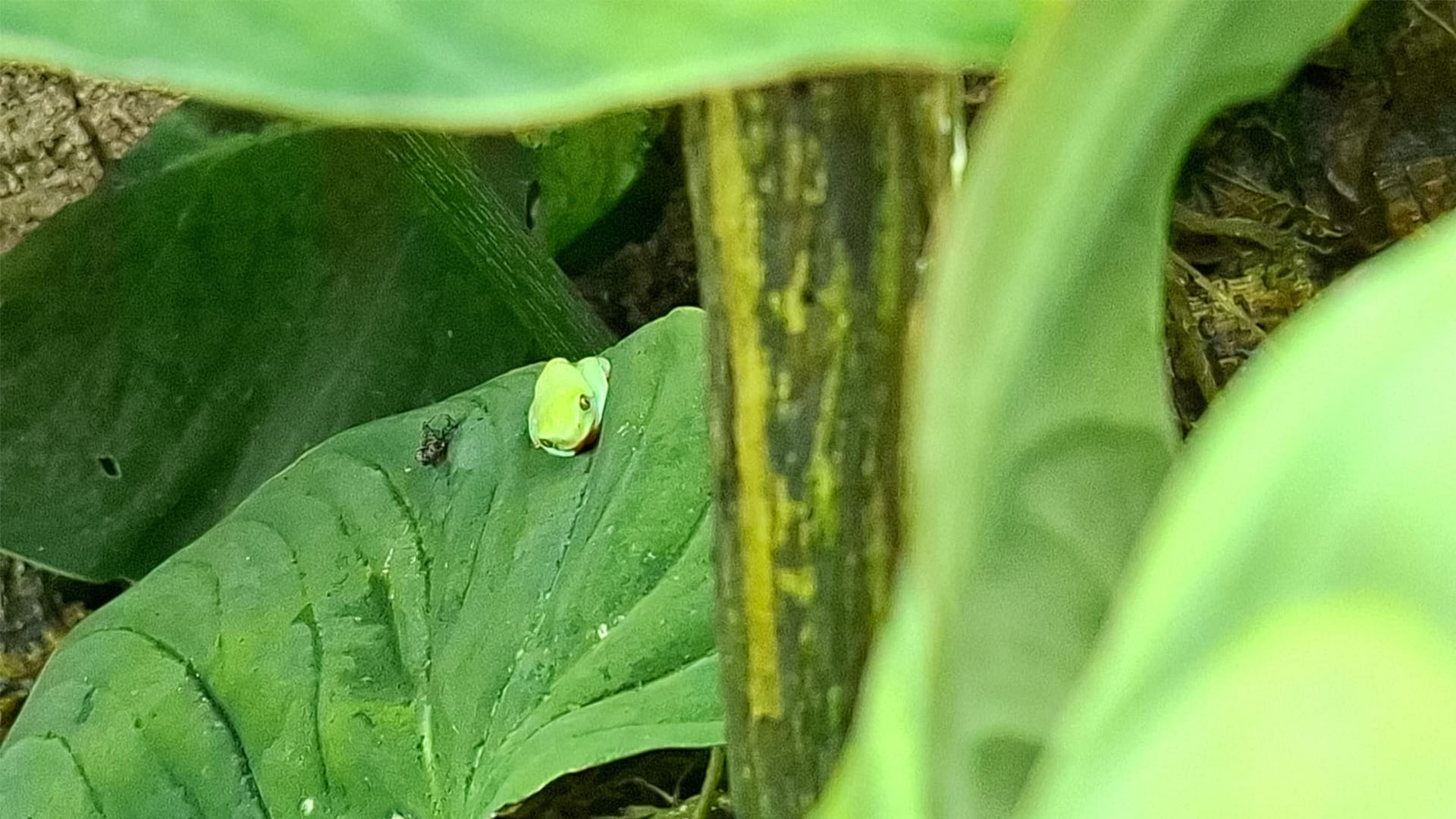
Historic snapshot: the first land-dwelling amphibian in Zurich
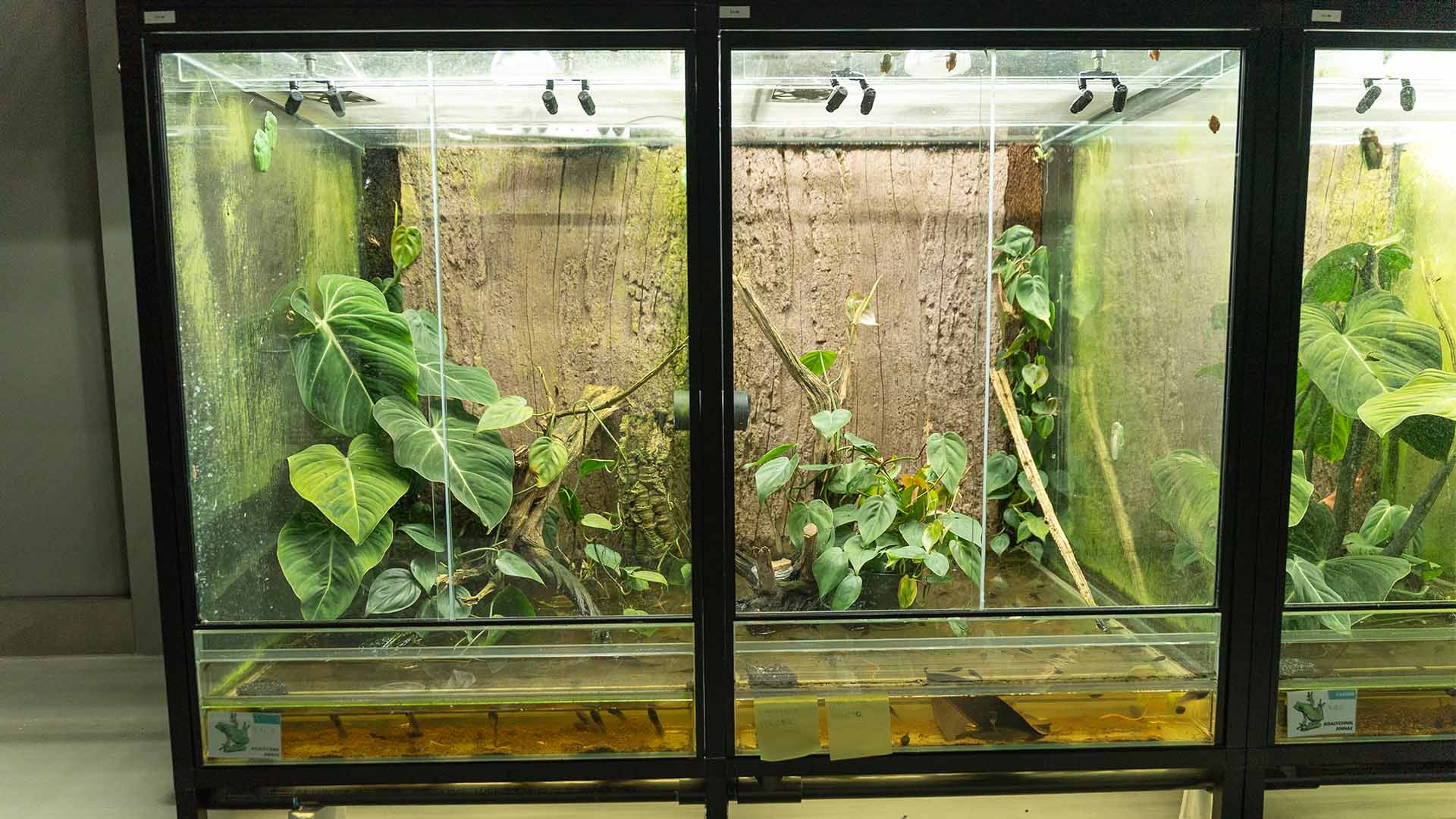
Plenty of young frogs in the hatcheries in Zurich
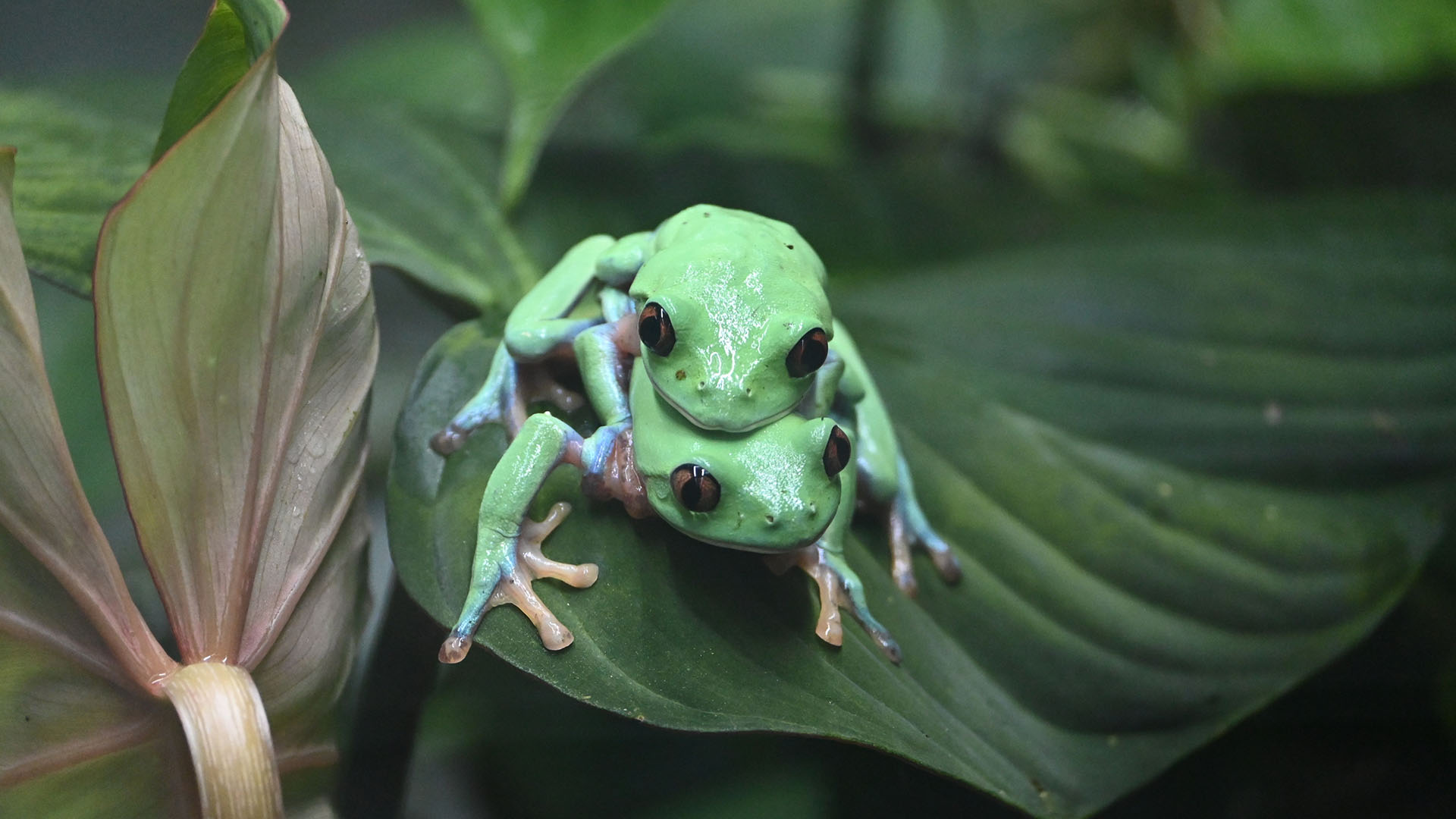
Even before they were a year old, the confiscated and fostered Orange-eyed Leaf Frogs were already engaging in amplexus and producing offspring.
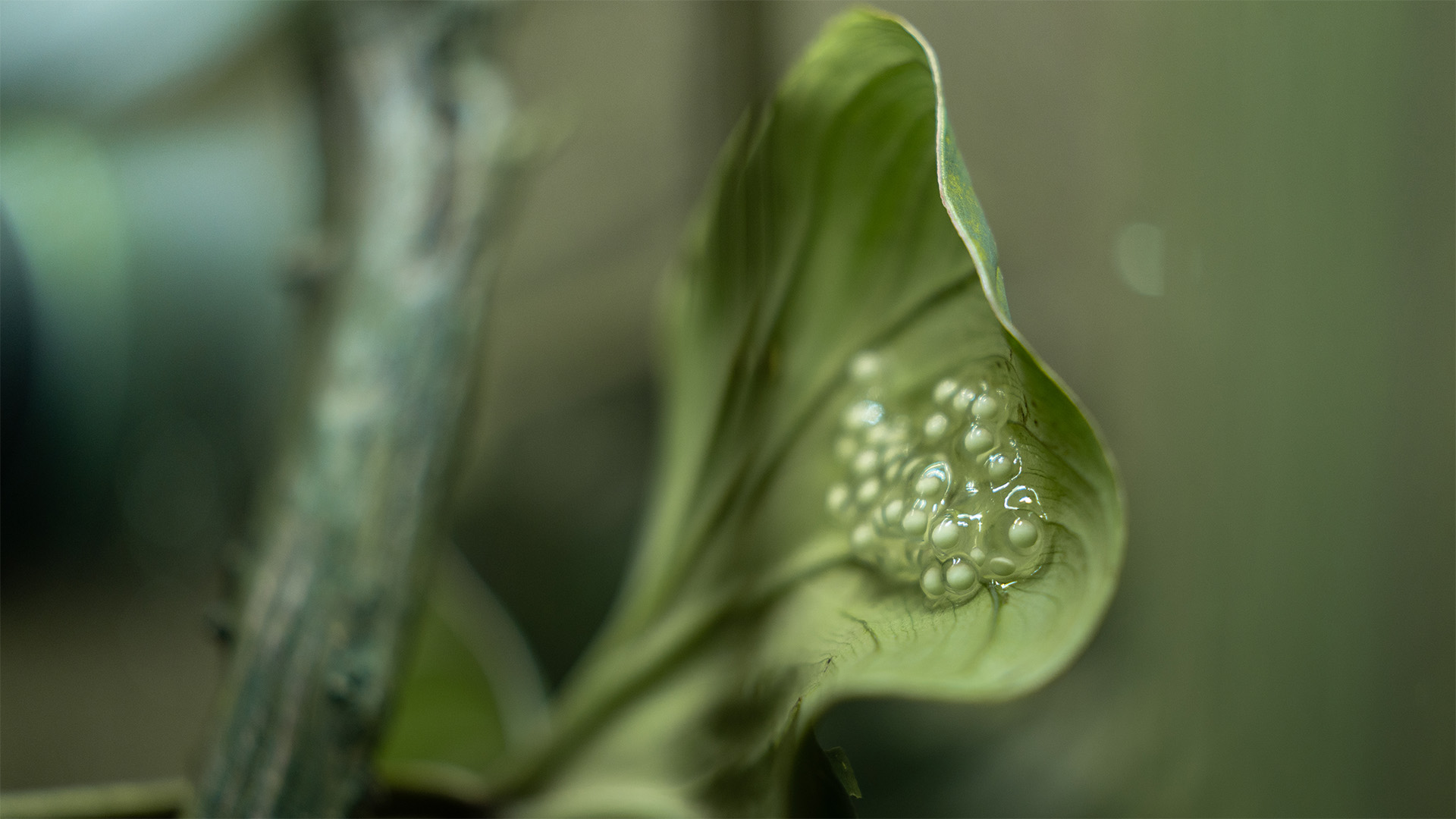
... and before long there were plenty of frogspawn.
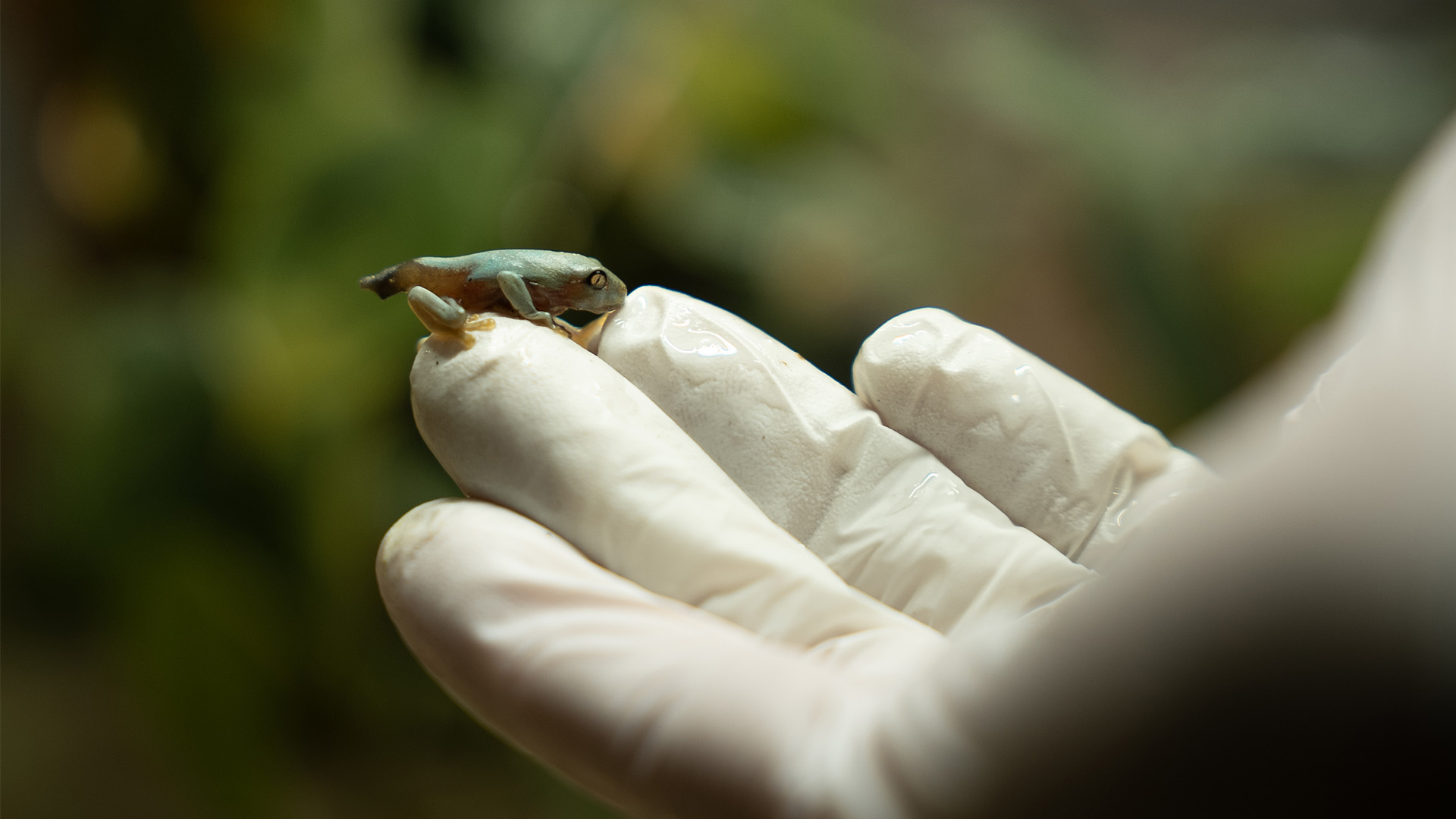
One of around 200 of the first amphibious land-goers – in order to establish a solid foundation for a long-term conservation breeding programme, these need to be distributed further.
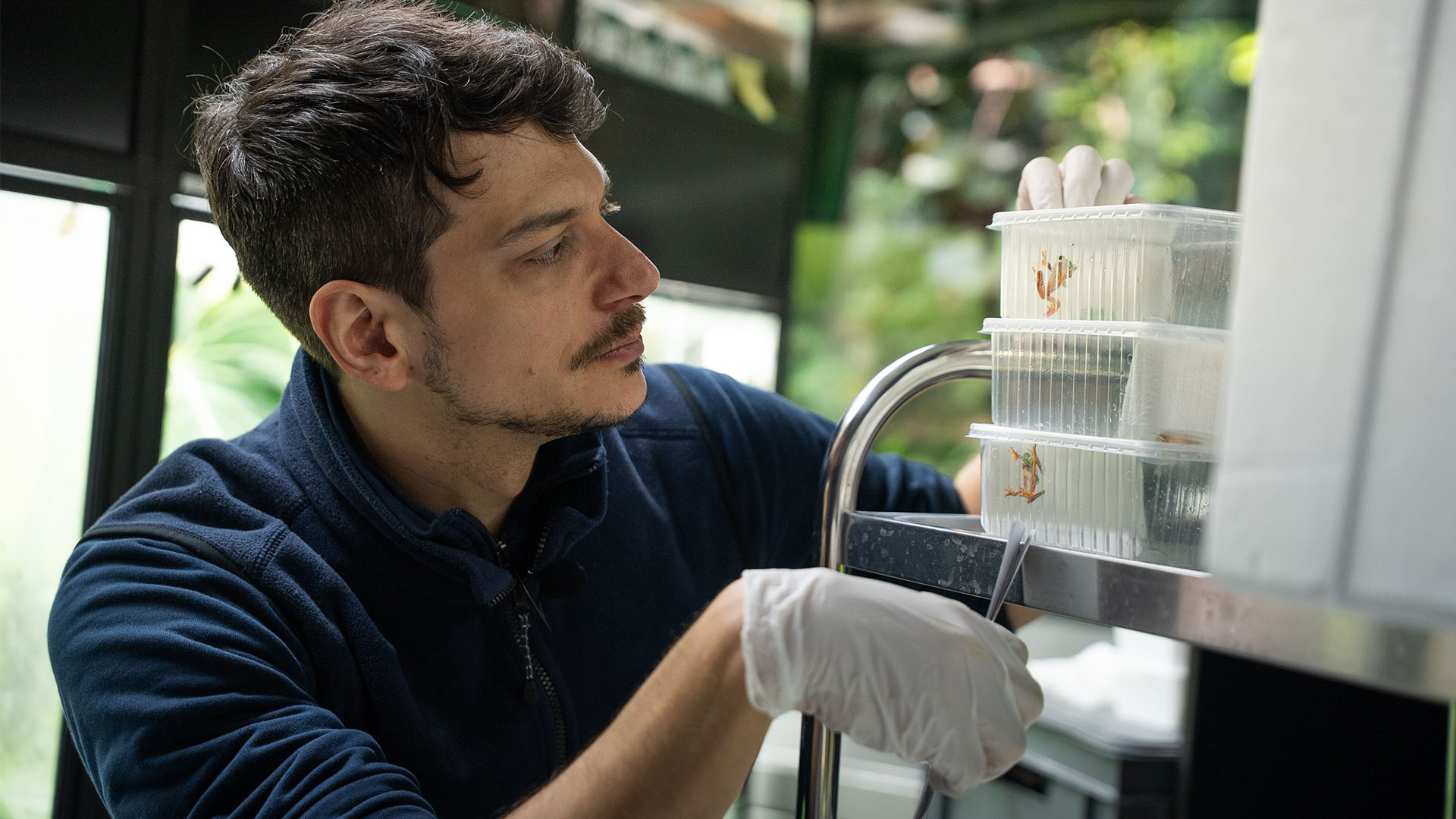
That is why curator Lukas Reese travelled from Karlsruhe Zoo to Zurich to clear the young frogs through customs. The mission: to distribute them to 14 CC facilities in Germany, Austria and France.
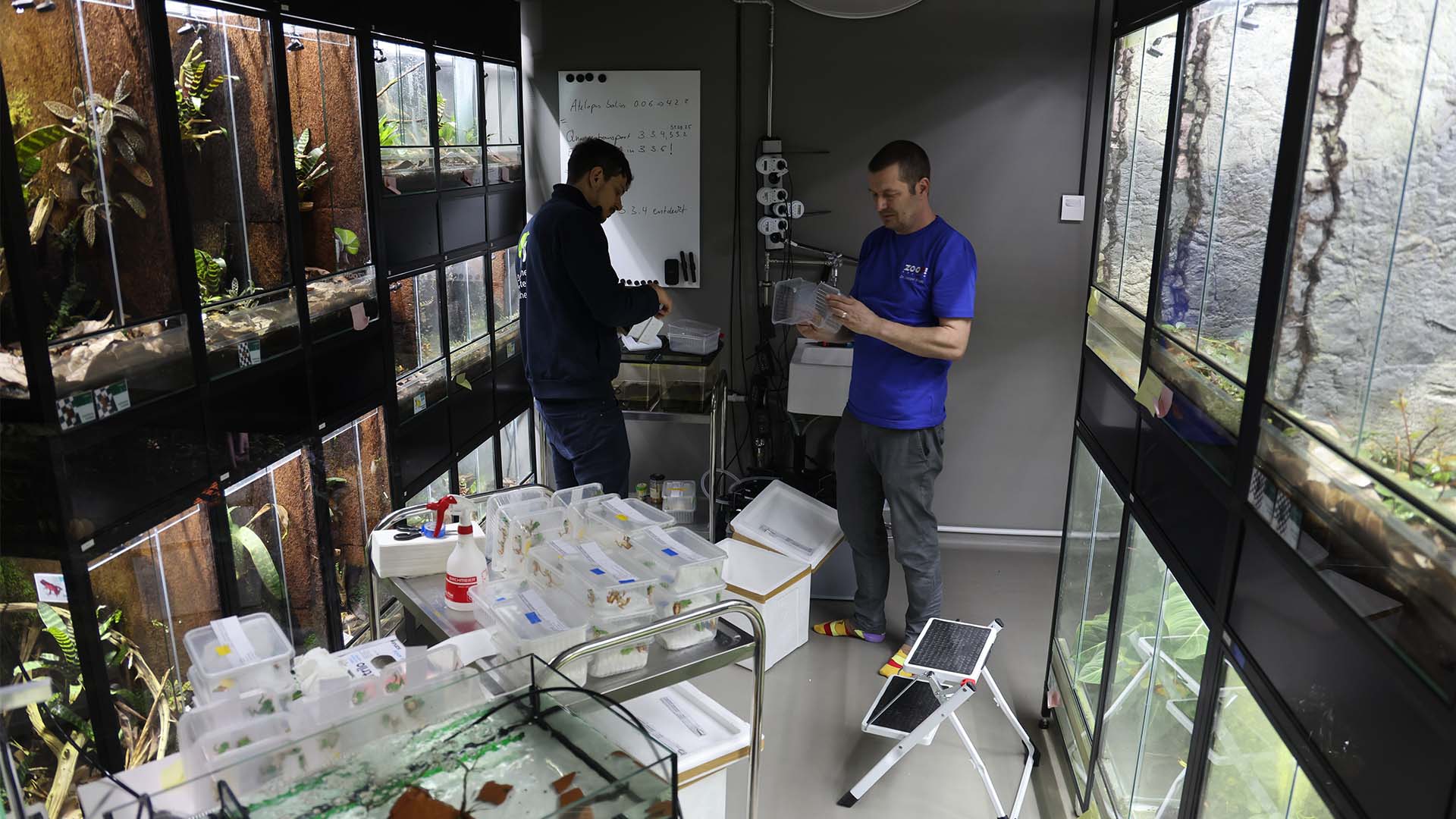
A major frog-catching operation in Zurich: around 200 frogs need to be caught and safely stored.
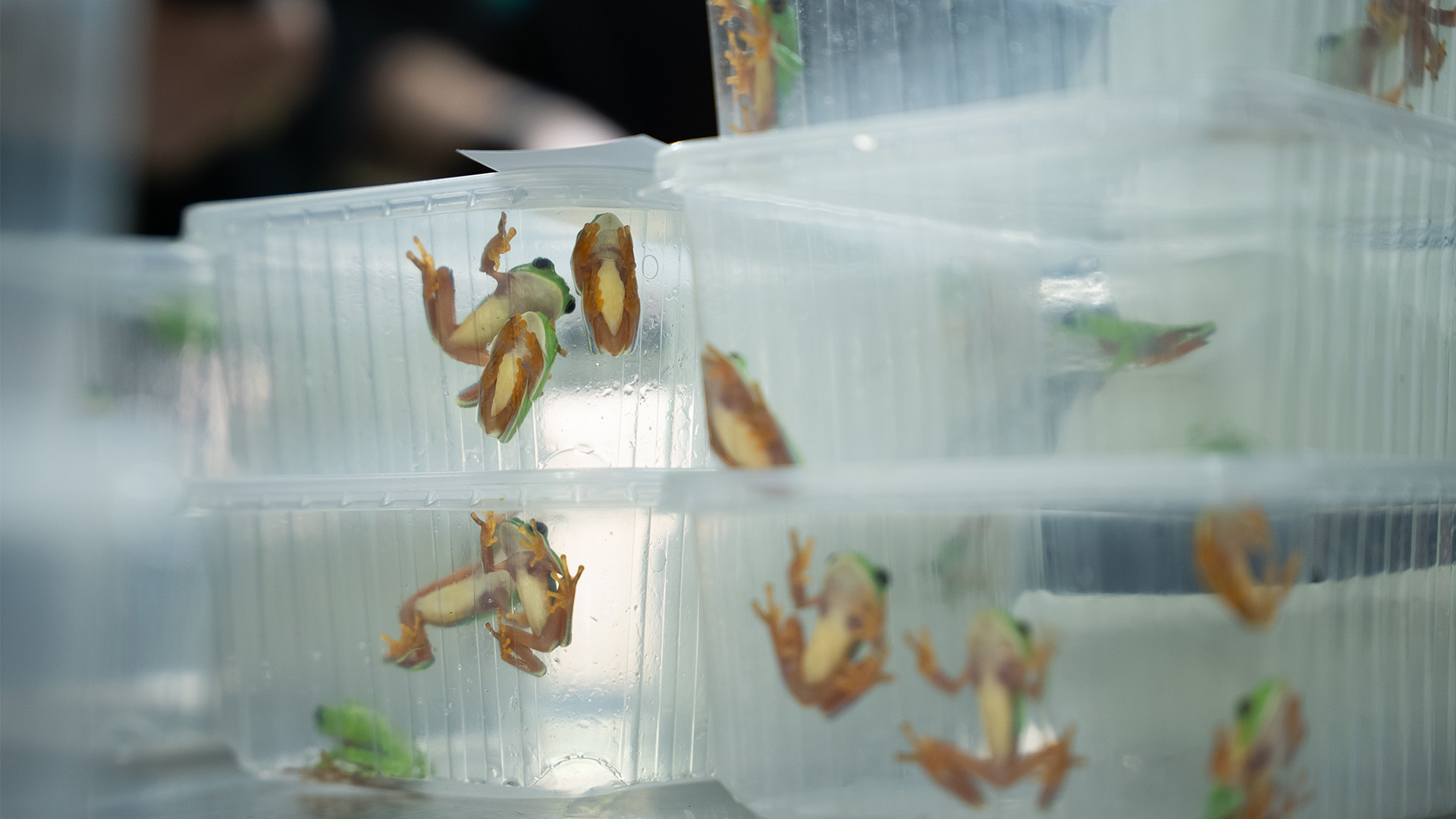
Ready to cross the border into the EU
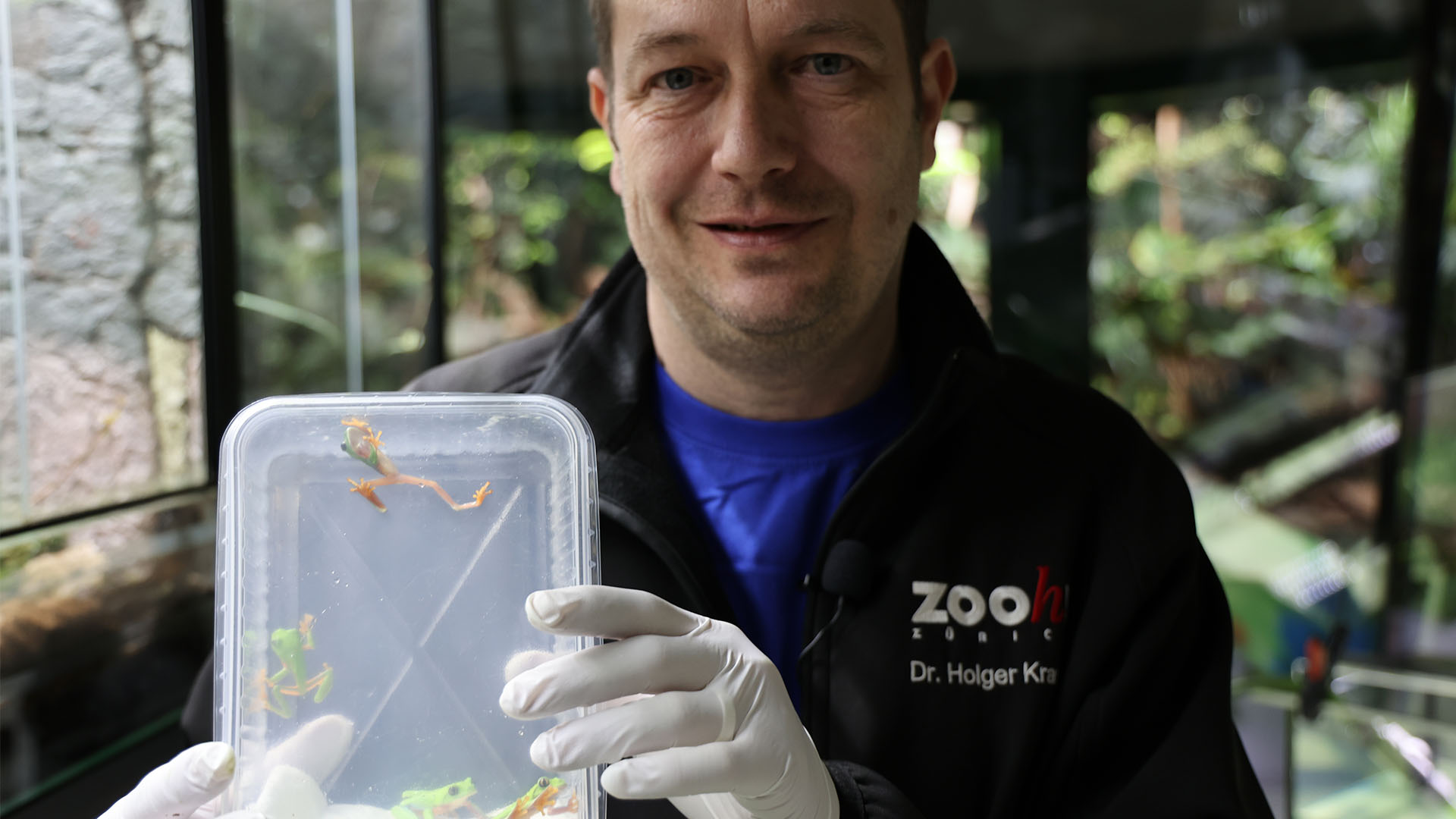
The reward for all the hard work: all the frogs have been packed up and are now ready to form the basis for further breeding programmes at private homes and zoos.

The big journey begins...

The frogs are placed in the delivery van, well protected in polystyrene boxes, and set off for the customs office and Karlsruhe.
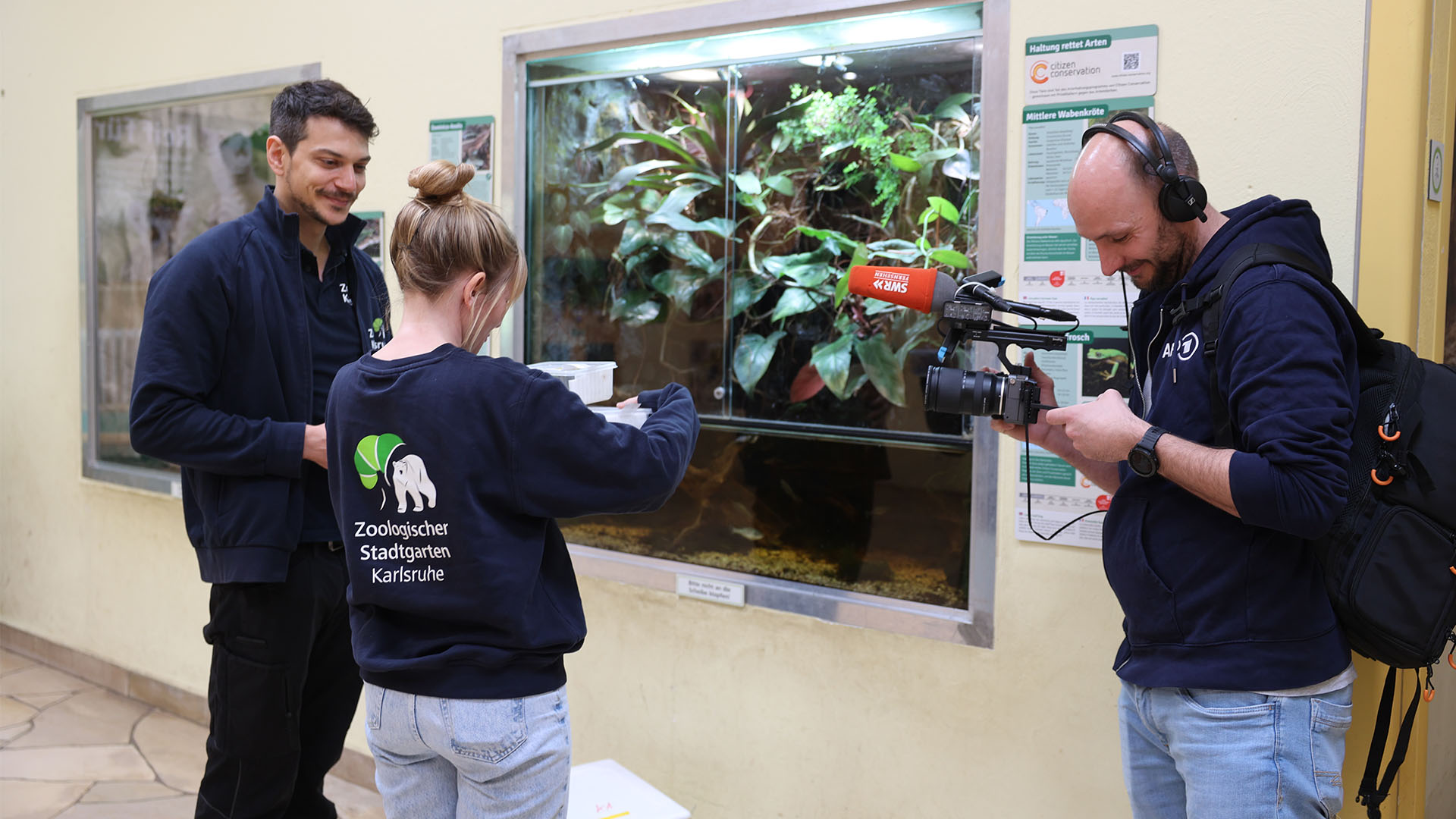
Upon arrival in Karlsruhe, the first frogs are placed straight into a display terrarium there, accompanied by a camera crew from SWR.

Tobias Eisenberg, a private keeper, frog expert and member of the CC Advisory Board, was there to collect the frogs for himself and other keepers and distribute them. Within 48 hours, the approximately 200 frogs had been distributed among 14 different keepers.

A large gathering of species conservationists and members of the CC Advisory Board on the sidelines of the Frog Trek at Karlsruhe Zoo: our colleague Thomas Ziegler from Cologne Zoo dropped by, as did private keeper and frog expert Karl-Heinz Jungfer, Holger Kraus from Zurich Zoo and Lukas Reese from Karlsruhe Zoo (from left to right).
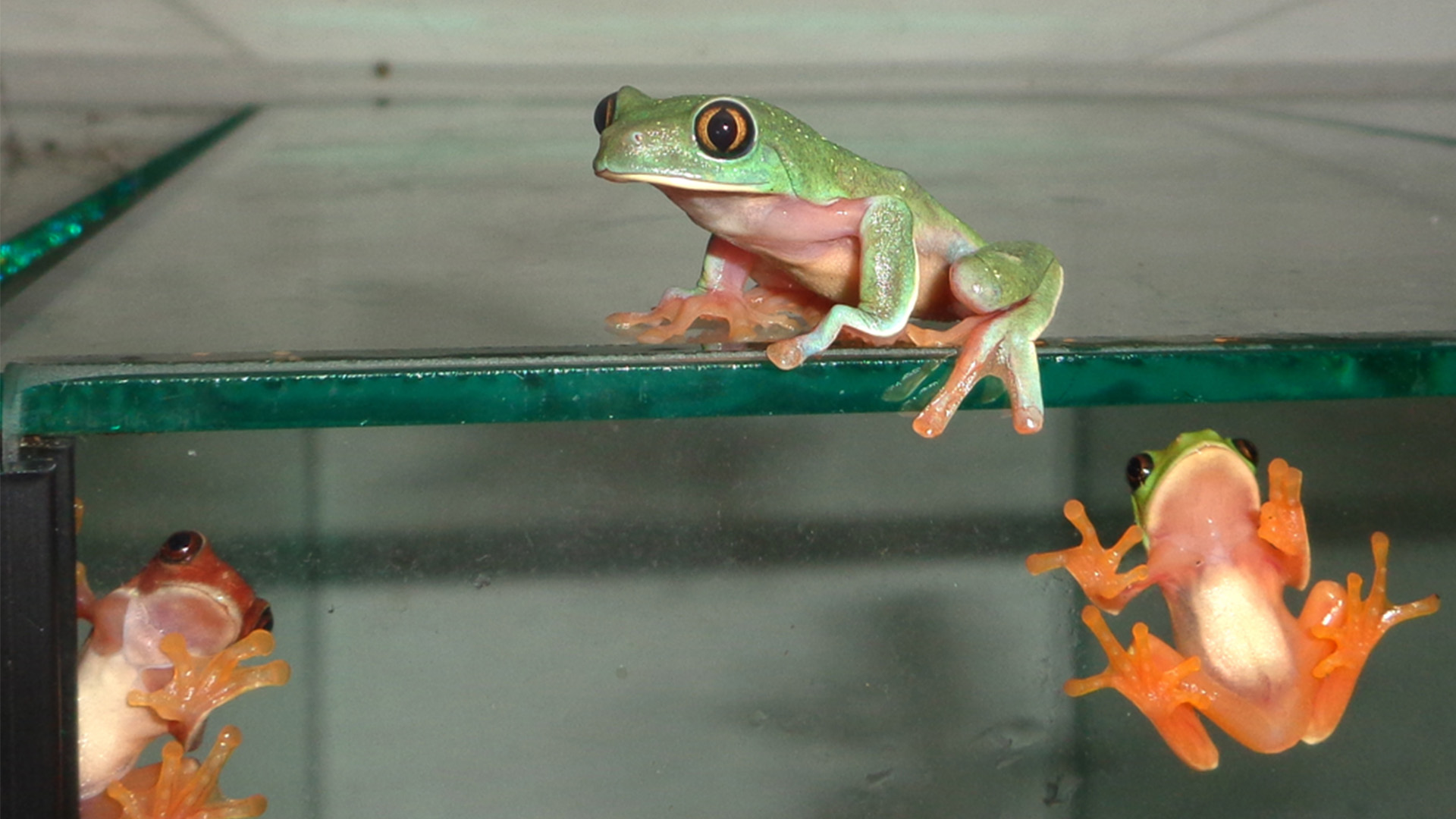
We now hope that the Orange-eyed Leaf Frogs in the CC husbandries, such as here with our keeper Martin Huber, will produce plenty of offspring.
Fantastic frog creature
For a while, one might actually have believed that the Orange-eyed Leaf Frog was nothing more than a mythical creature. For suddenly it had vanished, becoming a phantom of the woods, a rumour that left one wondering what truth there might have been to it. In the 1980s, it suddenly disappeared even from national parks and woodland areas that were supposed to be well protected. Its habitat remained untouched, as if nothing had happened – but the frog, which had previously been quite common, was simply gone. Unfortunately, it was not the only one.
‘For a while, one might actually have thought that the Orange-eyed Leaf Frog was nothing more than a mythical creature. For suddenly it had vanished, becoming a phantom of the woods, a mere rumour.’
© Tobias Eisenberg
... and a mysterious mushroom
As it turned out a few years later, the cause of the mass amphibian die-off in Central America was an imported fungus. Exactly how this could have happened remains unclear to this day. Where did the fungus come from? How did it get there? Why did it suddenly strike with such lethal force? The current theory holds that Batrachochytrium dendrobatidis, as it is called, arrived from the Far East – possibly via frogs transported around the world by humans, or perhaps by entirely different means – in regions where it had not previously existed, and the consequences were as dramatic as those we know from the indigenous peoples of the New World, who came into contact with pathogens brought by Europeans and died in their droves as a result.
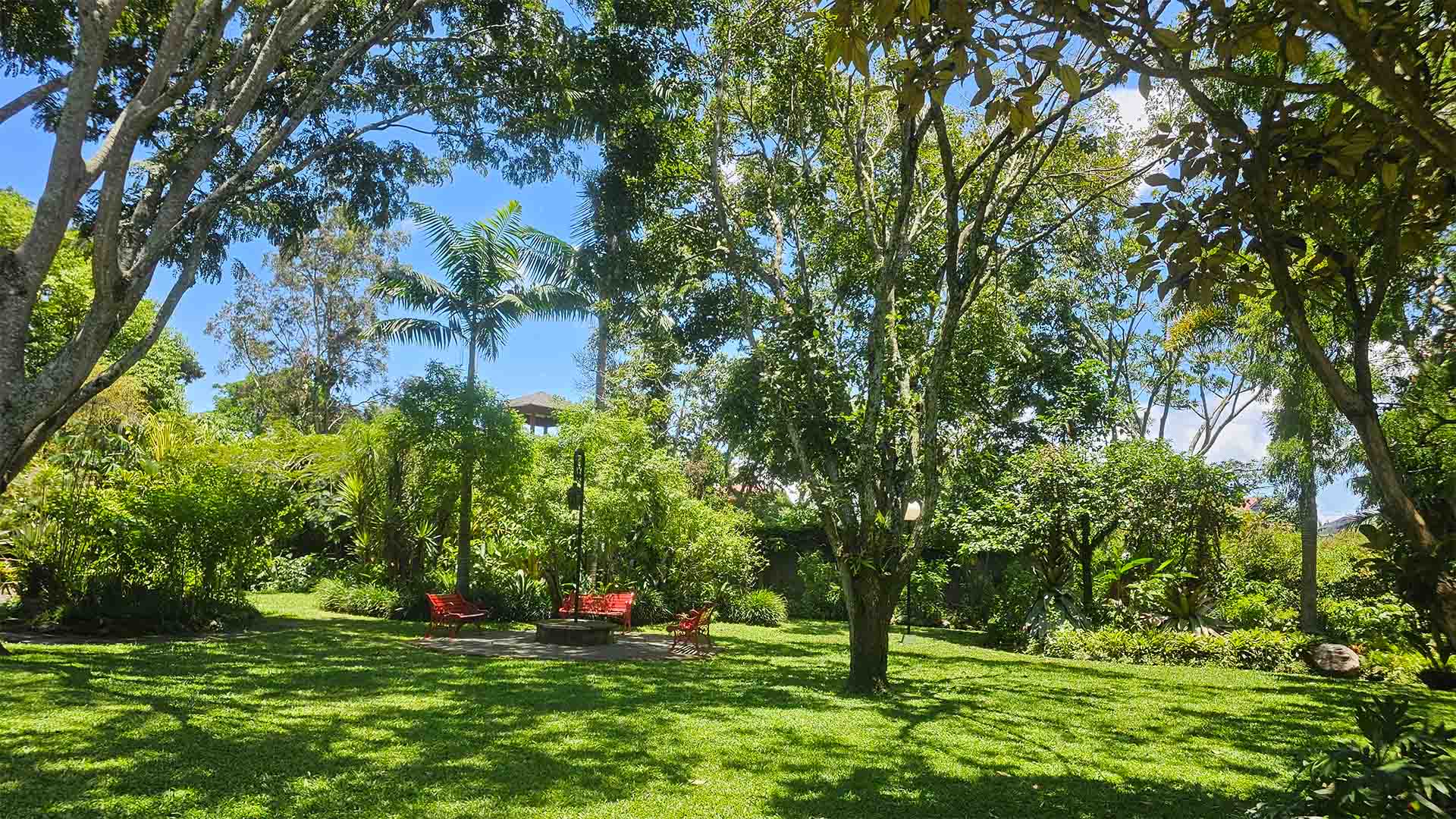
A bizarre situation: these days, Orange-eyed Leaf Frogs are only found in habitats that have been heavily disturbed by humans, such as city parks or plantations.
He's back
In any case, a whole range of frog species disappeared during this period due to the fungus, perhaps in conjunction with climate change or environmental pollution. Some frogs disappeared completely and forever, some only partially, and others suddenly reappeared. Fortunately, the Orange-eyed Leaf Frog is among the survivors. With one peculiarity, however: it is no longer found where one would expect, namely in untouched nature reserves – but, of all places, in the urban sprawl surrounding the Costa Rican capital, San José. These days, you no longer find this amazing frog in mountain forests, but in city parks and gardens. Why? We don’t know. We can only note with relief that the population has recovered somewhat. Even if only in a fraction of its former range. A fraction, moreover, that is particularly hard hit by urban sprawl and environmental pollution. We should therefore take good care of these frogs and keep them in human care even outside their remaining habitats. Because, as we now know, we actually know nothing…
For breeders
Basic information on biology and breeding
A species for experienced frog keepers. Terrarium for a breeding group: minimum dimensions 60–80 x 60 x 100–120 cm (length x width x height). No aggressive behaviour. Densely planted rainforest terrarium with plenty of climbing opportunities, a water dish and temperatures of 24–26 °C during the day and 17–20 °C at night. Feed with all standard live foods. Tadpole rearing in separate aquariums.