


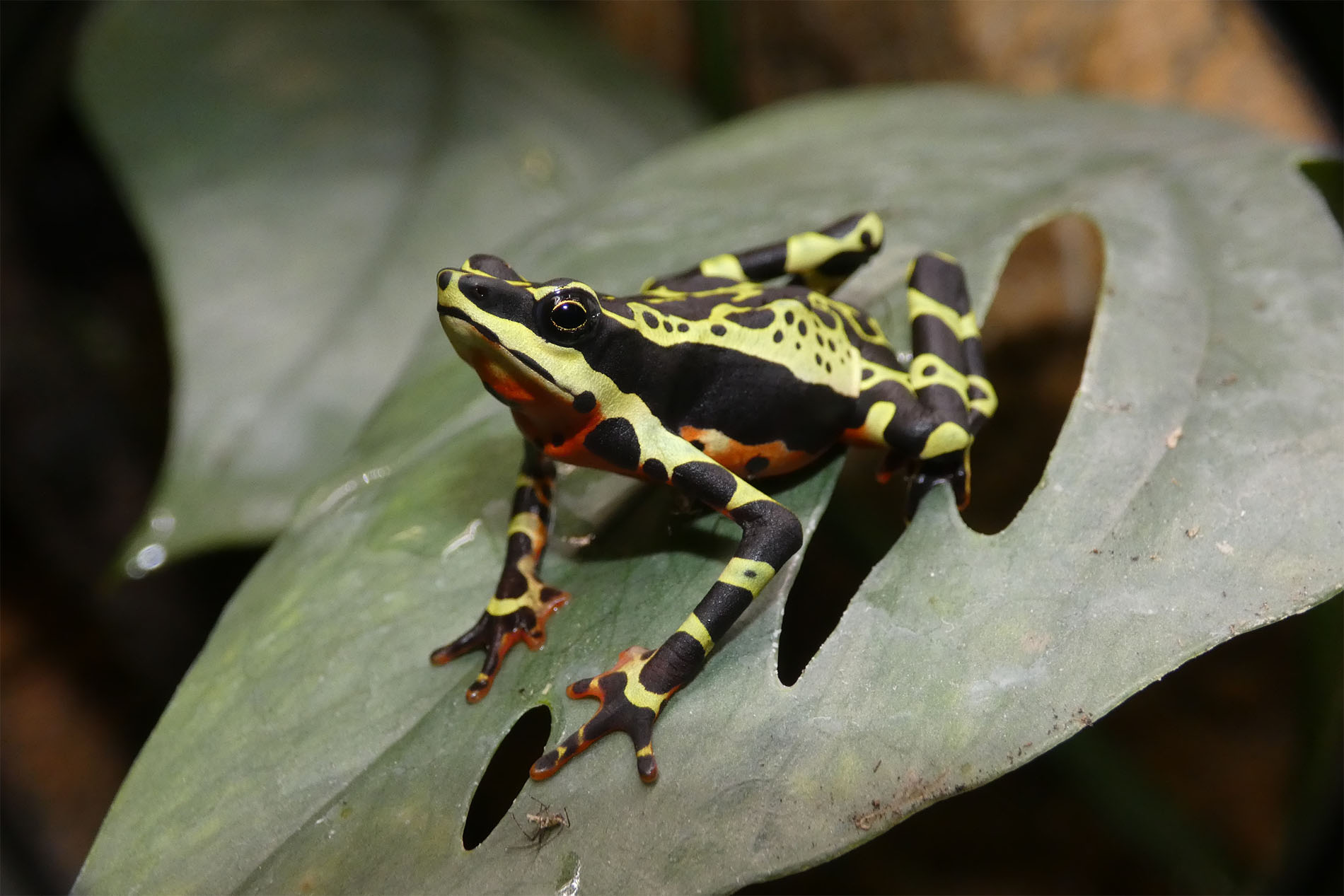
Animal population overview 2/2026 – Counting toads rather than swallowing them
On 1 November 2026, 7,023 animals from 39 taxa were being cared for as part of the Citizen Conservation (CC) programmes. They are spread across 544 holdings belonging to 327 private owners, zoos and other institutions.
Always keep on top of things
The half-yearly stock report is a key component of our conservation breeding programmes. All CC participants report their current stock levels, as well as offspring, deaths and experiences from the past six months, on 1 March and 1 September each year. The CC office compiles these figures, enters them into our database and updates them to include any further transfers by 1 November. This ultimately produces the half-yearly results, which we publish here. We are also delighted that many participants provide us with up-to-date photos of their animals, a selection of which we are always happy to showcase here. A special thank you to all our volunteer supporters who care for and breed endangered species on behalf of CC, and who reliably keep us informed about everything!
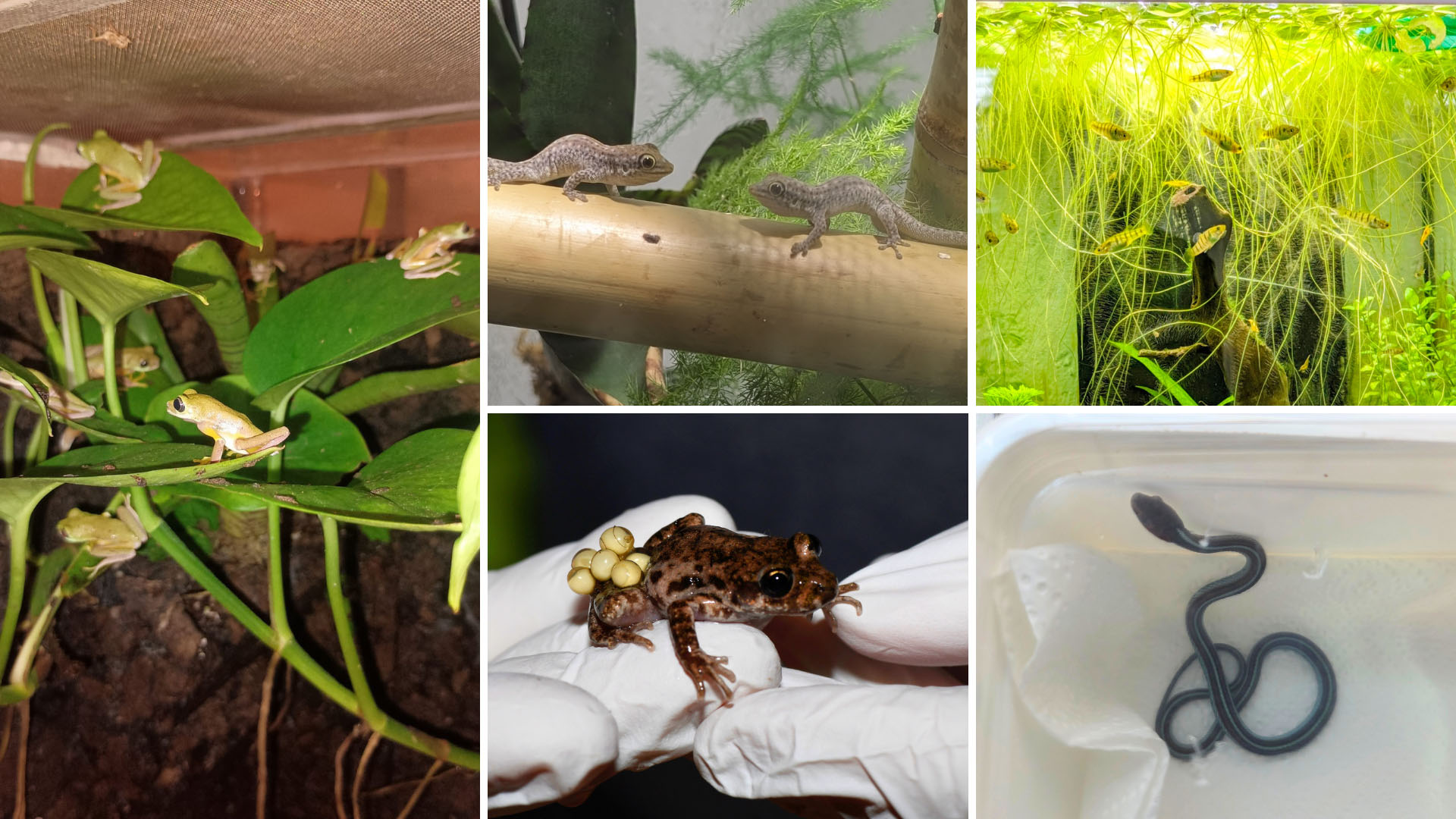
A baby boom in the CC holdings: the offspring of the Lemur Leaf Frog, the Guimbeau's Day Gecko, the Tiger Limia, the Mallorca Midwife Toad and the San Francisco Garter Snake, photographed by our participants Maximilian Koch, Karoline Rieß, Anna Eichelmann, Heiko Werning and Roman Astheimer.
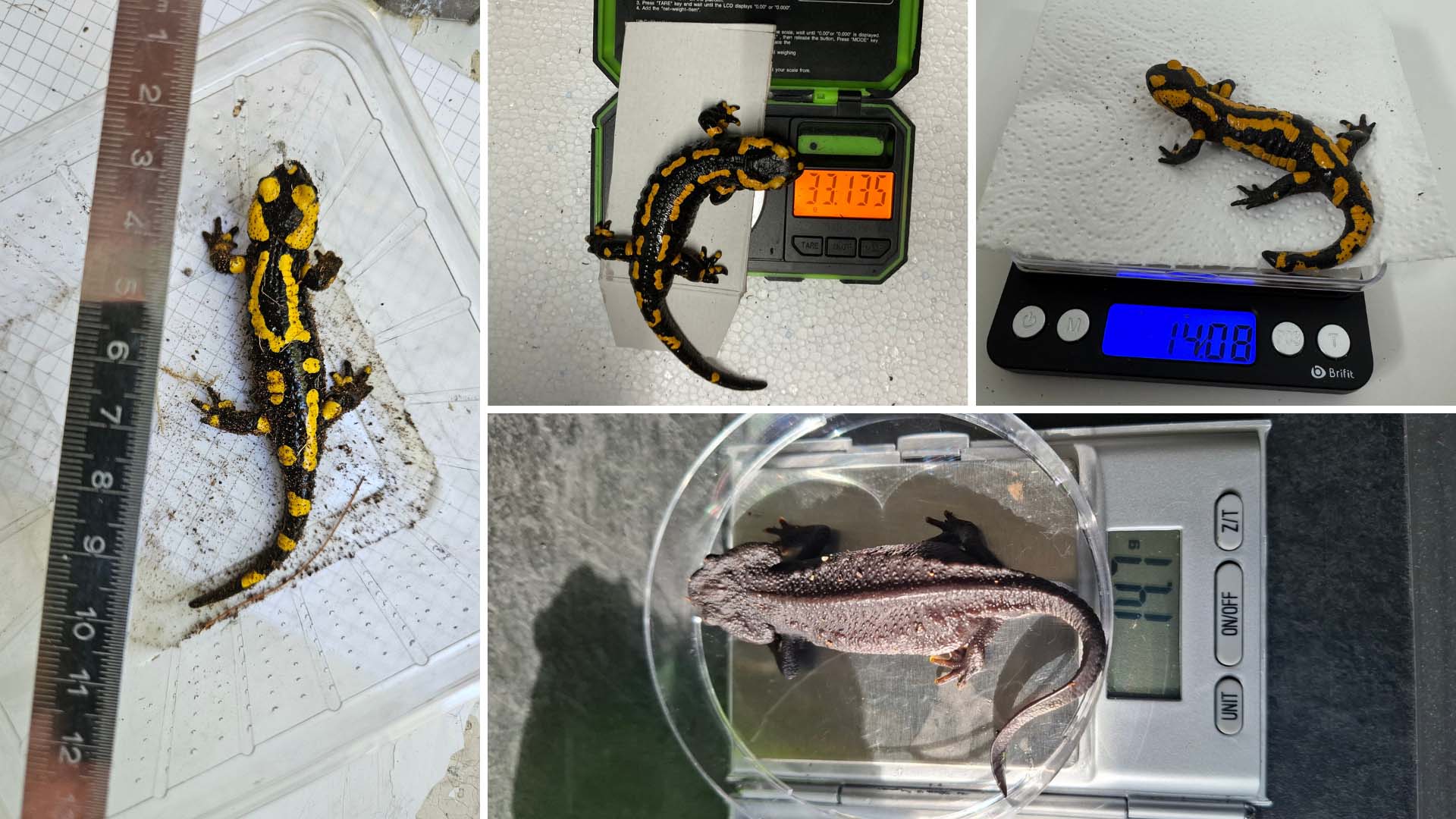
Our keepers – Ulf Glade, Simone Karlowski, Maja Lerch and Monika Labes – are not only busy counting the Fire Salamanders and Crocodile Salamanders, but are also weighing and measuring them straight away.
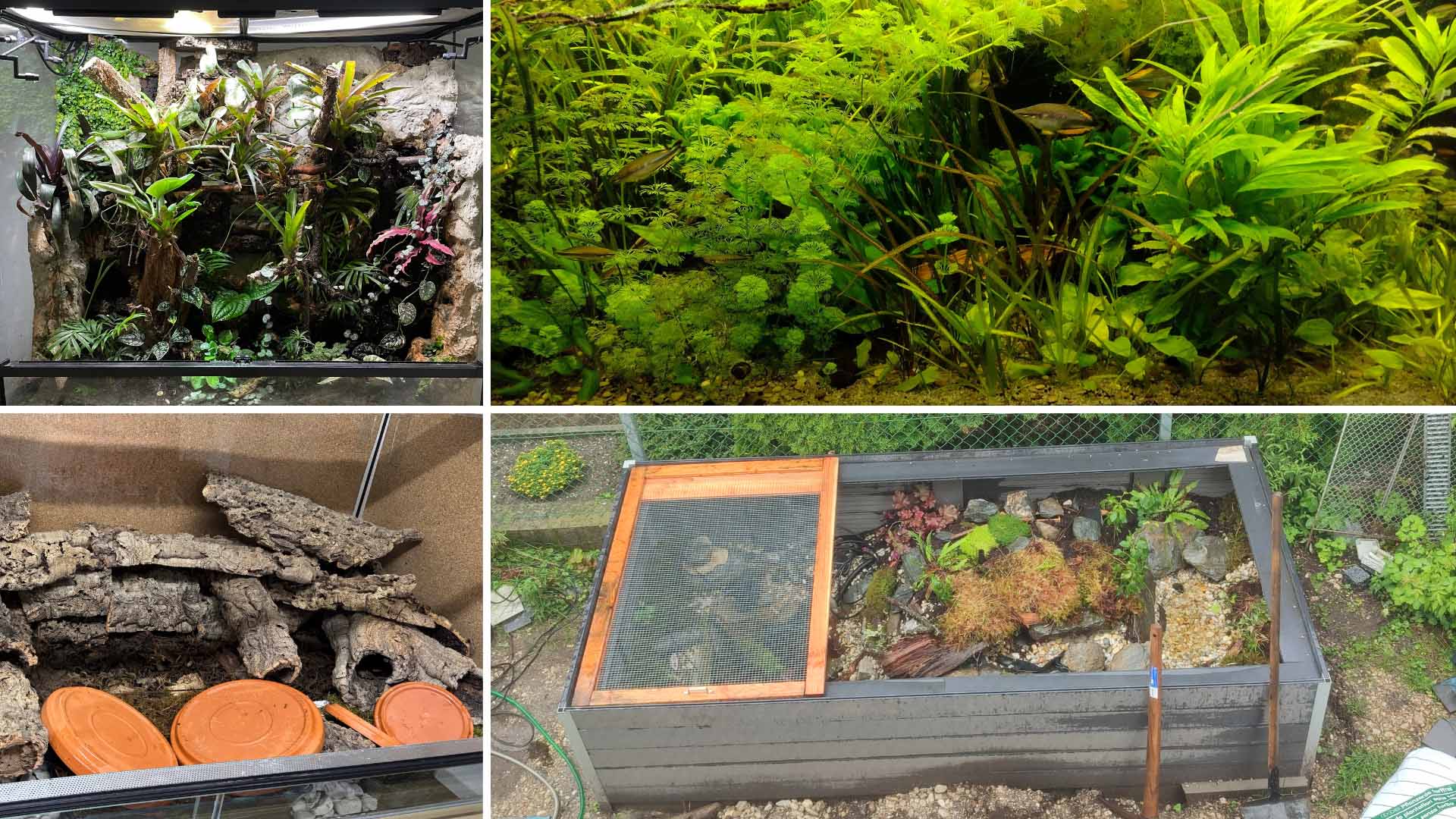
CC terrariums and aquariums can look so different – as documented by Lino Wiederkehr, Hans-Jürgen Kemp, Maja Lerch and Leo Dick.
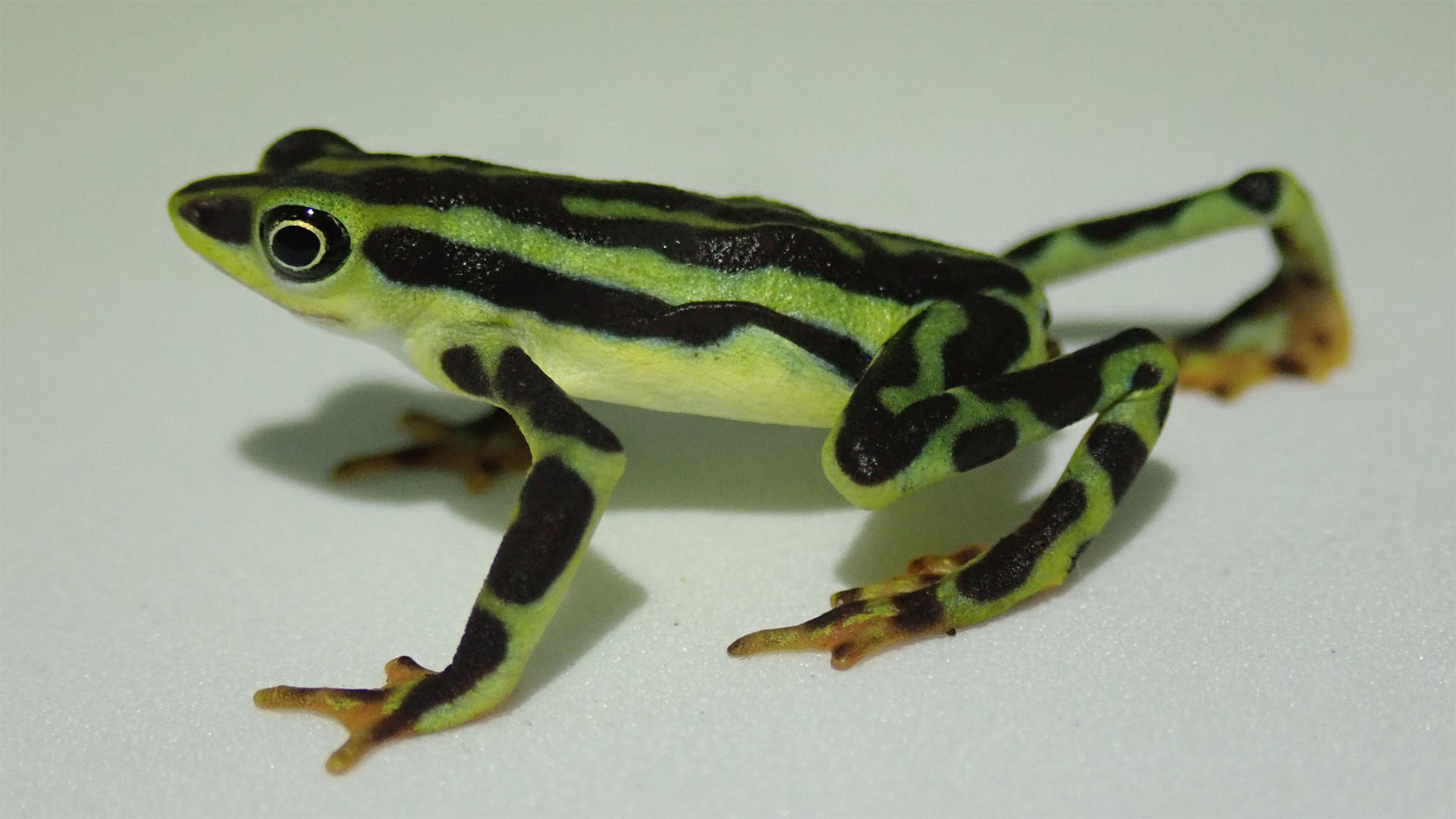
Newly listed in the CC: the critically Elegant Stubfoot Toad
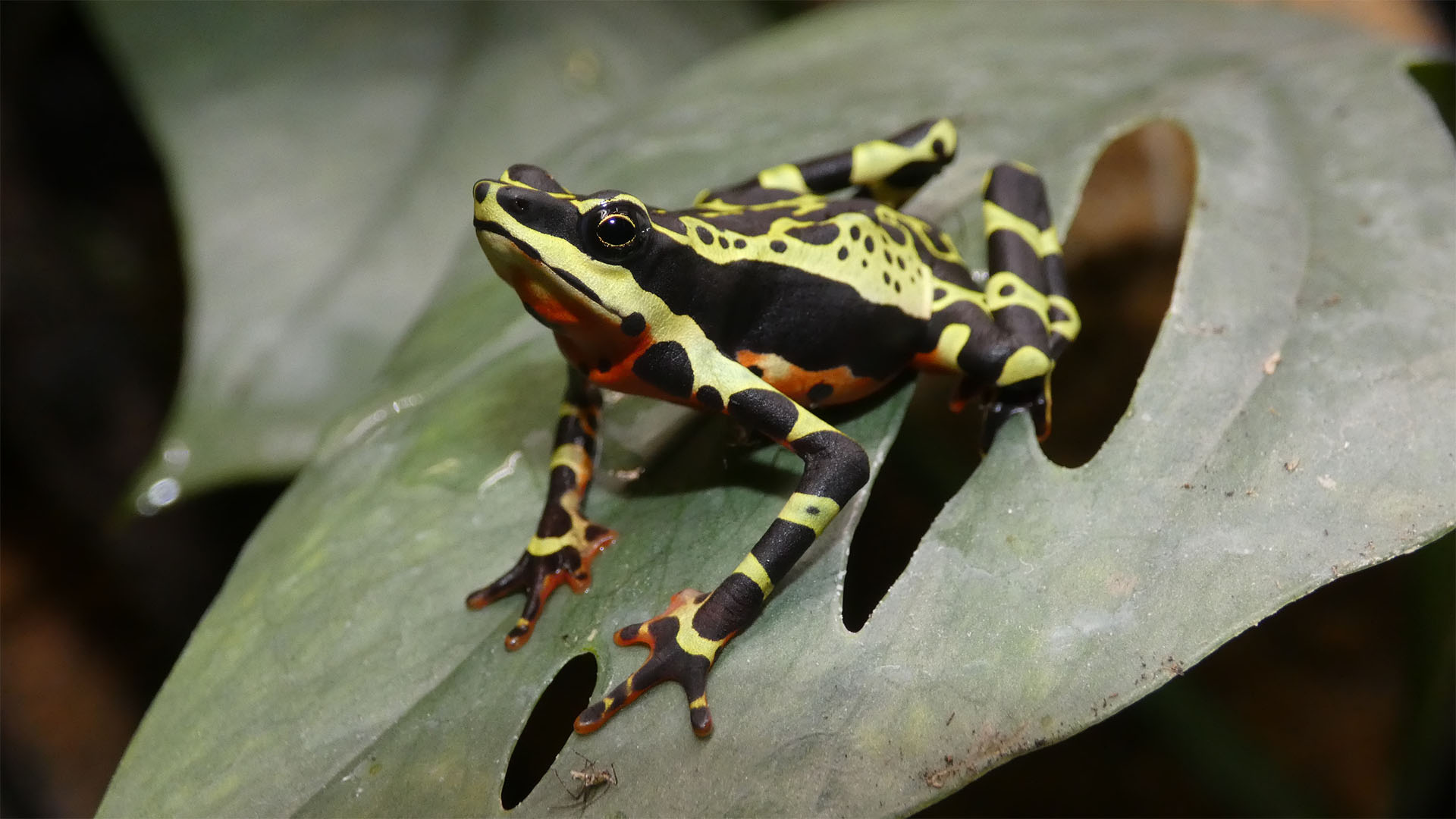
This Stubfoot Toad from Limón in Ecuador – which has not yet even been described, but is nonetheless under serious threat – is now also being cared for at CC – and, amongst others, in the trusted hands of our keeper, Thomas Ackermann.
A quarter more in half a year
Since the last stock take on 1 May 2026, 1,287 animals have been added to our programmes. This represents an increase of 22% in just half a year – meaning around a quarter more animals of critically endangered species in our care!
A large proportion of these – namely 1,891 animals – are successful offspring from our programmes. As mortality rates among larvae and very young offspring are often high, we only count animals as ‘stable’ from the age of three months, or – in the case of amphibians – three months after they have emerged onto land.
All these animals are looked after by our current 327 participants. Fifty of these are zoos (with a further six added in the last six months), whilst the others are divided amongst 210 private individuals (an increase of 16), 36 schools (an increase of 6) and 31 other institutions such as museums, public aquariums, animal welfare organisations, libraries and so on (an increase of 10). Measured by CC’s aim of expanding the conservation breeding capacities of the zoo community by involving civil society, we have therefore been able to create 277 additional places for animals of threatened species. As a number of participants look after several CC species at once, we are pleased to report 544 animal holdings, of which 155 are in zoos, 265 with private individuals, 73 in schools and 51 in other institutions. This represents an increase of 43 new holdings in the last six months. Consequently, their number has risen by 9%, whilst the number of participants has risen by as much as 10%.
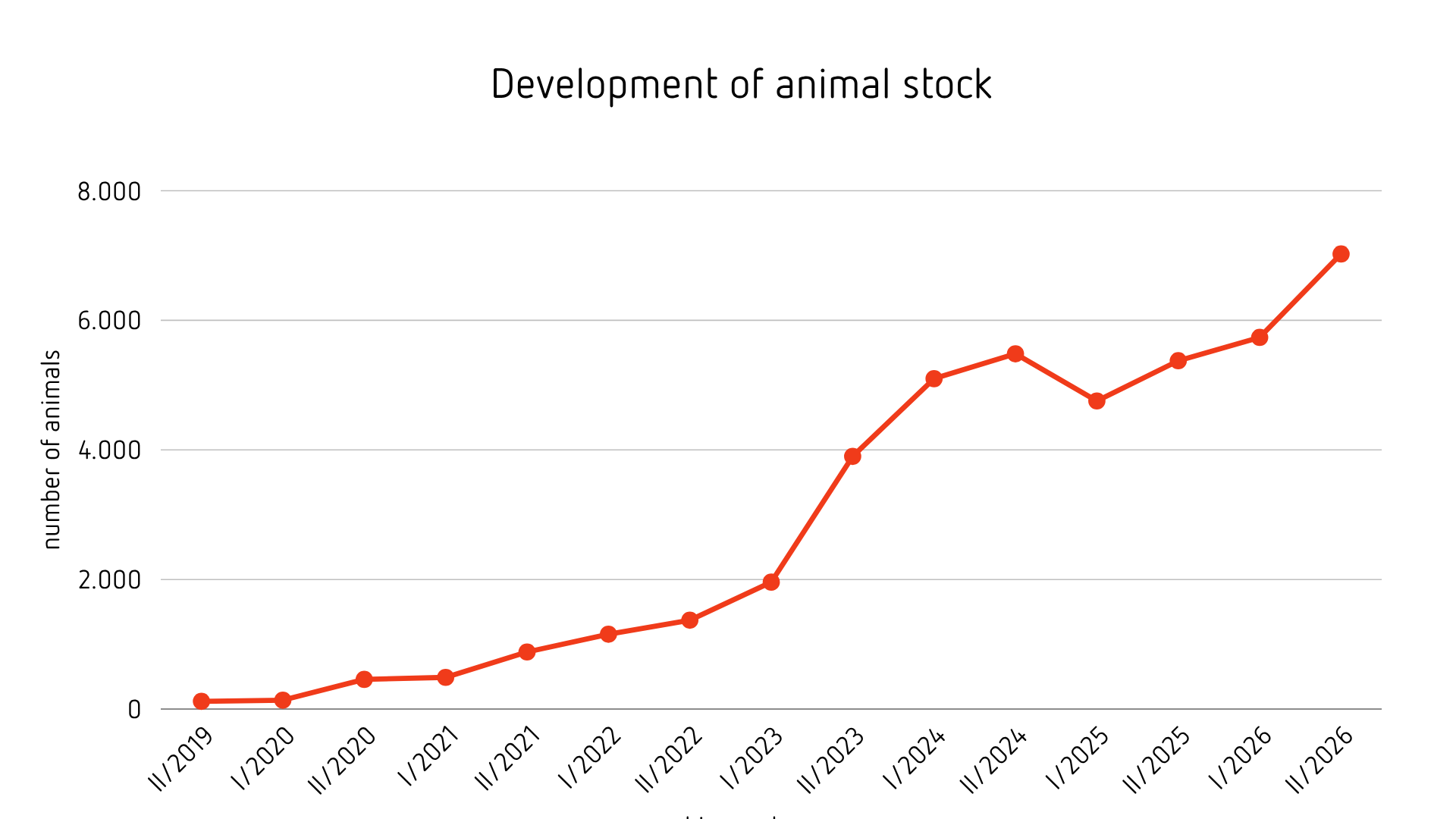
Number of animals kept at CC
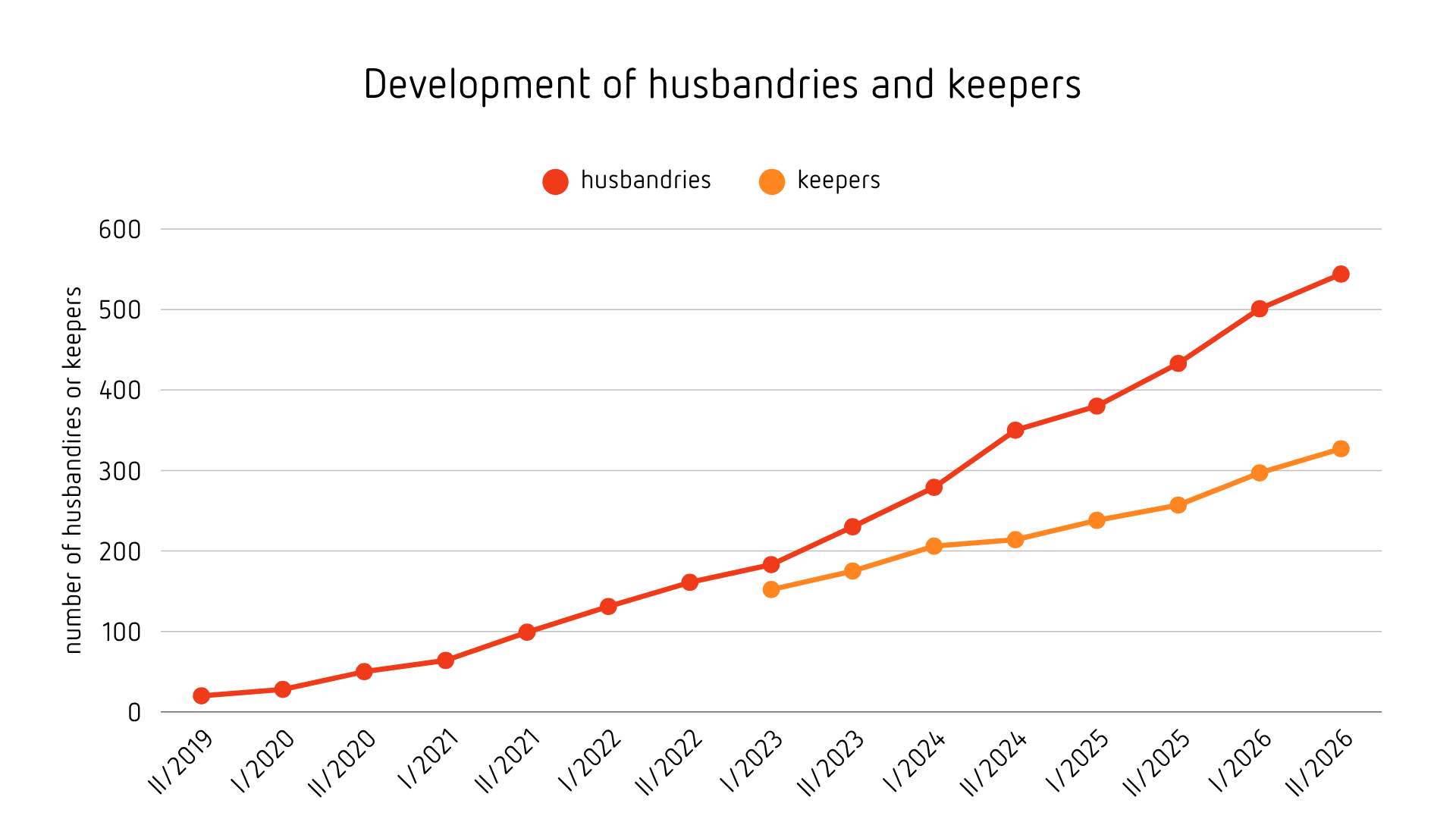
Number of CC poses and participants since the start of the project

Percentage breakdown of owner types by holdings and keepers as at 1 November 2026
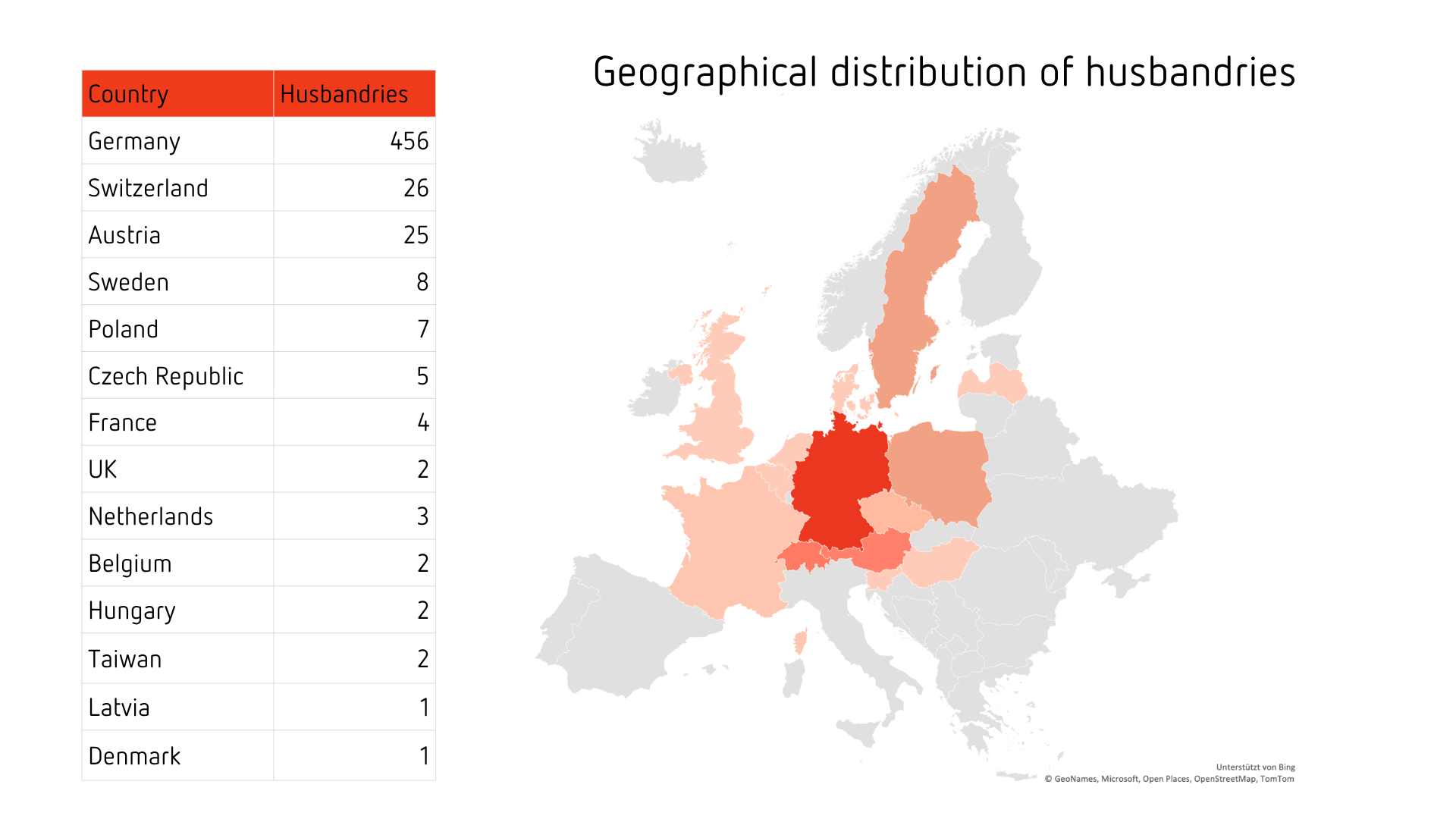
Distribution of holdings by country
From Berlin to Taiwan
Let’s also take a brief look at the geographical distribution this time. As CC is a German initiative based in Berlin, it is hardly surprising that the majority of the projects are also located in Germany: there are currently 456. Among German-speaking countries, Austria (25) and Switzerland (26) are also well represented. However, CC was designed to be international from the outset; we publish all documents in English as well, and this approach is, fortunately, also reflected in the number of participants from other countries. We now have 8 holdings in Sweden, 7 in Poland, 5 in the Czech Republic, 4 in France, 3 in the Netherlands, 2 each in the UK, Hungary and Belgium, and one each in Latvia and Denmark. In Italy, a dedicated coordination group has been set up, which is already assisting us with recruiting participants, distributing animals and dealing with all country-specific issues, so that CC facilities will soon be established there too – preparations are already underway. In addition, Taipei Zoo in Taiwan has become our first non-European participant, keeping Rio Pescado Stubfoot Toad and Sakishima Grass Lizard for us.
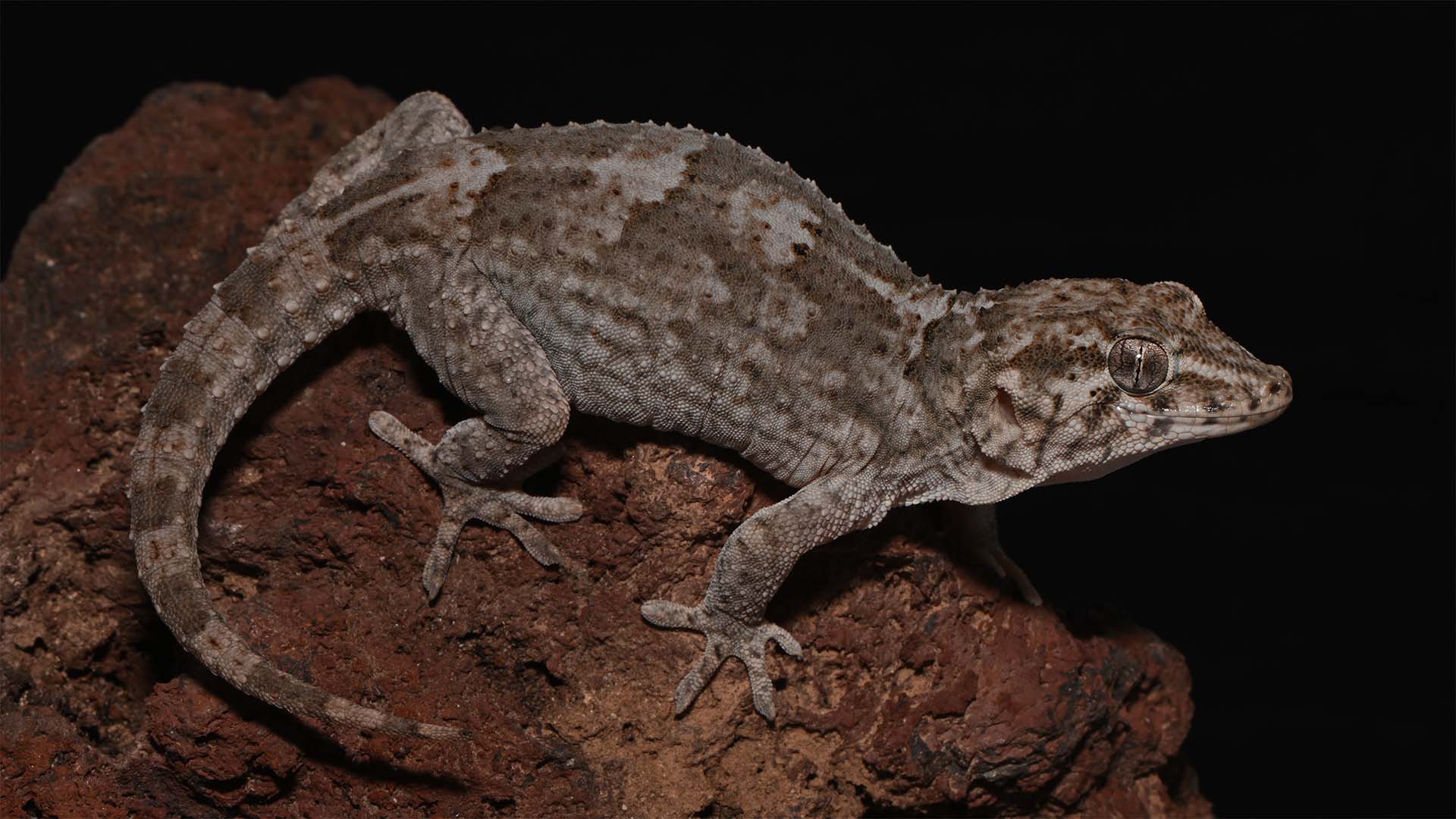
Great joy: the Giant Wall Gecko, newly admitted to CC in 2026, have already produced their first offspring!
Highlights and news from the programmes
One of the most successful CC programmes is being run for the critically endangered Rio Pescado Stubfoot Toad (Atelopus balios). The import of 30 founder animals, which we received directly from our partners at Wikiri in Ecuador, took place as recent as June 2023; the initial stock was distributed amongst three zoos and two private keepers. Following several successful breeding programmes, our population has now grown to a total of 659 animals, which we have been able to distribute across 28 holding facilities throughout half of Europe. We are therefore on the verge of reaching our target numbers for this species.
That is why, this October, we imported 45 founder individuals of two further critically endangered species of Stubfoot Toads from Ecuador: the Elegant Stubfoot Toad (Atelopus elegans) and the Limón Subfoot Toad, which has not yet been scientifically described. We hope this will build on our Atelopus success story and make a substantial contribution to the conservation of this genus, which has been particularly hard hit by the global amphibian decline.
We were also delighted to see the first offspring from the species newly admitted this year: Vicente’s Poison Frog (Oophaga vicentei), the Giant Wall Gecko (Tarentola gigas) and the Sakishima Grass Lizard (Takydromus dorsalis). And the breeding programme for two species of Poison Dart Frogs has been particularly successful: the Golden Poison Frog (Phyllobates terribilis) is now breeding enthusiastically, whilst the Demonic Poison Frog (Minyobates steyermarki) – which caused us quite a few headaches in the early years – now also appears to be breeding regularly. The icing on the cake is that the Phantasmal Poison Frog (Epipedobates tricolor), whose ‘Cielito’ variant proved surprisingly difficult to breed, also seem to be gradually coming out of their shell.
The fish programmes are continuing as usual, with most already achieving a high level of their goals and regular breeding successes – we are currently preparing to welcome two new species.
As for the reptiles, the programmes for the San Francisco Garter Snake (Thamnophis sirtalis tetrataenia) and the Guimbeau’s Day Gecko (Phelsuma guimbeaui) are gradually moving beyond the initial phase and are already yielding offspring more regularly and in greater numbers.
And what does species manager Julia Bindl, who compiled all the figures and images, have to say? She says: “All in all, I was absolutely delighted with the population report! Once again, the participants submitted a great many photos and measured, weighed and documented their animals. There was also a pleasing number of offspring among the geckos, and it was lovely to see that the Huu Lien Tiger Gecko have started laying eggs in their third year. And then, of course, the offspring of the San Francisco Garter Snakes were a real highlight.” She is absolutely right!
Animal population overview 1 November 2026
(You can scroll horizontally in the table.)
| Scientific name | Common name | Animals total (m/f/u) | Keepers total | Deaths 05/2026 – 11/2026 (m/f/u) | External delivery 05/2026 – 11/2026 | New offspring 05/2026 – 11/2026 | External arrivals 05/2026 – 11/2026 | Corrections (Counting errors, etc.)* | Aim (animals, keepers) | Status** |
|---|---|---|---|---|---|---|---|---|---|---|
| Amphibians | ||||||||||
| Agalychnis annae | Blue-sided Leaf Frog | 132 (2,5,125) | 13 | 34 (0,0,34) | 0 | 0 | 0 | 225, 32 | 50% | |
| Agalychnis lemur | Lemur Leaf Frog | 91 (30,14,47) | 11 | 11 (5,3,3) | 0 | 16 | 16 | plus 3 | 225, 40 | 34% |
| Alytes muletensis | Mallorca Midwife Toad | 857 (83,94,680) | 53 | 139 (8,9,122) | 0 | 165 | 0 | plus 5 | 425, 53 | 100% |
| Ambystoma andersoni | Anderson’s Salamander | 111 (26,26,59) | 20 | 4 (1,1,2) | 0 | 24 | 0 | 225, 40 | 50% | |
| Ambystoma dumerilii | Lake Patzcuaro Salamander | 196 (58,55,83) | 33 | 21 (10,5,6) | 0 | 34 | 0 | plus 6 | 225, 40 | 85% |
| Atelopus balios | Rio Pescado Harlequin Toad | 659 (40,42,577) | 28 | 60 (5,5,50) | 0 | 324 | 0 | plus 2 | 225, 32 | 94% |
| Atelopus elegans | Elegant Harlequin Toad | 60 (17,11,32) | 5 | 0 | 0 | 0 | 60 | 225, 32 | 21% | |
| Atelopus sp. 'Limón' | Limón Harlequin Toad | 25 (2,4,19) | 3 | 0 | 0 | 0 | 25 | 225, 32 | 10% | |
| Bombina orientalis | Oriental Fire-bellied Toad | 301 (54,40,207) | 30 | 56 (0,0,56) | 38 | 0 | 6 | 225, 60 | 75% | |
| Ecnomiohyla valancifer | San Martín Fringe-limbed Tree Frog | 71 (7,10,54) | 4 | 2 (0,0,2) | 0 | 25 | 2 | 225, 56 | 19% | |
| Epipedobates tricolor | Phantasmal Poison Frog | 30 (7,4,19) | 4 | 33 (1,0,32) | 0 | 8 | 0 | 320, 45 | 9% | |
| Gastrotheca lojana | Loja Marsupial Frog | 10 (4,6,0) | 3 | 1 (1,0,0) | 0 | 0 | 0 | 225, 38 | 6% | |
| Ingerophrynus galeatus | Bony-headed Toad | 100 (23,11,66) | 8 | 10 (1,0,9) | 0 | 10 | 0 | 225, 40 | 32% | |
| Minyobates steyermarki | Demonic Poison Frog | 108 (18,16,74) | 16 | 0 | 0 | 25 | 0 | 110, 20 | 89% | |
| Odontobatrachus smithi | Smith's Torrent-frog | 22 (1,2,19) | 2 | 0 | 0 | 0 | 0 | 225, 38 | 8% | |
| Oophaga vicentei | Vicente's Poison Frog | 17 (7,8,2) | 4 | 0 | 0 | 2 | 0 | 225, 113 | 6% | |
| Phyllobates terribilis | Golden Poison Frog | 436 (23,21,392) | 28 | 7 (2,3,2) | 0 | 226 | 5 | 225, 70 | 70% | |
| Salamandra sal. almanzoris | Almanzor Fire Salamander | 38 (7,11,20) | 9 | 1 (1,0,0) | 0 | 15 | 0 | 185, 30 | 25% | |
| Salamandra salamandra (D) | Central European Fire Salamander | 326 (80,67,179) | 63 | 54 (3,1,50) | 0 | 15 | 17 | plus 1 | 330, 90 | 84% |
| Staurois parvus | Lesser Rock Skipper | 204 (30,26,148) | 5 | 14 (4,9,1) | 0 | 12 | 10 | 500, 10 | 45% | |
| Telmatobius culeus | Titicaca Water Frog | 196 (15,14,167) | 9 | 12 (2,4,6) | 0 | 71 | 0 | 225, 45 | 54% | |
| Tylototriton vietnamensis | Vietnamese Crocodile Newt | 141 (36,46,59) | 27 | 26 (2,1,23) | 0 | 4 | 6 | plus 1 | 185, 30 | 83% |
| Tylototriton ziegleri | Ziegler’s Crocodile Newt | 132 (18,13,101) | 16 | 15 (1,2,12) | 0 | 78 | 6 | 185, 30 | 62% | |
| Fish | ||||||||||
| Bedotia madagascariensis | Madagascar Rainbowfish | 199 (78,66,55) | 18 | 30 (9,9,12) | 0 | 13 | 1 | 192, 16 | 100% | |
| Cyprinodon veronicae | Charco Palma Pupfish | 149 (25,31,93) | 6 | 66 (0,3,63) | 0 | 89 | 0 | 225, 15 | 53% | |
| Limbochromis robertsi | Robert’s Cichlid | 64 (7,8,49) | 9 | 57 (2,1,54) | 0 | 59 | 0 | 215, 16 | 43% | |
| Limia islai | Tiger Limia | 1182 (226,284,672) | 28 | 87 (8,21,58) | 0 | 446 | 0 | 2000, 20 | 80% | |
| Parosphromenus bintan | Bintan Gourami | 46 (8,9,29) | 5 | 23 (8,6,9) | 0 | 5 | 20 | 100, 15 | 40% | |
| Ptychochromis insolitus | Mangarahara Cichlid | 456 (65,82,309) | 16 | 14 (0,0,14) | 0 | 83 | 40 | 192, 16 | 100% | |
| Ptychochromis loisellei | Loiselle’s Ptycho | 213 (6,2,205) | 7 | 5 (0,1,4) | 0 | 0 | 0 | 160, 16 | 72% | |
| Ptychochromis oligacanthus | Nosy Be Cichlid | 226 (41,40,145) | 5 | 40 (0,0,40) | 0 | 113 | 0 | 192, 16 | 66% | |
| Reptiles | ||||||||||
| Cnemaspis psychedelica | Psychedelic Rock Gecko | 5 (2,3,0) | 1 | 1 (0,0,1) | 0 | 0 | 0 | 110,55 | 3% | |
| Cuora cyclornata | Vietnamese Three-striped Box Turtle | 12 (2,3,7) | 7 | 0 | 0 | 0 | 2 | 100, 50 | 13% | |
| Goniurosaurus huuliensis | Huu Lien Tiger Gecko | 23 (8,9,6) | 9 | 0 | 0 | 2 | 1 | 110, 55 | 19% | |
| Phelsuma guimbeaui | Guimbeau's Day Gecko | 40 (12,21,7) | 17 | 1 (0,1,0) | 0 | 9 | 1 | 110, 55 | 34% | |
| Rhampholeon acuminatus | Nguru Pygmy Chameleon | 7 (4,3,0) | 1 | 2 (1,1,0) | 0 | 0 | 0 | 215, 36 | 3% | |
| Takydromus dorsalis | Sakishima Grass Lizard | 83 (5,6,72) | 8 | 0 | 0 | 7 | 26 | 425, 48 | 18% | |
| Tarentola gigas | Giant Wall Gecko | 11 (1,2,8) | 3 | 0 | 0 | 3 | 0 | 110, 55 | 8% | |
| Thamnophis sirtalis tetrataenia | San Francisco Garter Snake | 44 (14,6,24) | 10 | 5 (3,2,0) | 0 | 8 | 3 | 110, 28 | 38% | |
m: male, f: female, u: undetermined sex *Corrections = animals that were previously recorded in our tables as dead or offspring, but which reappeared or were missing in this year’s population report. This happens, for example, in very large enclosures with many animals, where numbers are often estimated. **Status = mean value of the percentage of the target number of keepers already achieved and the target number of animals