


One event appears with pleasing regularity in the diaries of amphibian and reptile researchers each autumn: the 62nd Annual Conference of the German Society for Herpetology and Terrarium Science (DGHT) took place from 16 to 20 September 2026, this time in Stuttgart. The event was hosted by the State Museum of Natural History and the Wilhelma Zoological and Botanical Gardens in Stuttgart. The DGHT is one of the three founding members and partners of Citizen Conservation; Wilhelma is one of our long-standing annual donors and is therefore one of the organisations making our project possible; it is also actively involved as a participant in several of CC’s conservation breeding projects. It is, of course, a matter of honour that we were well represented at this symposium and made a significant contribution to the already extensive programme.
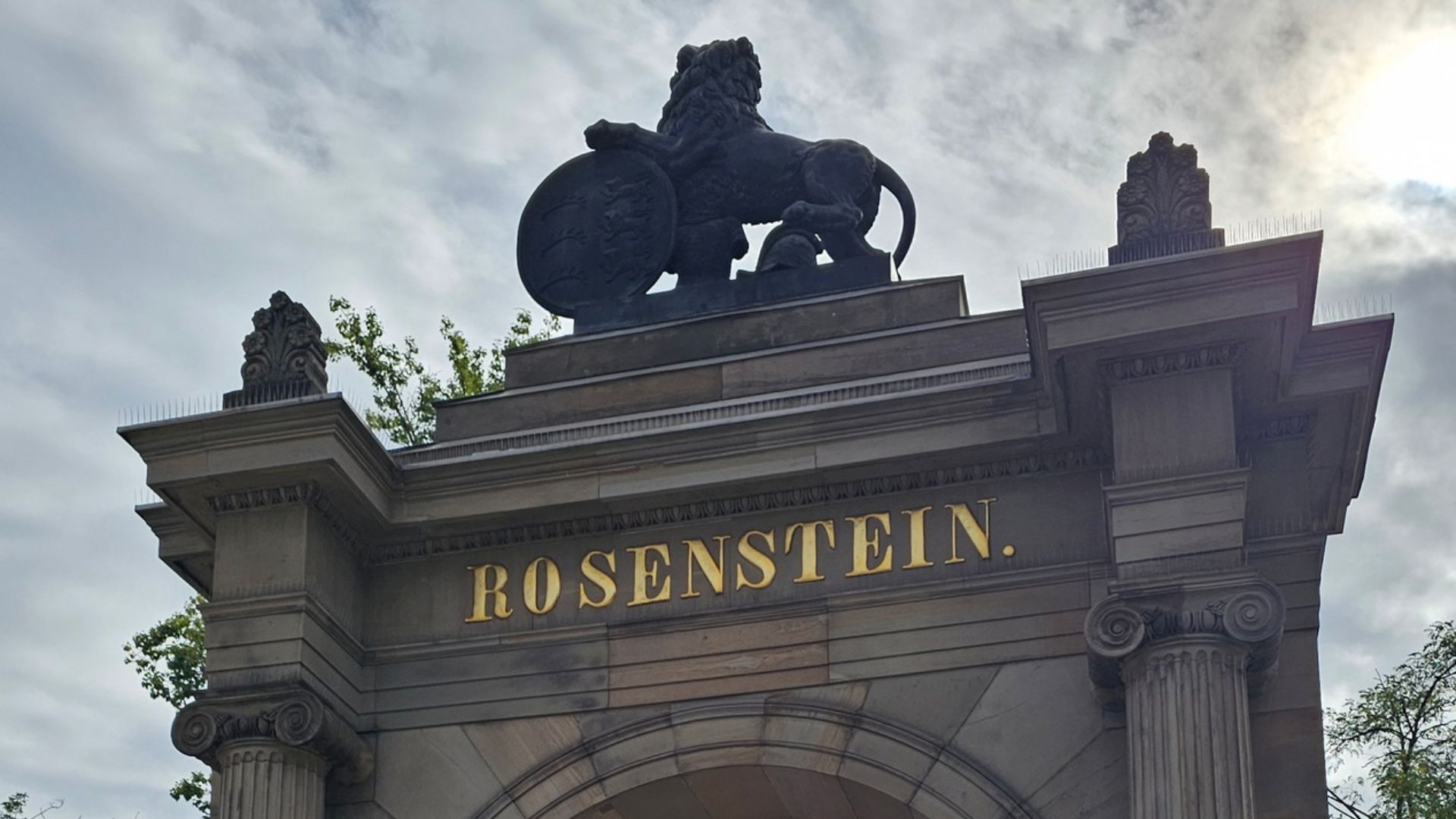
The famous Lion Gate, the entrance to Stuttgart’s Rosenstein Park, home to the Natural History Museum and Wilhelma
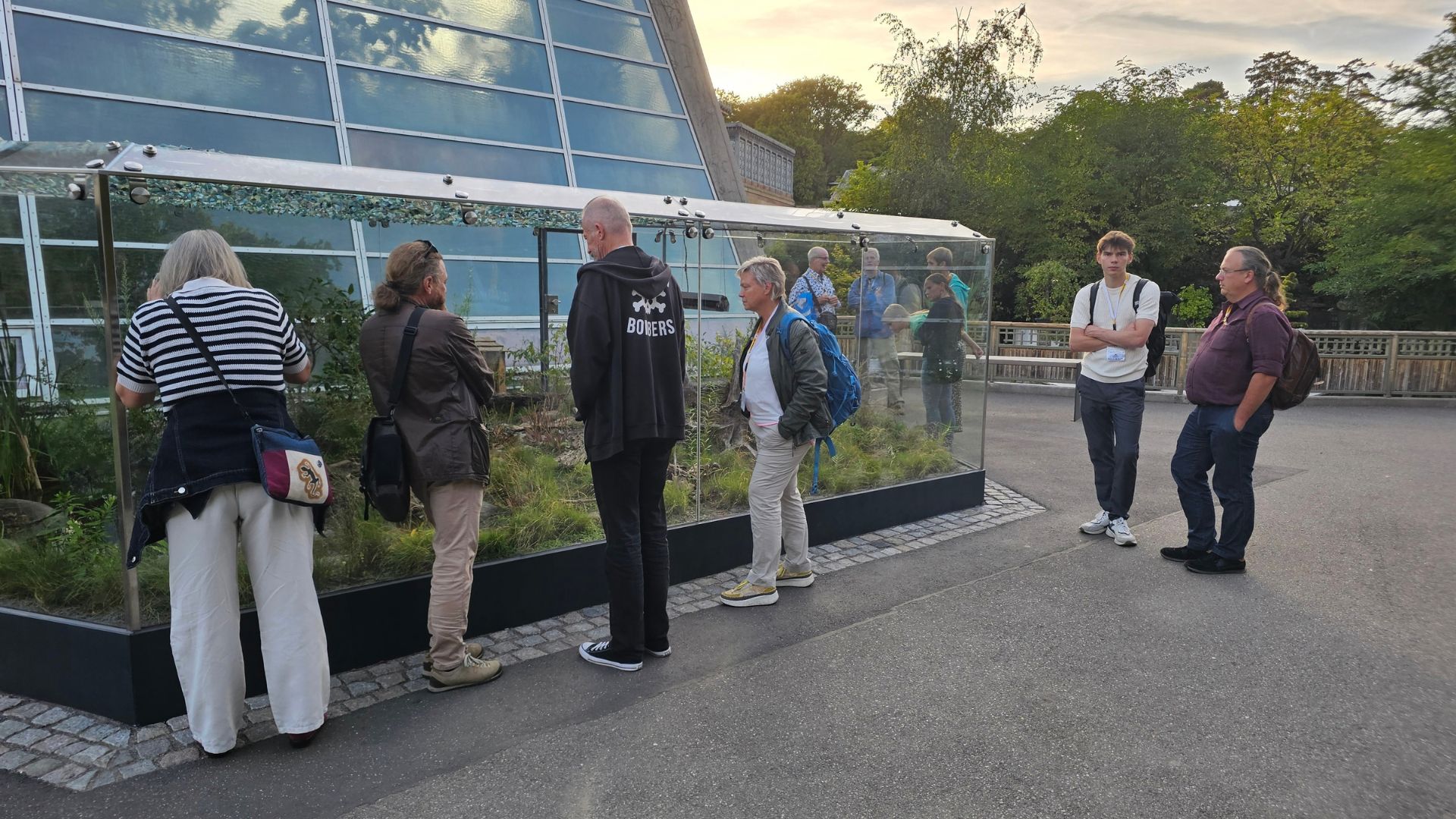
The conference participants are carrying out an expert inspection of CC’s new outdoor enclosure for the San Francisco garter snakes
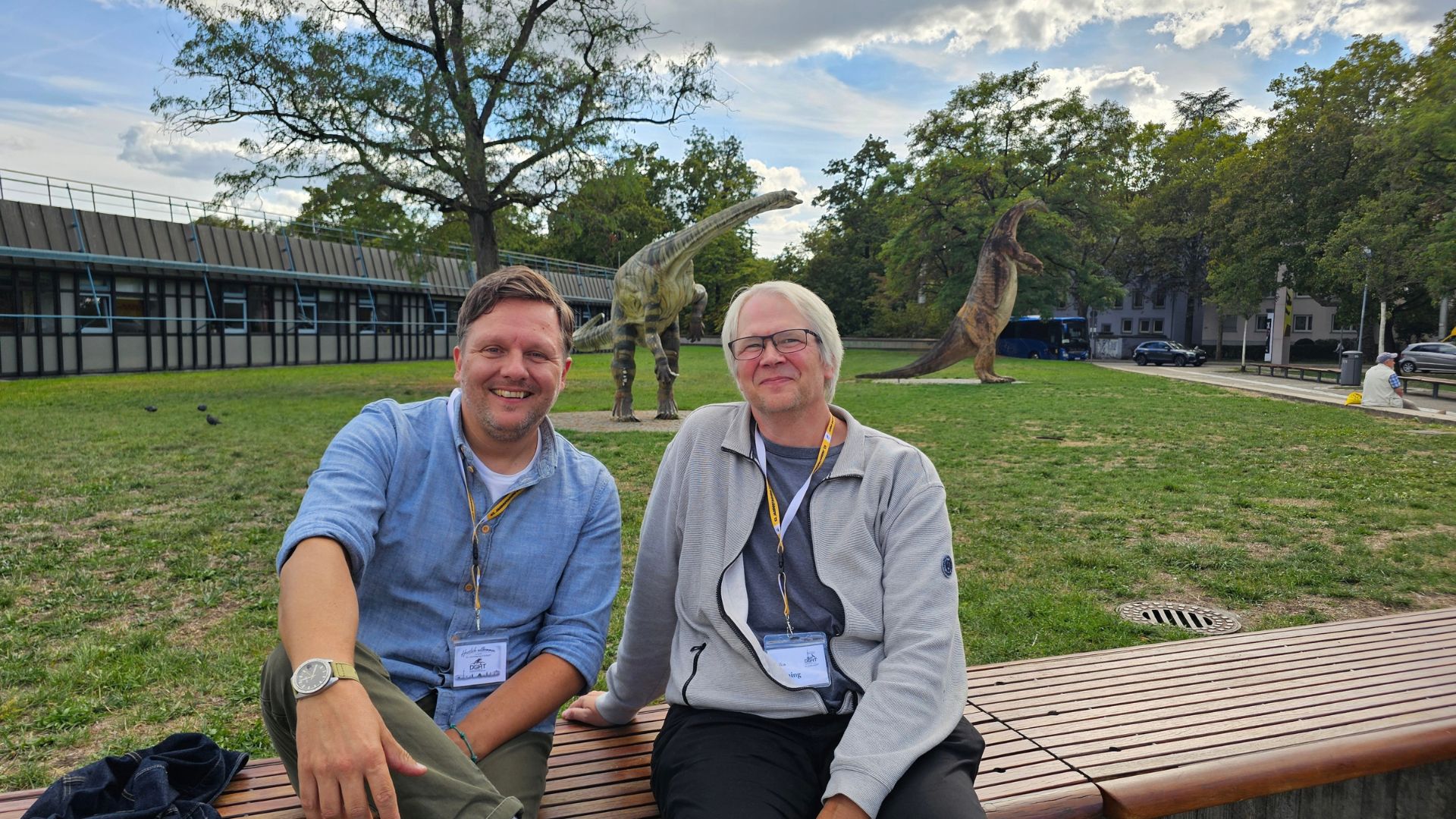
Networking at Jurassic Park: CC Advisory Board member Arne Schulze (left) in conversation with art manager Heiko Werning
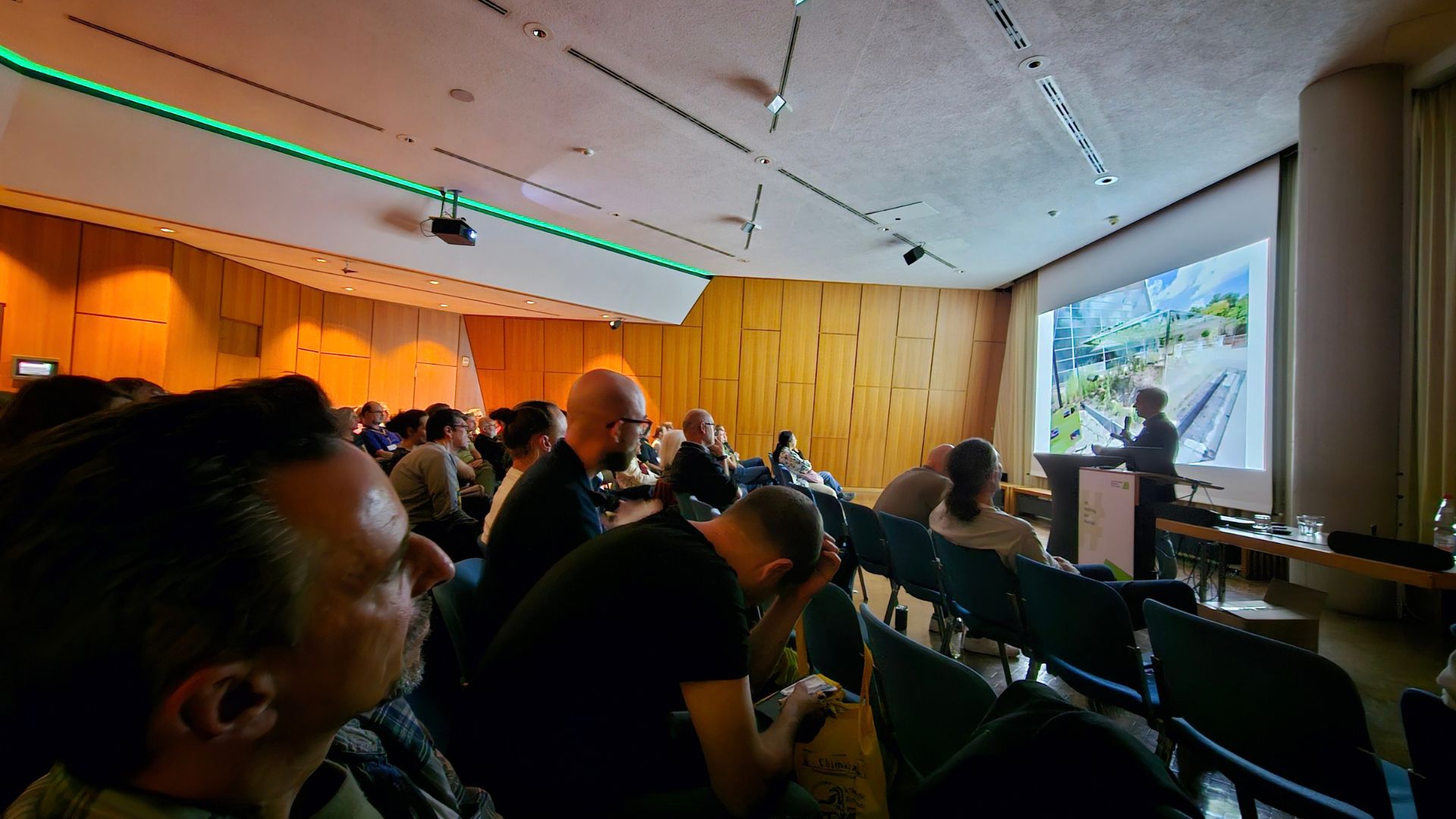
At the major evening lecture, Wilhelma Director Thomas Kölpin will present the new CC garter snake enclosure at the Stuttgart Zoological and Botanical Gardens
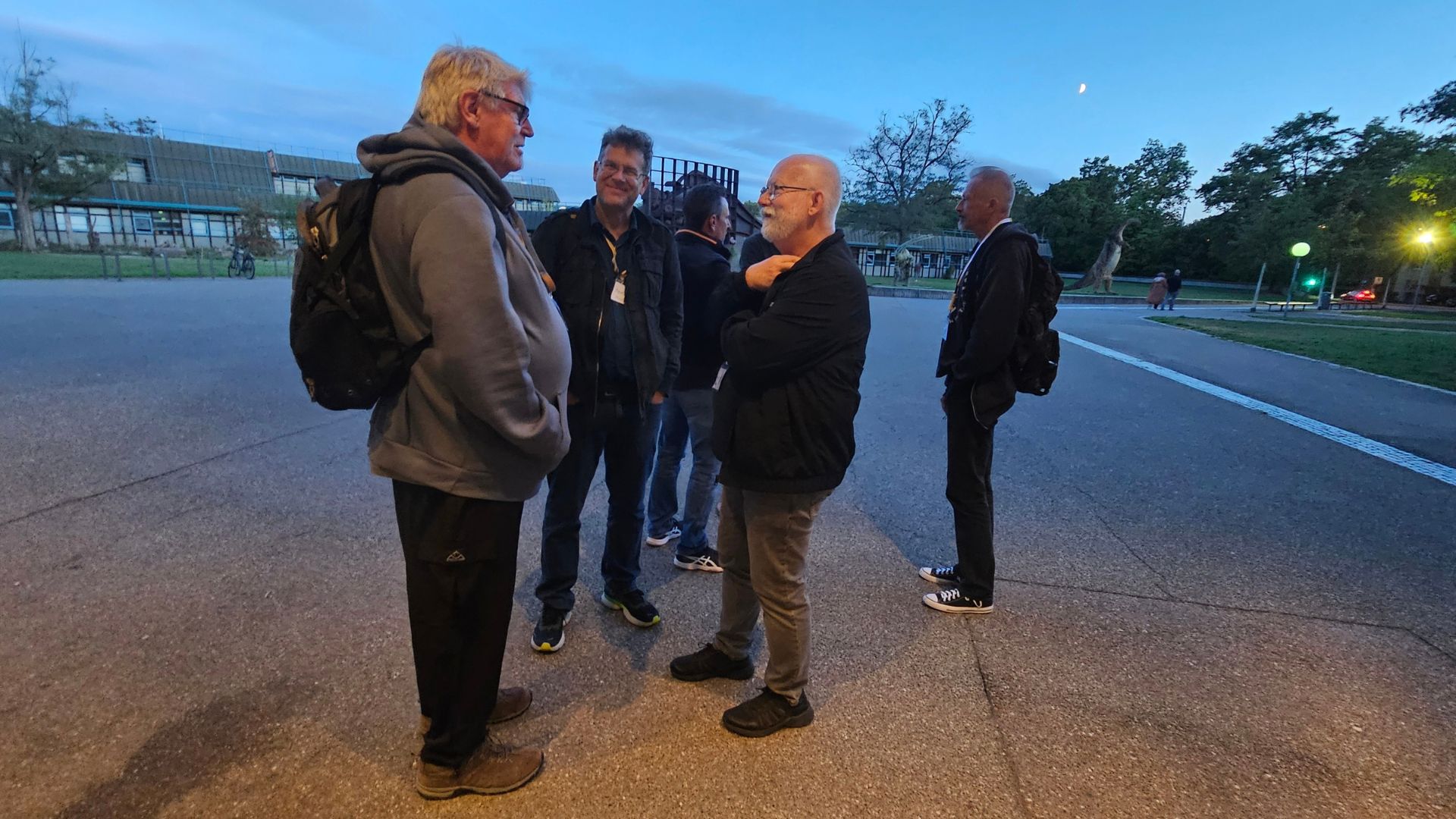
The experts' discussions are far from over once the presentations have finished. Outside the Natural History Museum, CC employee and newt expert Uwe Seidel (left) is seen talking to Miguel Vences and CC Supervisory Board member Mark-Oliver Rödel (r.)
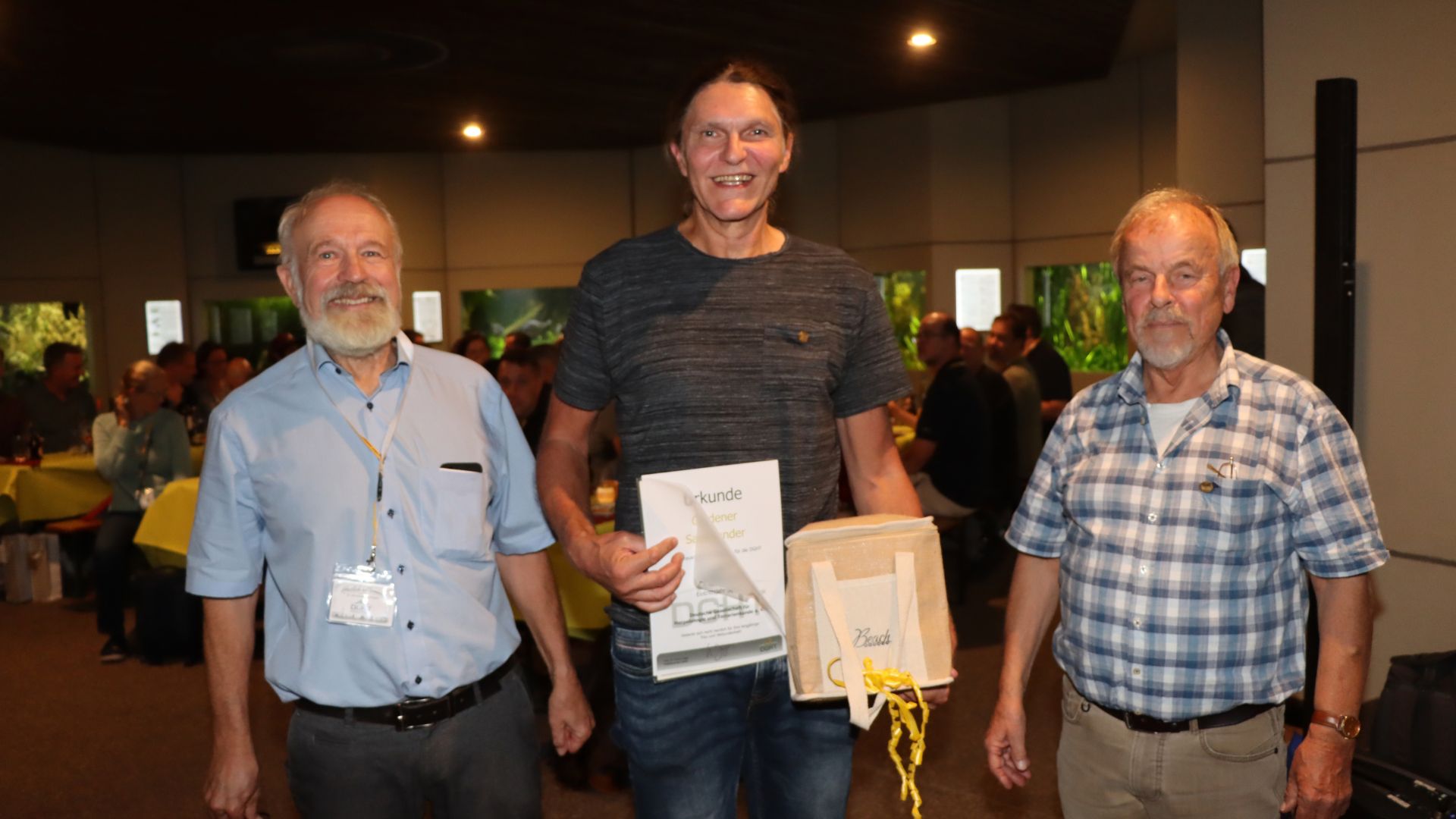
Honour where honour is due: CC Advisory Board member Axel Kwet (centre) was awarded the Golden Salamander for outstanding service to the DGHT, presented by President Ulrich Joger (left) and Honorary Councillor Richard Podlucky.
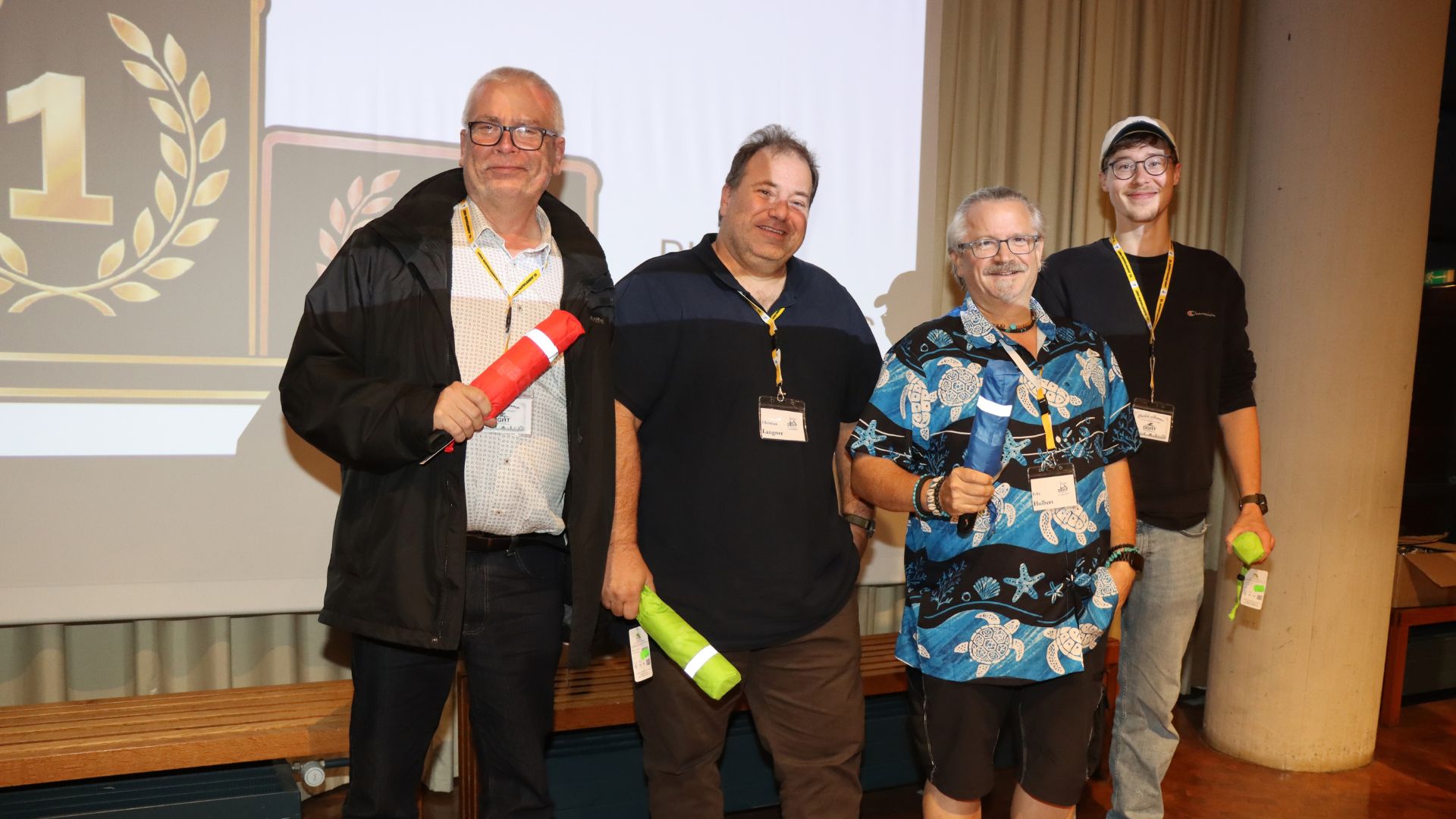
Quite clever: no wonder that the winning team of the DGHT’s first Herpeto Quiz included two members of the CC Advisory Board: Christian Langner (2nd from left) and Felix Hulbert (2nd from right); alongside them are Peter Klaas from Cologne Zoo (left) and Carl Bolling from Münster Zoo
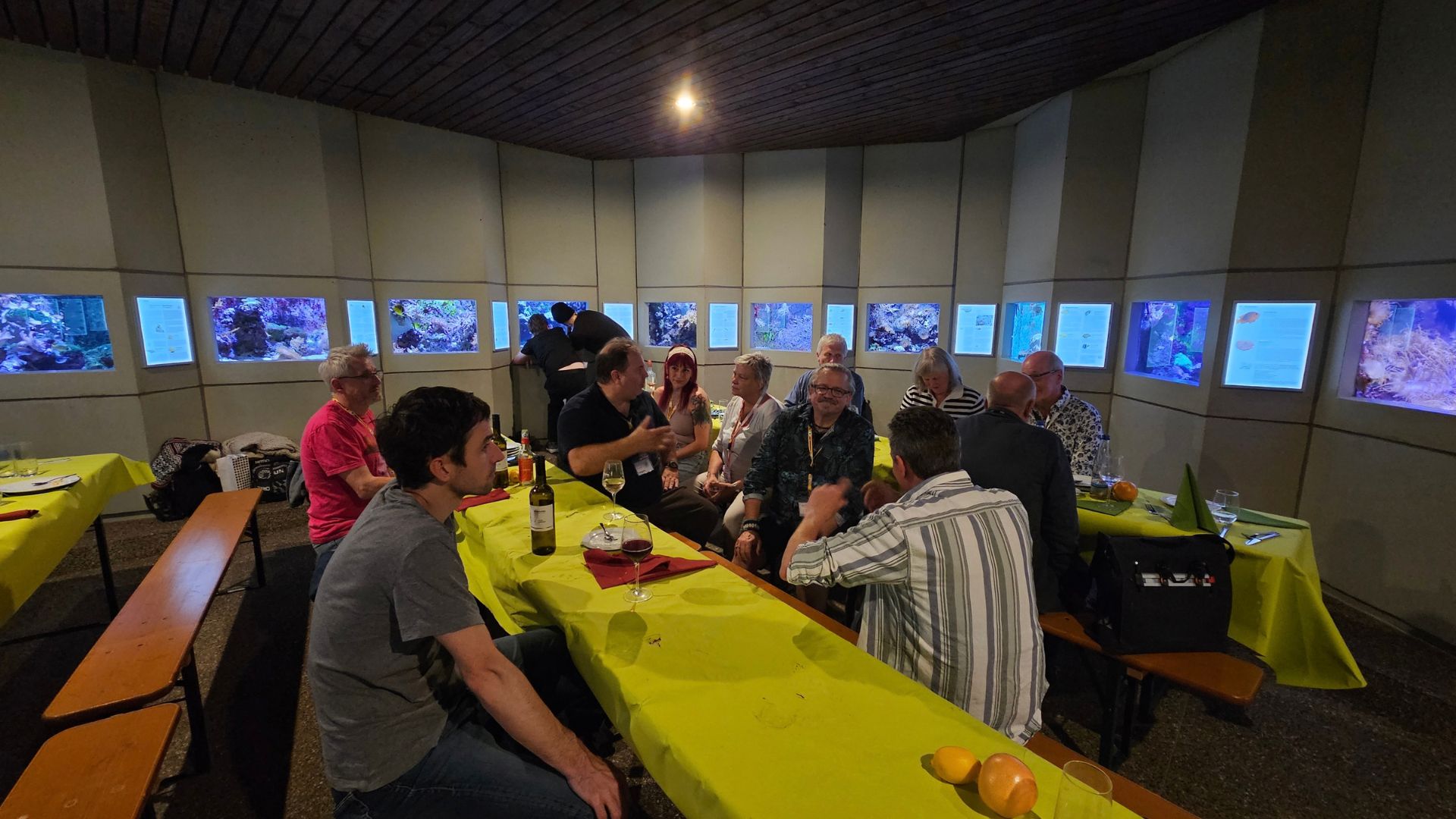
The last ones are the best, and CC advisory board members are always happy join in … just before the gala dinner at the Wilhelma Aquarium draws to a close, Christian Langner and Felix Hulbert, amongst others, are chatting
One goal, many facets
An entire block of talks on Saturday morning centred on Citizen Conservation and our major goal of conservation breeding programmes for endangered species. Our Curator of Research and Zoology, Johannes Penner, kicked things off by presenting the developments at CC over the past year to the audience of over a hundred people gathered in the large lecture theatre of the Natural History Museum as part of our ‘Update 2026’. Afterwards, co-founder and species manager Heiko Werning went into amphibian-specific detail and presented one of our programmes, along with the mechanics behind it: ‘From a lost species to a stable conservation breeding programme – the Mallorcan midwife toad (Alytes muletensis) as the prototype for Citizen Conservation’s first studbook’. Incidentally, the hosts played a prominent role in this, as one of the breeding lines of these charming little toads can be traced directly back to just three specimens brought over 40 years ago by the then director of the Stuttgart Natural History Museum and subsequently bred at Wilhelma – an impressive lineage spanning numerous generations, so far without any discernible inbreeding depression and thus, from a purely scientific perspective, a remarkable contribution to our understanding of this species, which remains critically endangered.
Holger Kraus from Zurich Zoo, who is also a member of our Scientific Advisory Board, gave a presentation entitled ‘Establishing an ex situ population of the Blue-sided leaf frog (Agalychnis annae)”, impressively demonstrated how close cooperation between zoos and private keepers can, in a very short space of time, set up a complete conservation breeding programme for an endangered species from scratch: using confiscated, smuggled eggs and tadpoles of this beautiful tree frog from Costa Rica, the zoo was able to establish breeding groups which, after just one year, produced offspring of their own and were subsequently distributed via CC to over a dozen keepers – thus, hopefully, laying the foundations for a long-term conservation breeding programme.
DGHT Vice-President Christian Bittner provided an update on his presentation from last year regarding his experiences in breeding the Titicaca water frog (Telmatobius culeus). Among other things, he succeeded for the first time in recording the calls of this aquatic, peculiar amphibian.
CC Advisory Board member Fabian Schmidt, curator at Basel Zoo, introduced the Rio Pescado stubfoot toad (Atelopus balios), which had previously been thought to be extinct, as well as the Sakishima long-tailed lizard (Takydromus dorsalis), which has recently been added to the CC programme. Both species are being bred very successfully by the zoo, which is also deeply committed to CC in other ways and is planning participatory spaces for CC participants as part of its masterplan, drawing on its long-standing experience with public participation at the ‘Zolli’ Children’s Zoo. And because it will be some time yet before this is realised, the zoo is planning to make interim use of the site by installing its own CC containers. An outstanding project! Equally outstanding is the Alpine Salamander Centre of Excellence, which CC initiated to save highly endangered subspecies of the ‘Amphibian of the Year 2026’ and for which we have funded housing facilities at the Sachsenhagen Wildlife Rescue Centre. CC staff member Uwe Seidel presented this ambitious project. To round off the series of presentations, Nicolas Chalwatzis took the floor to report on his hard-won successes in the husbandry and breeding of the Phantasmal poison frog, a critically endangered poison dart frog from Ecuador, which, somewhat surprisingly, has proved to be quite a tough nut to crack in captivity.
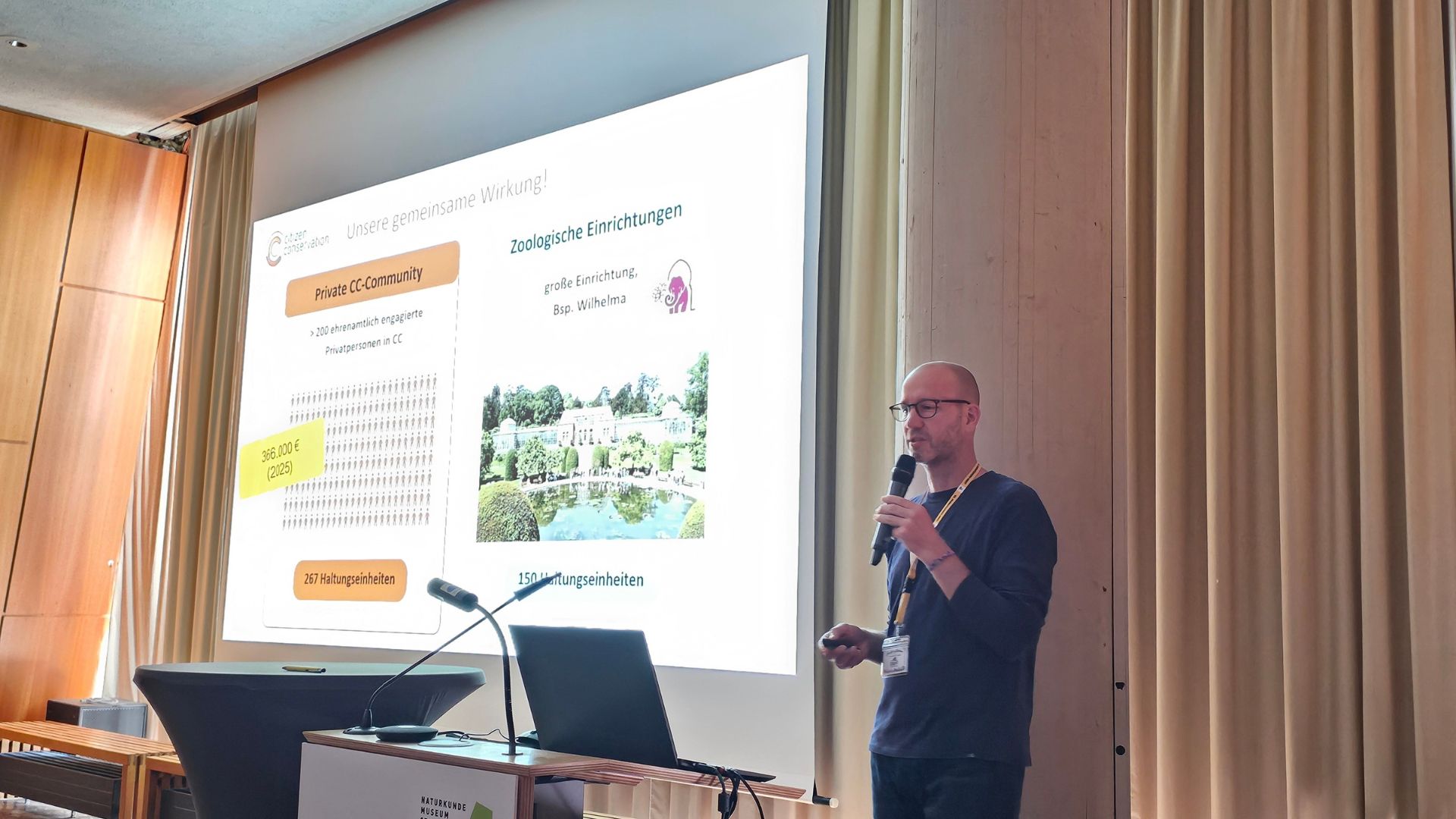
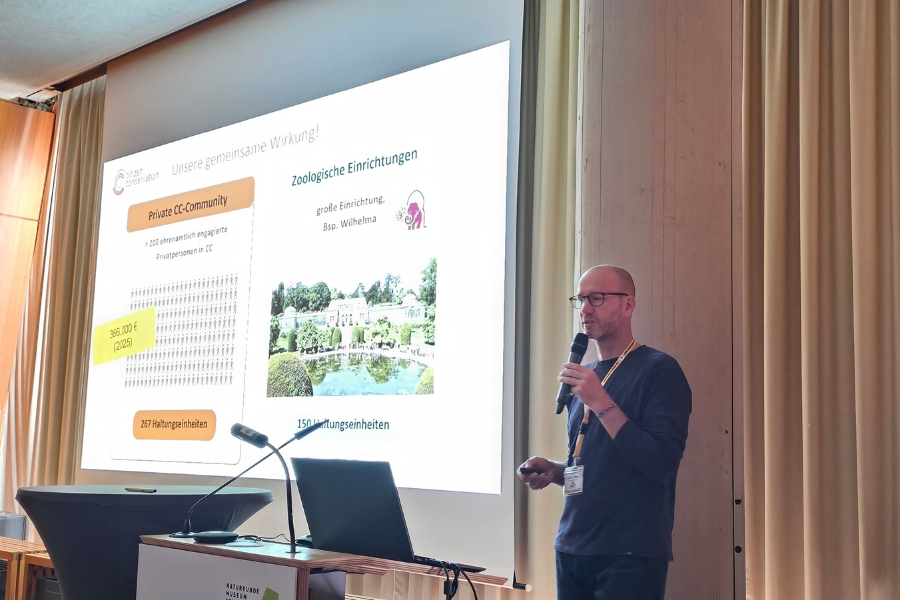
Curator Johannes Penner opened the programme block with an update on CC – our volunteers are already contributing twice as much capacity for species conservation to the zoo community as the venerable and vast Wilhelma Aquarium and Terrarium House has to offer.
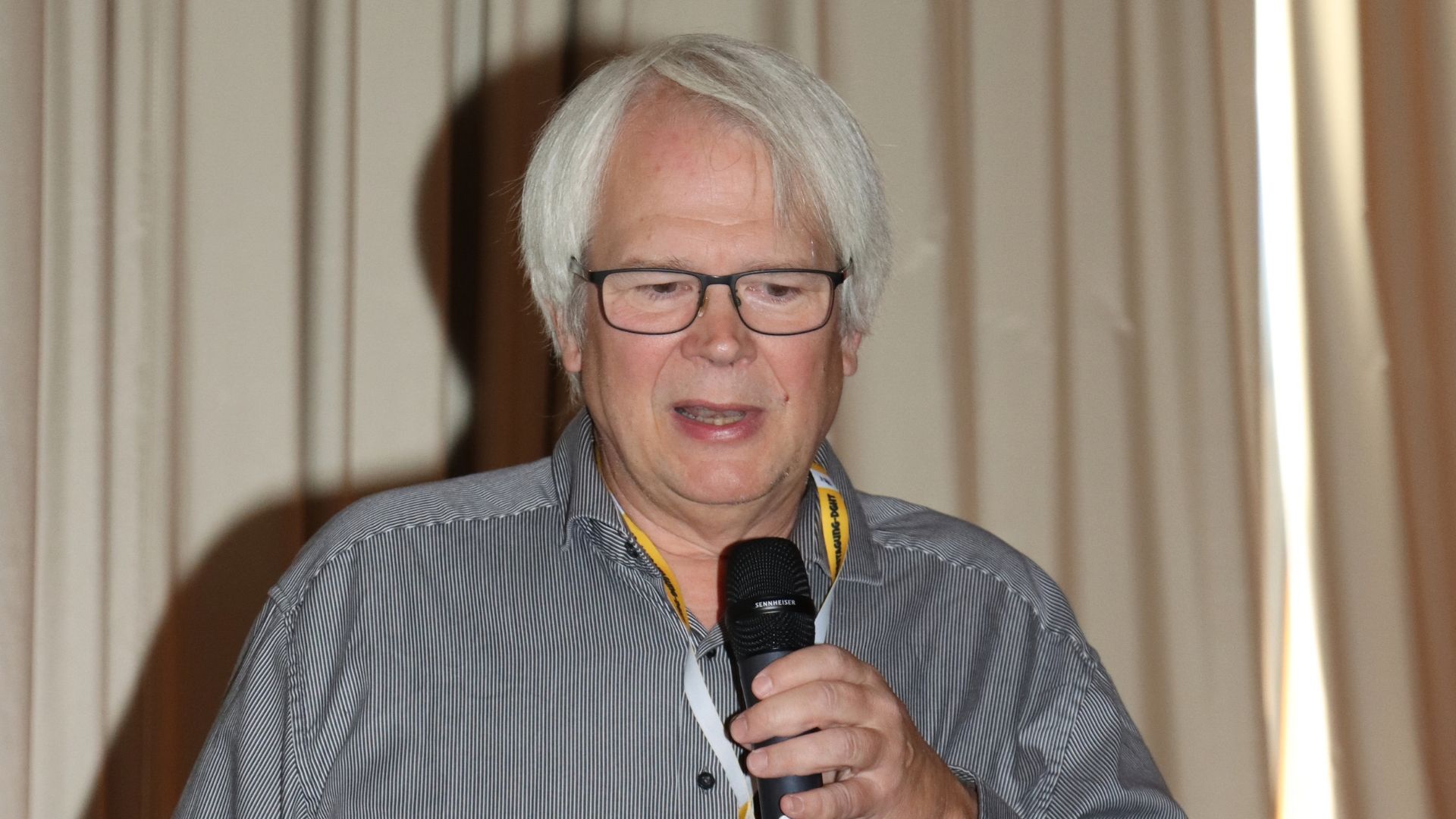
CC Species Manager Heiko Werning presents the studbook for the Mallorca midwife toad
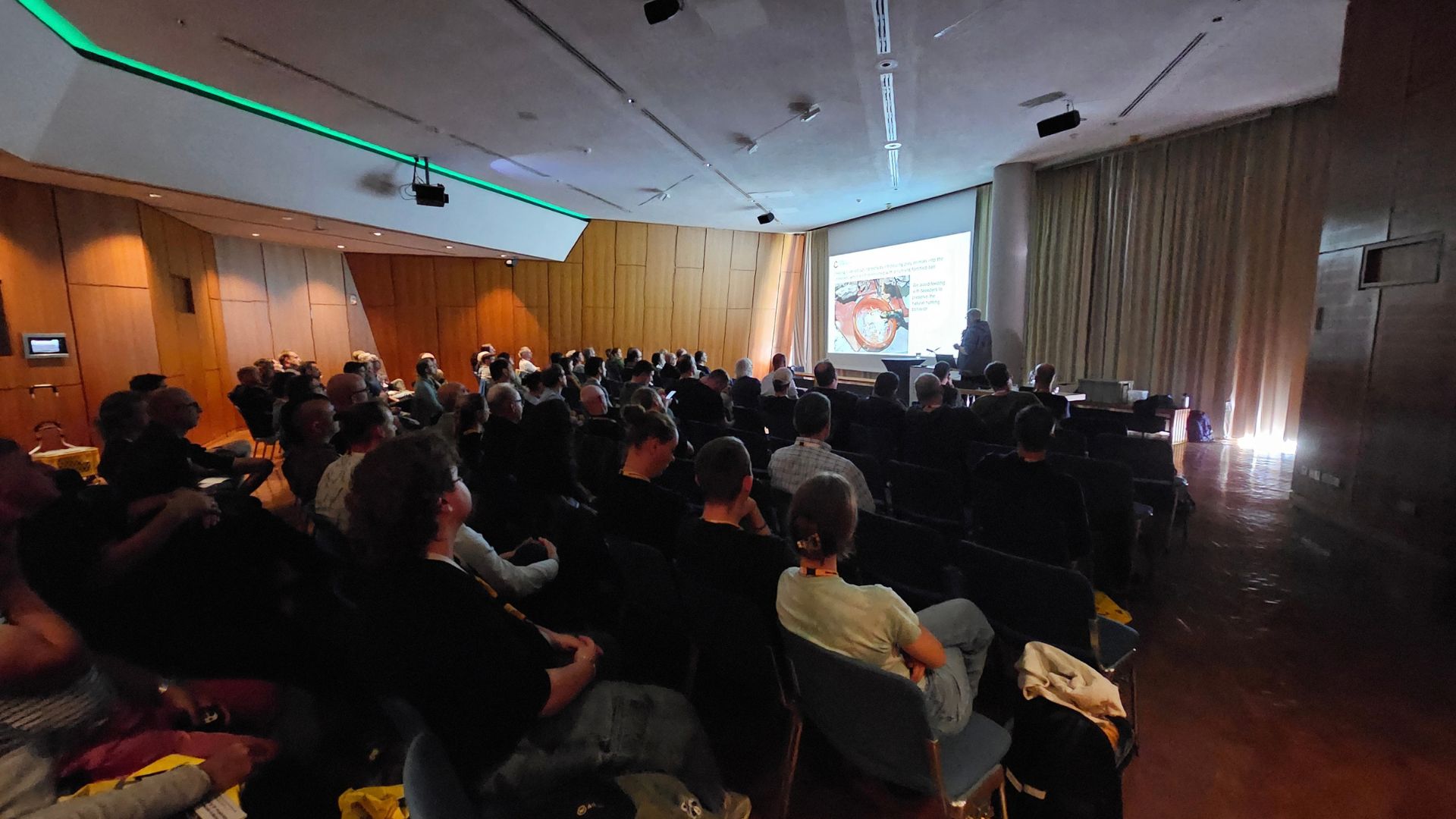
A packed house at the CC Block, here during Uwe Seidel’s talk on the Alpine Salamander Centre of Excellence launched by CC
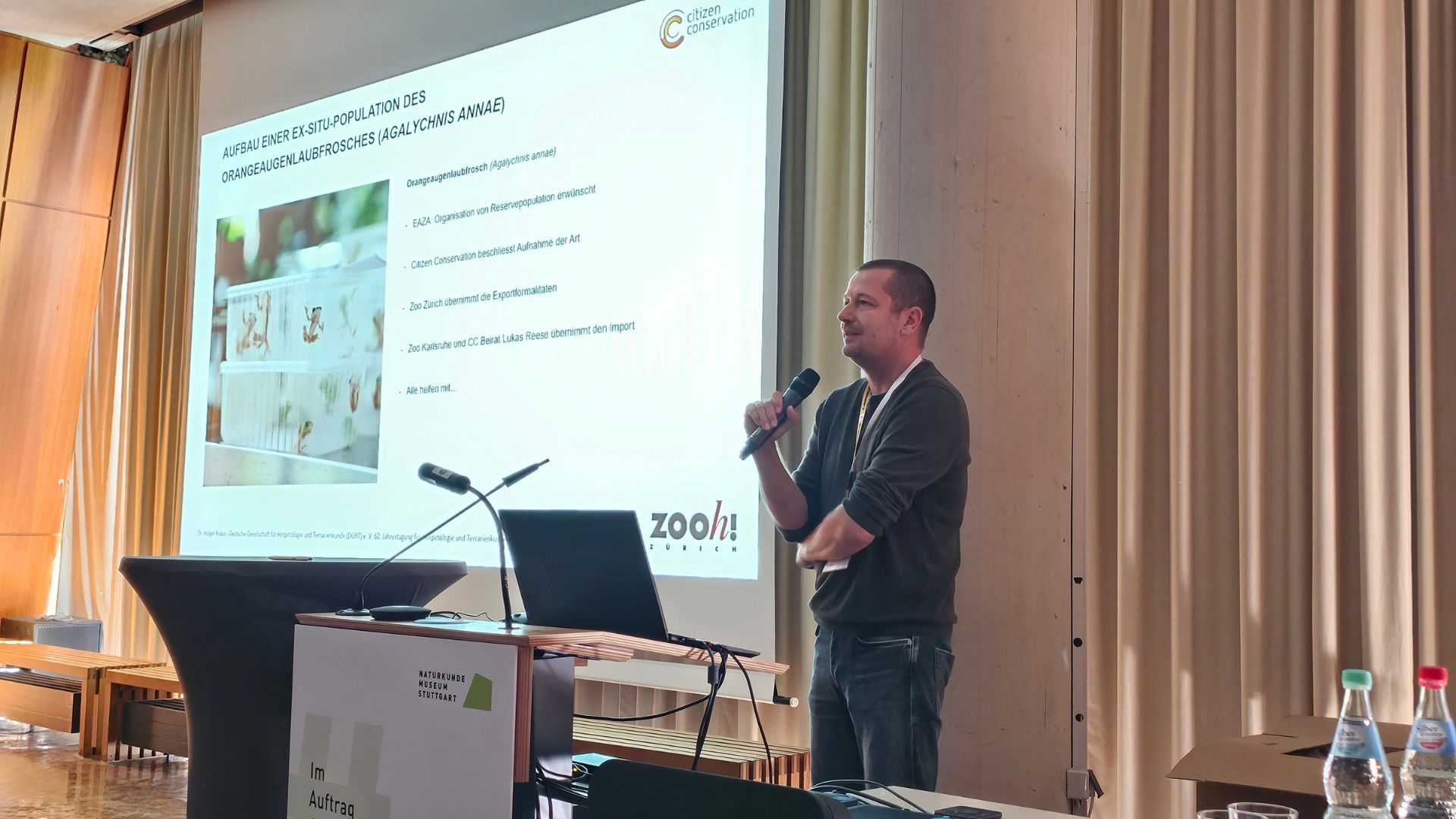
CC Advisory Board member Holger Kraus from Zurich Zoo on the spectacular launch of the programme for the Blue-sided tree frog
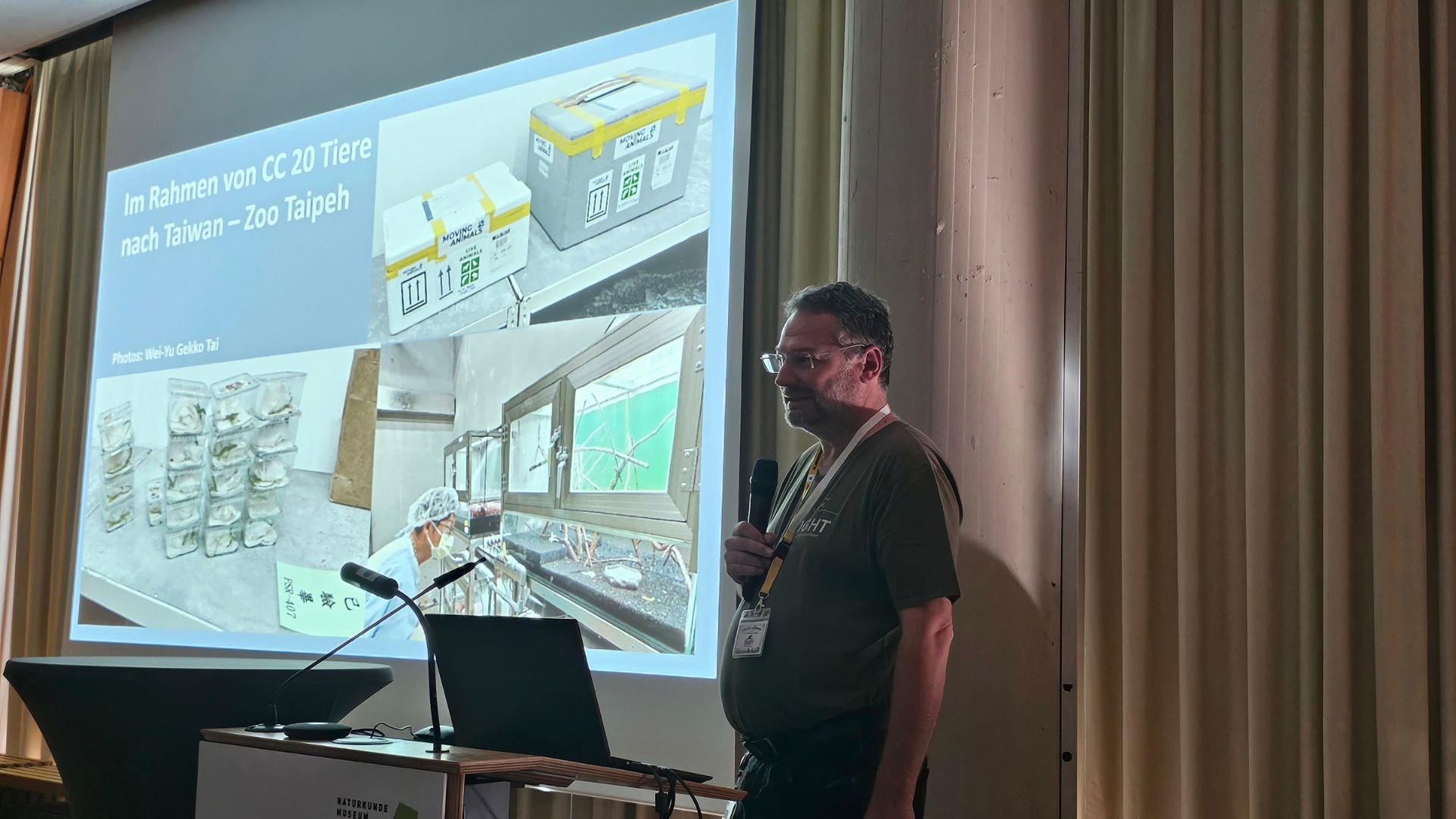
CC Advisory Board member Fabian Schmidt presents the remarkable successes achieved in the programme for the Rio Pescado stub-toed toad – and, whilst he’s at it, introduces the first CC participant in Asia: Taipei Zoo in Taiwan
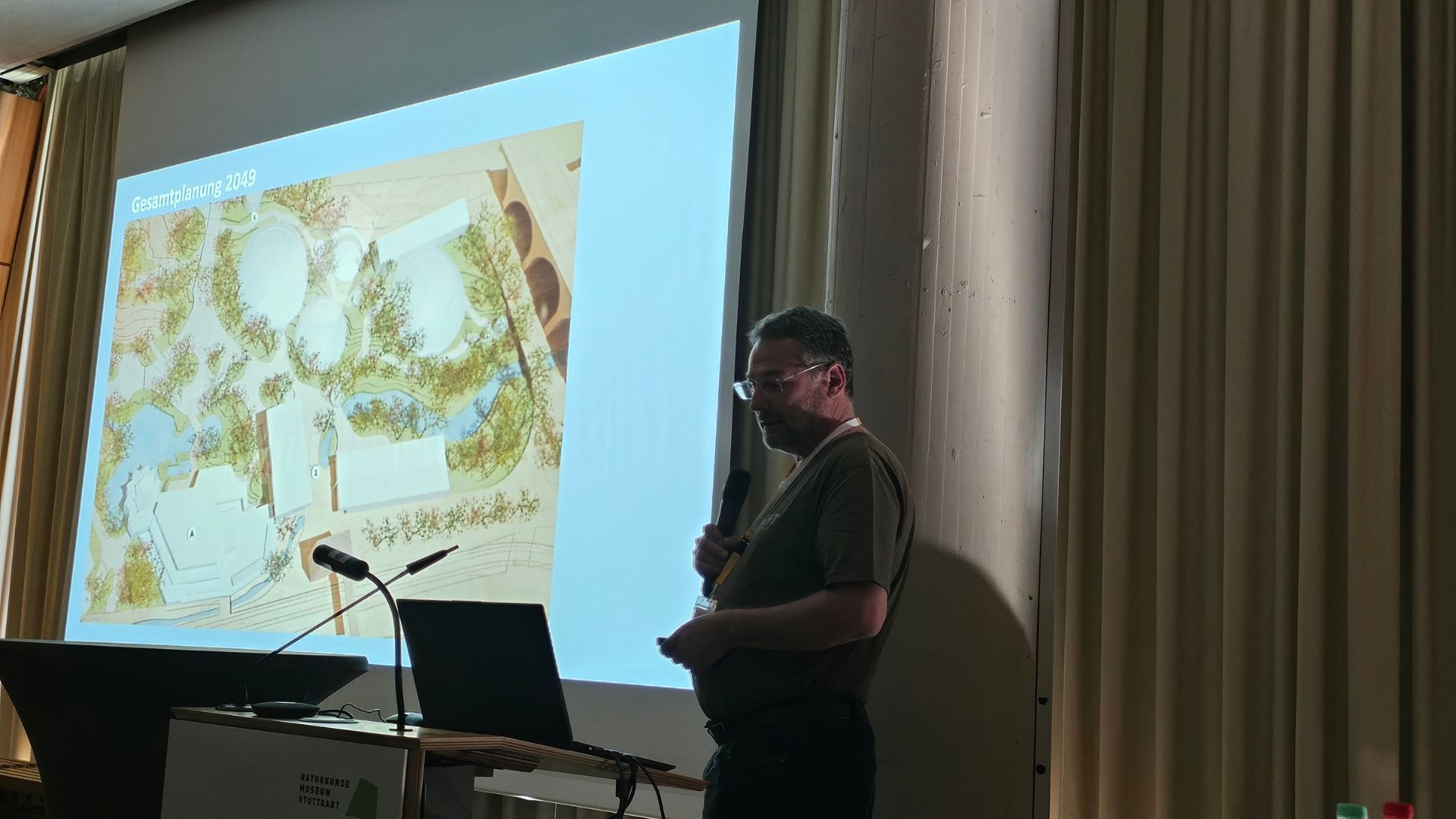
CC Advisory Board member Fabian Schmidt presents the designs for the planned CC building at Basel Zoo
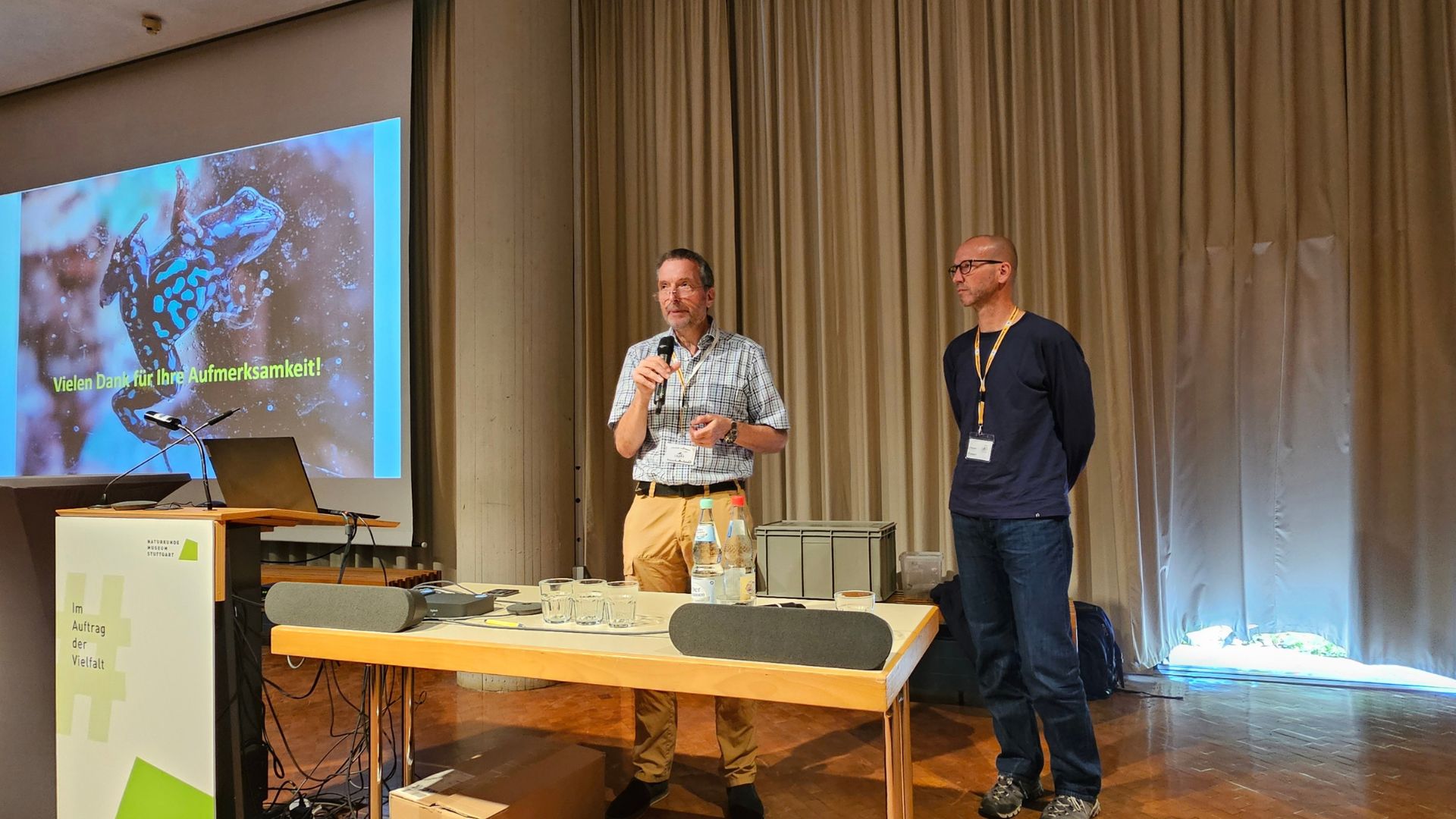
Thank you for your attention! Nicolas Chalwatzis (left) talks about the challenges of breeding the Phantasmal poison frog, with Johannes Penner in the role of moderator
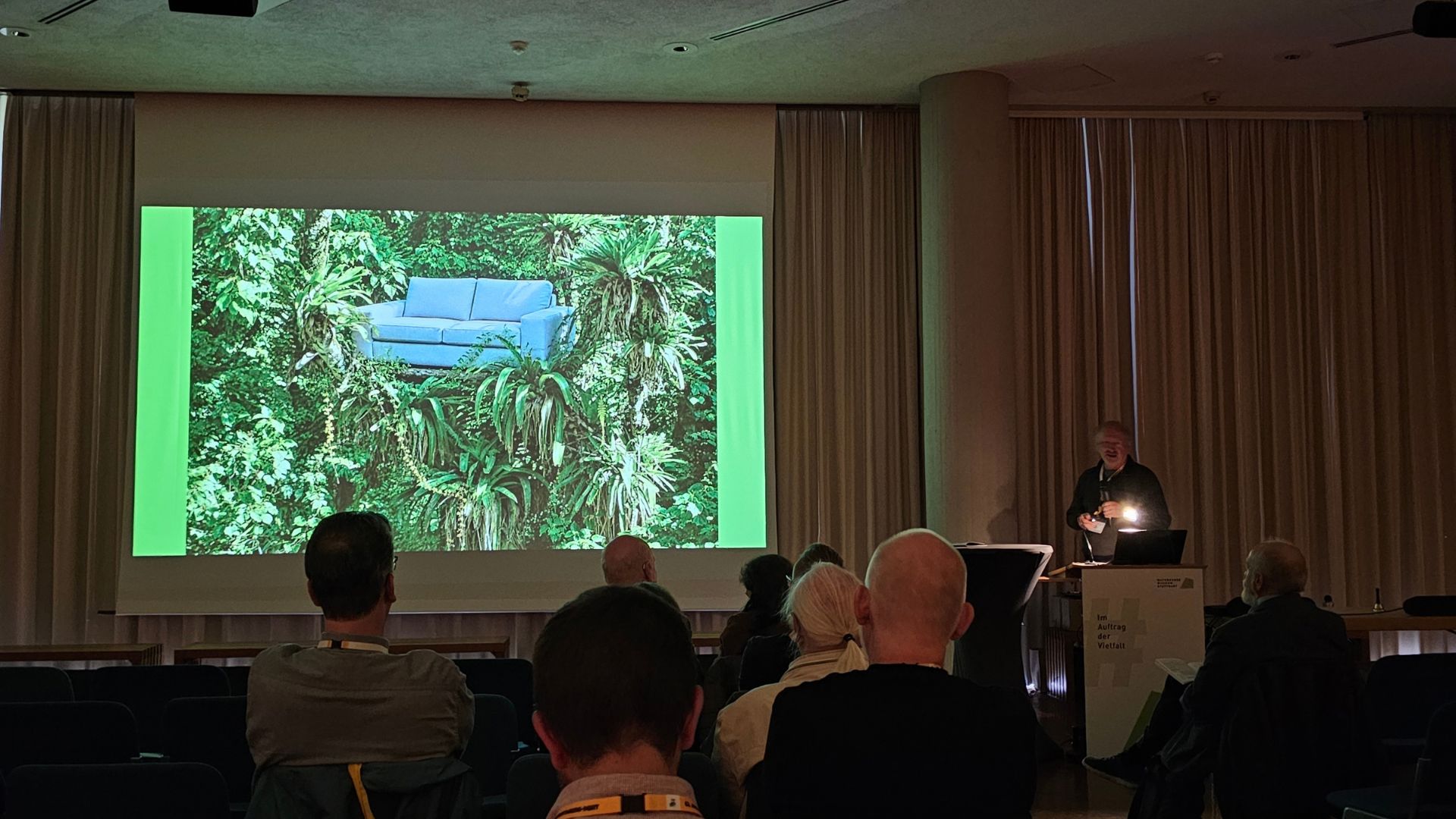
A ‘Couch in the Canopy’ would be ideal for observing the secret breeding behaviour of species such as the San Martín fringed-limbed tree frog. With his terrariums, private keeper Karl-Heinz Jungfer has a decent alternative at home.
From the garter snake to the fringed-limbed tree frog – CC is ever-present
But even outside this programme block, the approximately 250 conference participants came across CC time and again. On the conference’s Science Day, Advisory Board member Karl-Heinz Jungfer reported on his spectacular observations made in the terrarium regarding the brood care of the San Martín fringed-limbed tree frog (Ecnomiohyla valancifer), which now also demonstrates its astonishing habit of laying eggs with its hind foot – as well as its extraordinary tadpole feeding behaviour – in our conservation breeding programme. In his major evening lecture, Wilhelma Director Thomas Kölpin presented the species conservation projects of the Stuttgart Zoological and Botanical Gardens – which now have an annual budget of one million – including support for CC. Particular focus was placed on the enclosure newly constructed this summer for the critically endangered San Francisco garter snakes (Thamnophis sirtalis tetrataenia), which are cared for at CC; these could be viewed first-hand during a visit to Wilhelma – naturally part of the conference programme – as well as the Mangarahara cichlids (Ptychochromis insolitus), which provided the atmospheric aquatic accompaniment to the conference’s grand closing dinner in the Aquarium and Terrarium House there.
It goes without saying, of course, that this involved numerous in-depth discussions between the experts that lasted well into the night – but the fact that several new participants were recruited for some of our conservation breeding programmes was the icing on the cake of this successful event.
And for us Berliners, walking through the seemingly never-ending construction site at Stuttgart 21 station was both a source of comfort and encouragement – after all, our BER airport doesn’t look so bad by comparison…